Key facts
- Tessa Williams of Slate Geotechnical Consultants Inc. and colleagues created the first Moon-specific ground motion model for shallow moonquakes. It guides seismic hazard assessments for lunar building projects.
- The new lunar model forecasts substantially stronger shaking at long distances than Earth-based ground motion models do.
- Williams said that on Earth, a few hundred kilometers counts as a large distance in ground-motion modeling, and by then shaking has mostly attenuated, so terrestrial models reflect that.
- The team assessed lunar seismicity to help structural engineers create design guidelines for new lunar structures.
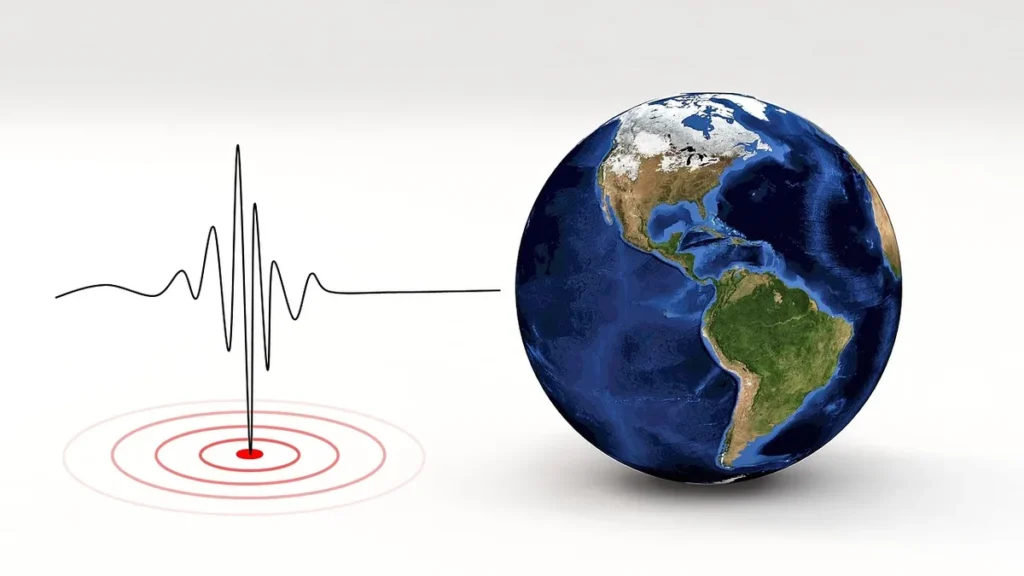
On Nov. 19, 2026, Tessa Williams of Slate Geotechnical Consultants Inc. and colleagues introduced the first lunar ground motion model for shallow moonquakes, Phys.org reported. The model guides seismic hazard assessments for lunar building projects. A ground motion model predicts how strongly the ground shakes during a seismic event, and a moonquake is a seismic event on the Moon. The research appeared in Seismological Research Letters under DOI 10.1785/0220260181 in a paper titled Ground-Motion Model Development for Shallow Moonquakes.
The lunar model predicts stronger shaking at long distances than terrestrial ground motion models produce, Phys.org reported. Williams said engineers on Earth treat a few hundred kilometers as a long distance in ground-motion modeling, by which point shaking has faded and terrestrial models reflect that. She said 200 kilometers (124 miles), which Earth treats as a large distance, is only a short distance for lunar shaking. This contrast shows why terrestrial distance assumptions underestimate lunar hazard zones.
Williams said terrestrial models expect shaking to fade quickly within a few hundred kilometers, but lunar data show strong shaking beyond 1,000 kilometers (621 miles) even for small events. She said shaking strength at large distances and long durations does not look like earthquakes, so terrestrial ground-motion models would probably fail to capture potential lunar shaking well. Strong shaking at those distances means seismic hazards reach far beyond a moonquake’s epicenter. Even small events can produce persistent shaking across large lunar distances.
The team examined seismic data from Apollo moon missions and found that lunar seismicity is different from Earth seismicity. Williams noted that the Moon’s colder, more solid interior makes seismic waves lose less energy and amplitude as they pass through it than Earth’s interior does. That lower energy loss helps explain why lunar shaking travels farther.
Cosmic impacts over millennia have covered the lunar surface in fractured rubble that scatters seismic energy strongly and widely. This broken surface layer spreads seismic waves in ways not seen on Earth. That widespread scattering helps lunar shaking persist over long distances. The team built the model by combining Apollo-era moonquake recordings with physics-based ground motion simulations using lunar-specific inputs.
The team used that hybrid approach to test how lunar geology affects seismic wave propagation. Combining real recordings with simulations let the team tune the model to lunar conditions. After accounting for those features, Williams said the team’s simulations matched the Apollo seismic recordings better. Adding the Moon’s interior and surface properties improved how well the model fit real lunar data.
The team left shaking duration out of the model. Williams said Apollo records average about 54 minutes of strong shaking, while shallow crustal events on Earth last under a minute. She said the long duration comes mainly from scattering in the fractured crust that spreads energy into a long coda. Scattering in the broken surface layer extends the shaking signal recorded by instruments.
That mechanism helps explain the long durations seen in Apollo recordings. Williams said the model has a limit: moonquake recordings now come from just four closely spaced stations gathering narrowband seismic information. She said researchers using modern broadband, three-component instruments could capture shaking across the full frequency range relevant to structures. The sparse Apollo network limits the frequency range and geographic coverage available to the researchers.
The researchers write that adding more lunar stations at different depths and distances to capture potential large-magnitude events would help improve the model for seismic hazard assessment. More stations could improve predictions for future lunar construction. Additional stations would improve the data foundation for the model. The team assessed lunar seismicity so structural engineers could create design guidelines for new lunar structures.

Join the discussion