Key facts
- With the laboratory tent standing, Andersen said more work can move forward and the science program can begin at Lake Untersee.
- Andersen said temperatures at Untersee normally reach near or above 0°C only late in November or in early December.
- Andersen and his team watched Starship's return on the evening of 14 November 2026 and called it a remarkable achievement and a success for SpaceX.
- The short-term outlook for Sunday, November 15 forecast overcast skies, a high near 12°F, a low of 8°F, southeasterly winds strengthening to 28 mph, and wind chills below zero.
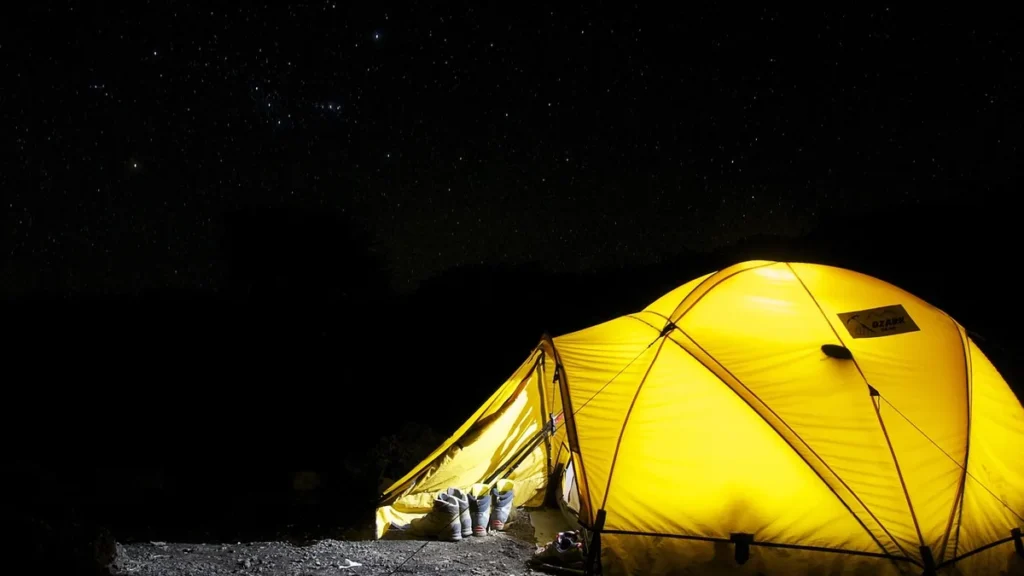
Astrobiologist Dale Andersen’s team erected the laboratory tent and completed the wooden platform for the dive tent at Lake Untersee, Antarctica, on 14 November 2026.
Andersen said the camp would be fully operational once the lab and dive tents stood in place, allowing more work to move forward and the science program to begin. He described conditions on 14 November as light winds, broken skies, occasional sunshine, and -2°C, calling it very warm for mid-November. Temperatures at the lake normally reach near or above 0°C only late in November or in early December, he said. Andersen had thought the team could get the wooden platforms in place that day and, with some luck, one of the WeatherPorts as well.
Andersen expected winds to pick up after three to four p.m. as a smaller storm passed by that day and the next. He also said high winds may arrive that night and the following day, and the team would see what conditions developed overnight. A Gemini weather report for Lake Untersee listed cloudy skies, 11°F (−12°C), wind chills of −8°F (−22°C), east winds at 20 mph, and relative humidity at 56% on 14 November.
The short-term outlook for Sunday, 15 November, forecast overcast skies, a high near 12°F, a low of 8°F, southeasterly winds strengthening to 28 mph, and wind chills below zero. Monday, 16 November, was forecast to bring sunny daytime and clear night skies, a high of 8°F, a low of 2°F, and southeast winds easing to 21 mph. The outlook for Tuesday, 17 November, through Wednesday, 18 November, forecast mostly cloudy to overcast skies, highs around 6°F, lows of 0°F to 1°F, southeast winds at 15 to 20 mph, and a 10% chance of light snow.
Weather models often underestimate wind speeds at Lake Untersee because nearby mountains and the Anuchin Glacier valley channel winds straight across the lake basin. Recent storms in Queen Maud Land left fresh snow across the region, and winds over 15 to 20 mph may cause localized blowing snow and poor visibility even when snow is not falling. Ground blizzard conditions can persist as surface snow scours away, affecting visibility and travel at the lake.
Andersen and his team watched Starship’s return on the evening of 14 November 2026 and called it a remarkable achievement and a success for SpaceX. “Today we put up the lab tent and built the wooden platform for the dive tent,” he said.
Andersen flew from Cape Town, South Africa, to the Novolazarevskaya Station ice-runway in Antarctica on 6 January 2026 after a five to six hour flight aboard an IL-76TD jet. The team landed at the Novo ice-runway before unpacking stored gear and preparing for the overland traverse inland to Lake Untersee. They staged gear at Ultima Antarctic Logistics’ airbase, tested snowmobiles, and traversed toward the lake at 71.342 degrees S, 13.473 degrees E. The overland traverse used a convoy of snowmobiles and tractors.
After landing at the Novolazarevskaya ice-runway, the team spent a couple of days preparing at Ultima Antarctic Logistics’ airbase for the overland traverse. Workers sorted polar clothing, staged gear, packed cargo sleds, checked snowmobiles, and locked in communications, check-in schedules, and emergency procedures.
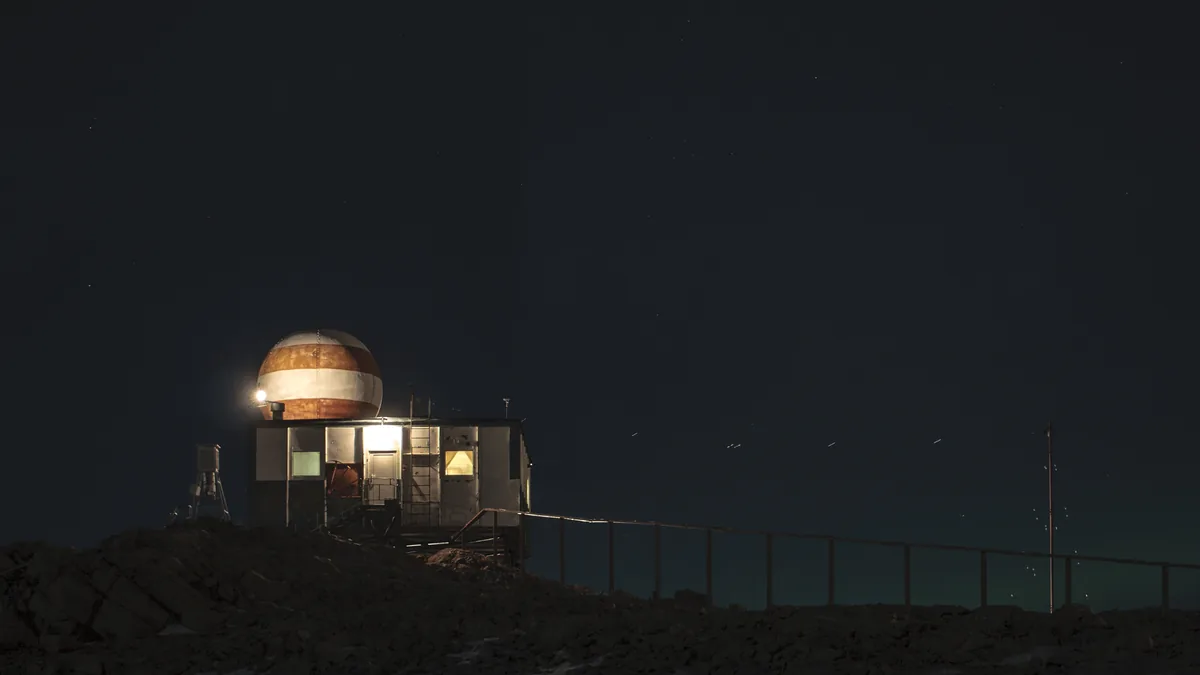
The field season, coordinated by the Carl Sagan Center at the SETI Institute, runs from Jan. through the end of Feb. 2026. The Lake Untersee team led by Andersen includes graduate students and scientists representing the United States, Canada, and Austria.
Cyanobacterial mats beneath Lake Untersee’s perennial ice cover have grown undisturbed for billions of years, offering insight into the planet’s earliest biosphere. Sediments at the lake date back 3.45 billion years, and the microbial structures preserved there help inform the search for life on Mars and icy moons. The lake resembles Earth‘s earliest biosphere, with microbial life forming fabrics and structures preserved in those ancient sediments.
Andersen made Starlink setup, a satellite internet link, a high priority for safety check-ins with Ultima at least twice each day and for weather updates and messages. The satellite link would provide a robust connection back to the rest of the world from the remote camp. Maitri, managed by India’s polar and ocean research institute, and Novolazarevskaya, run by the Russian Antarctic Expedition, are the closest stations to the lake.
Lake Untersee experiences winds and blinding snow reaching 110 mph and four months of darkness accompanied by cracking ice and howling winds. The surrounding mountains block continental ice, and the Anuchin Glacier descends gently from the north to the lake’s edge. The lake lies within the mountains of Queen Maud Land, an isolated oasis where the team established its research camp.
The Novo Airbase sits at approximately 70.823 degrees S, 11.641 degrees E and is run by Ultima Antarctic Logistics out of Cape Town. Planes landing there usually come in from the west against prevailing winds blowing from the east, and low clouds, flat light, and windy conditions are common there. The runway is designated QAO/AT17.
The SETI Institute’s January field season preview included a note from Andersen: “Stay tuned – once we are on the ice, I will send more updates!” The institute said it planned to post updates from the team throughout the January-to-February deployment in Antarctica.




Join the discussion