Key facts
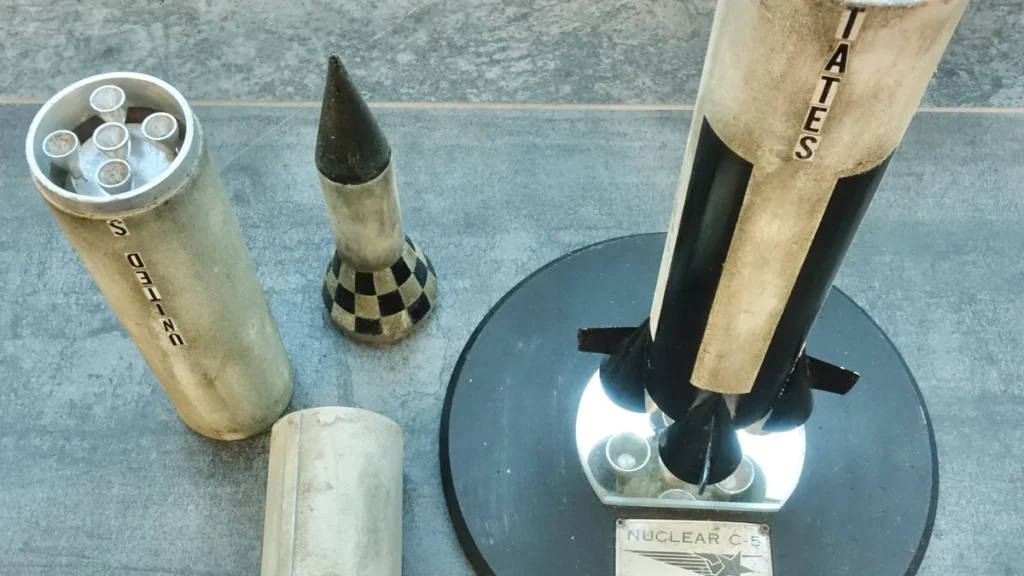
- Project CERES includes a lander and an orbiter that would launch in January 2037 and reach Ceres a little more than one year later using nuclear thermal propulsion for a direct flight to the dwarf planet.
- Worden says nuclear thermal rockets run at two to three times chemical efficiency and reach Ceres from Earth a little over a year after launch.
- Worden states that refueling at Ceres cuts launch mass by 60 percent per round trip, and he adds that these savings allow the node to cover its cost within its first fleet's operational lifetime.
- Worden says the Pathfinder's samples can address whether Ceres's water hosted anything beyond mere chemistry.
Astrophysicist Pete Worden, Chairman of the Breakthrough Prize Foundation and Laureate Professor at the University of Arizona in Tucson, and aerospace engineer Fred Kennedy, CEO of Dark Fission and former head of the Pentagon’s Space Development Agency, proposed in 2026 an interplanetary transport node at Ceres to refuel spacecraft bound for the outer solar system.
The two men co-authored a 2026 paper submitted to the Journal of the British Interplanetary Society describing the concept. It contrasts the proposal with sixty years of one-off deep-space missions that carry all fuel from Earth and leave nothing behind. Worden said, “We propose replacing this plodding, inefficient approach with a scalable transportation network, and putting its hub at the dwarf planet Ceres.”
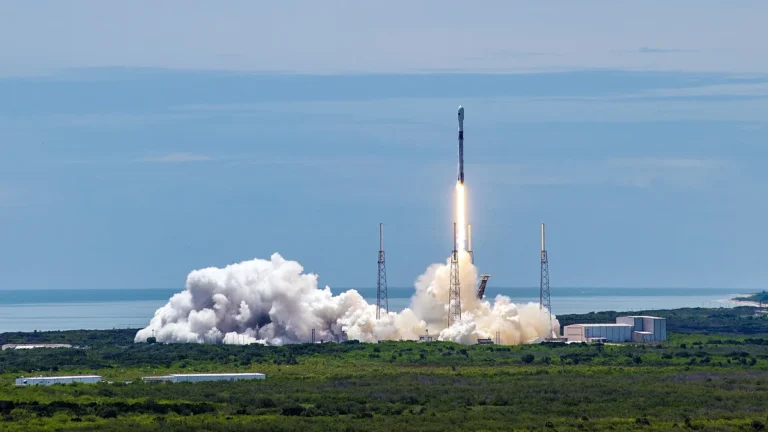
The spacecraft would launch in January 2037 and reach Ceres a little more than one year later using nuclear thermal propulsion for a direct flight. The authors describe the first flight as designed to survey Ceres, land, extract water, and return samples within five years, combining a Dawn-class orbiter with a lander, sample capsule, and new engine.
Nuclear thermal propulsion replaces a rocket’s combustion chamber with a small fission reactor that pumps liquid hydrogen through a hot core, heats it to around 2,700 degrees Kelvin, and expands it through a conventional nozzle, according to Kennedy. Kennedy notes that reactor technology is sixty years old and was ground-tested under NASA’s Rover and NERVA programs, which ran more than twenty reactors and engines for full-power operation in Nevada from 1959 to 1972. Those tests included hour-long full-power runs and many restarts. Kennedy describes the technology as mature and ready to deploy because the underlying reactor physics is six decades old and validated by ground tests.
Worden says nuclear thermal rockets run at two to three times chemical efficiency and reach Ceres from Earth a little over a year after launch. He frames the technology as a replacement for the sixty-year pattern of expendable deep-space missions. The proposal envisions a scalable transportation network centered at Ceres, allowing spacecraft to refuel at the dwarf planet rather than carrying all propellant from Earth for each trip.
It would then conduct about twenty months of extended survey before departing in June 2040 and returning samples to Earth in May 2041. Following sample return, the spacecraft would brake into cislunar orbit and remain available for its next sortie, using a return capsule resembling the one from NASA’s 2004 Stardust mission to Comet Wild 2.
Project CERES pairs nuclear thermal propulsion with local manufacture of water, hydrogen, oxygen, and ammonia at Ceres. Worden says these products can be burned directly as steam, split into hydrogen and oxygen, or combined with local nitrogen into ammonia.
Worden says refueling at Ceres cuts launch mass by 60 percent per round trip, and he adds that these savings allow the node to cover its cost within its first fleet’s operational lifetime. He argues that launching from Ceres is cheaper than from Earth or the Moon because the dwarf planet is farther out and has only a fraction of Earth’s gravity, reducing required initial thrust.
Worden says Ceres offers water, nitrogen, and carbon, while the Moon has essentially none of the latter two. NASA’s Dawn mission detected water ice making up about ten percent of the mass within the upper meter of Ceres’ regolith at mid-to-high latitudes in 2015. Dawn also found ammoniated clay minerals, carbonates, organic compounds, and sodium carbonate brine deposits in Occator crater. Worden says these deposits supply raw materials for propellants such as water, hydrogen, and ammonia and for life support such as water, oxygen, and nitrogen.
NASA’s Dawn spacecraft explored Ceres from 2015 to 2018, documenting bright, highly reflective salt deposits on the surface linked to past water ice activity and cryovolcanism. The mission also detected subsurface water ice along with ammonia, nitrogen, and hydrogen during its orbital phase.
Worden says Ceres infrastructure would be built in phases starting with surface extraction and an orbital tank farm. The next phase would add electrolysis and hydrogen liquefaction powered by the node’s own plant, and the final phase would add fabrication. He describes the infrastructure as something that stays at Ceres and accumulates over time, eventually enabling fabrication on site.
Worden says Ceres has an ice-rich crust, minerals formed in liquid water, and Occator crater bright deposits of sodium carbonate salts from brines reaching the surface within the last few million years. The Dawn team reads those deposits as evidence of a deep briny liquid reservoir persisting beneath the frozen crust. Heat from radioactive decay early in Ceres’ history created a global subsurface ocean that later froze, leaving hydrated clays, carbonates, and ammoniated minerals in an ice-rich crust.
Worden says the Pathfinder’s samples can address whether Ceres’s water hosted anything beyond mere chemistry. Ceres has long interested astrobiologists because its chemistry might include conditions for ancient microbial life. Dawn’s 2015 findings showed subsurface water ice, ammonia, nitrogen, and hydrogen.
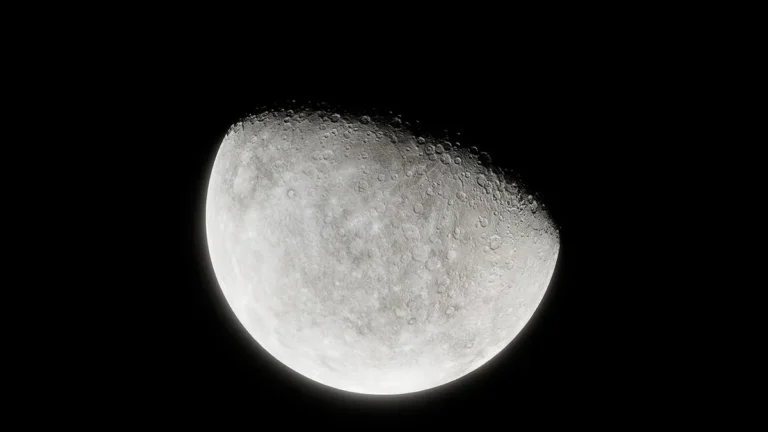
Ceres ranks as the largest object in the main asteroid belt, and its share of the belt’s total mass is between 25 percent and 30 percent. Its layered interior resembles Pluto and other rocky worlds.
Caltech researchers say salt deposits on Ceres might be concealed by the water ice they are mixed with, and they estimate the salt total could run between 30 percent and 50 percent above earlier hypotheses. The Caltech team used Dawn data and computer models to study how ice and salt evolved on Ceres’ surface, focusing on sublimation and whether Dawn accurately measured ice and salt amounts.
The Caltech study found that landslides, also called mass wasting, expose more surface ice on Ceres, and that ice later sublimates to leave the salty bright spots Dawn observed. The researchers say some water ice deposits Dawn detected may have been recently uncovered by landslides, and the resulting sublimation feedback explains how salt concentrates at the surface over time.
The study by V. V. Kachmar et al., titled Ceres’ Salty Ices: Sublimation-Driven Evolution From Water Ice Exposures to Na-Carbonate Deposits, was published in the Journal of Geophysical Research: Planets in 2026.
Join the discussion