Key facts
- The agreement covers Qualcomm Dragonwing QRU100 and QDU100 platforms plus commercial-grade Layer 1 software for Massive MIMO radio and baseband deployment at scale.
- The network will use Massive MIMO radio units with a 64 transmit and 64 receive path configuration called 64T64R to improve coverage, capacity, and spectral efficiency.
- SpaceX plans to start the nationwide U.S. rollout in 2027 and deploy tens of thousands of base station sites during the multi-year agreement.
- Financial terms of the SpaceX-Qualcomm agreement for Starlink Mobile's terrestrial network technology were not released, UPI reported on Nov. 4, 2026.
SpaceX selected Qualcomm Technologies to supply Dragonwing Cellular Infrastructure platforms for Starlink Mobile’s nationwide terrestrial 5G network under a multi-year agreement announced in San Diego on November 4, 2026. The announcement puts Qualcomm’s Dragonwing platforms at the center of Starlink’s plan to build terrestrial base stations as SpaceX takes on established U.S. wireless carriers.
The agreement covers Qualcomm Dragonwing QRU100 and QDU100 platforms plus commercial-grade Layer 1 software, with Massive MIMO radios and baseband units deployed at scale. The network will use Massive MIMO radio units in a 64T64R configuration with 64 transmit and 64 receive paths to boost coverage, capacity and spectral efficiency.
Starlink Mobile aims to blend satellite and terrestrial infrastructure to offer nationwide mobile coverage and compete with Verizon, AT&T and T-Mobile, positioning itself as a potential fourth major U.S. carrier. SpaceX plans to start the nationwide rollout in 2027 and roll out tens of thousands of sites during the multi-year agreement. UPI provides this context for why SpaceX is adding a ground network next to its satellite constellation. ServeTheHome notes that building out that many locations takes time, since power needs at each site add up quickly.
Michael Nicolls said Starlink is building the network so calls do not drop at home or while traveling. Qualcomm Technologies executive vice president and general manager Durga Malladi said Dragonwing platforms pair advanced Massive MIMO and purpose-built processing with commercial-grade Layer 1 software in support of an exceptional nationwide network for Starlink.
The collaboration is a commercial step toward a broader SpaceX and Qualcomm vision for AI-native 6G infrastructure, though the current agreement centers on terrestrial 5G instead of commercial 6G. Both companies describe the current 5G buildout as an opportunity to lay foundations for AI-native 6G in the years ahead.
UPI reported on Nov. 4, 2026 that the financial terms of the agreement were not released. Starlink’s share was 36 percent of SpaceX’s third-quarter revenue, while CNBC attributed 85 percent of operating profit to Starlink, according to UPI. The outlet provides the figures as background on Starlink’s importance to SpaceX, and reports that the mobile service has struggled with direct-to-device coverage because its satellite service cannot match the data coverage competitors offer.

Last month, SpaceX announced a deal to buy a nationwide portfolio of spectrum in the 800 MHz band, UPI reported on Nov. 4, 2026. Earlier this month, the Washington Post reported that SpaceX was in talks to acquire Boost Mobile from EchoStar, according to UPI.
SpaceX went public in June in the largest IPO on record, and the company is worth almost $2 trillion, according to CNBC as cited by UPI. UPI lists the spectrum purchase among recent SpaceX moves alongside the Boost Mobile talks and the June IPO, and uses the IPO and valuation as background on the company’s size and financial profile.
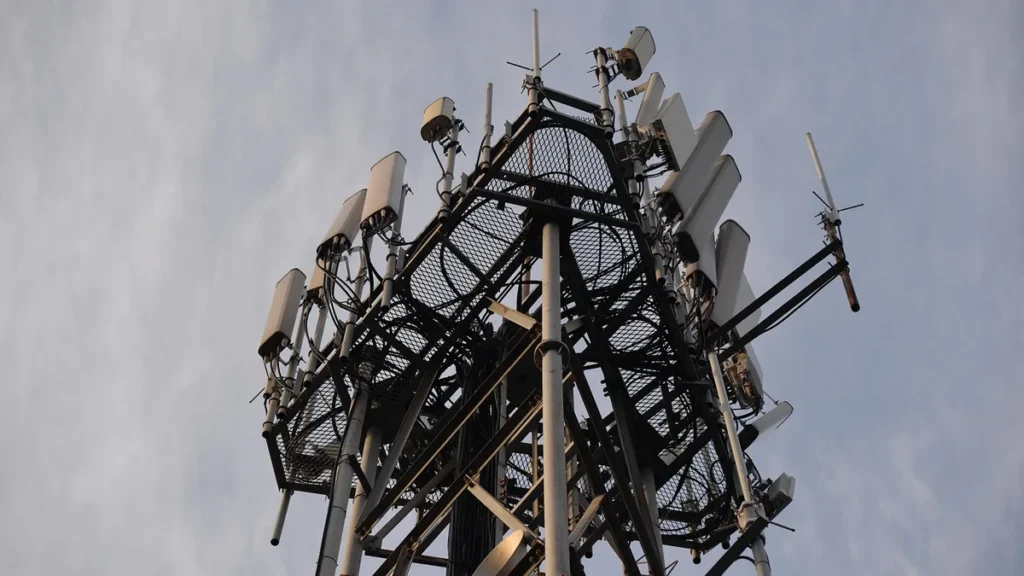
UPI says Qualcomm’s reputation rests mainly on device modems and radios rather than base stations, and that the company has targeted carriers and infrastructure companies since entering the 5G infrastructure market in 2020. The outlet also says SpaceX ranks among Qualcomm’s highest-profile 5G infrastructure customers, alongside earlier infrastructure deals with Verizon and Dish, and with Europe’s Vodafone. The outlet also describes the typical tower-leasing model: carriers usually rent space from firms such as American Tower and Crown Castle, and those sites often host multiple carriers at once.
Qualcomm (QCOM) shares rose 1.36 percent to $166.67 after an early morning decline, rebounding after the SpaceX-Starlink infrastructure announcement, Blockonomi reported on Nov. 4, 2026. ServeTheHome reported on Nov. 4, 2026 that the Dragonwing platforms have seen deployment in Asia but trail in U.S. adoption.
Qualcomm says the Dragonwing platforms improve performance per watt for radio and distributed-unit processing, aiding deployment economics. Blockonomi reported on Nov. 4, 2026 that the platforms will serve as building blocks for a planned multi-band network spanning different frequency bands and multiple rollout phases, with a flexible design built to expand beyond the first terrestrial 5G phase.



Join the discussion