Key facts
- Maia rockets will use the Guiana Space Centre's former Soyuz launch site, which MaiaSpace is modifying for its partially reusable vehicle after signing an occupation agreement in February 2026.
- In July 2026, MaiaSpace told European Spaceflight it had given up a suborbital test flight of the Maia rocket and would move directly to an orbital launch attempt during the second half of 2027.
- Eric Berger's rule says a rocket aiming for a first flight in the fourth quarter of a year, with over six months' notice, will invariably slip to the next year, which could push Maia's debut into 2028.
- MaiaSpace CEO Yohann Leroy said the first mission will not reach orbit and that the company will not attempt to recover the initial stage on that flight.
MaiaSpace, an ArianeGroup subsidiary, has shipped full-scale mechanical models of its Maia rocket’s first and second stages to the Guiana Space Centre in French Guiana, announcing the delivery on 25 November 2026 ahead of combined testing in the first half of 2027.
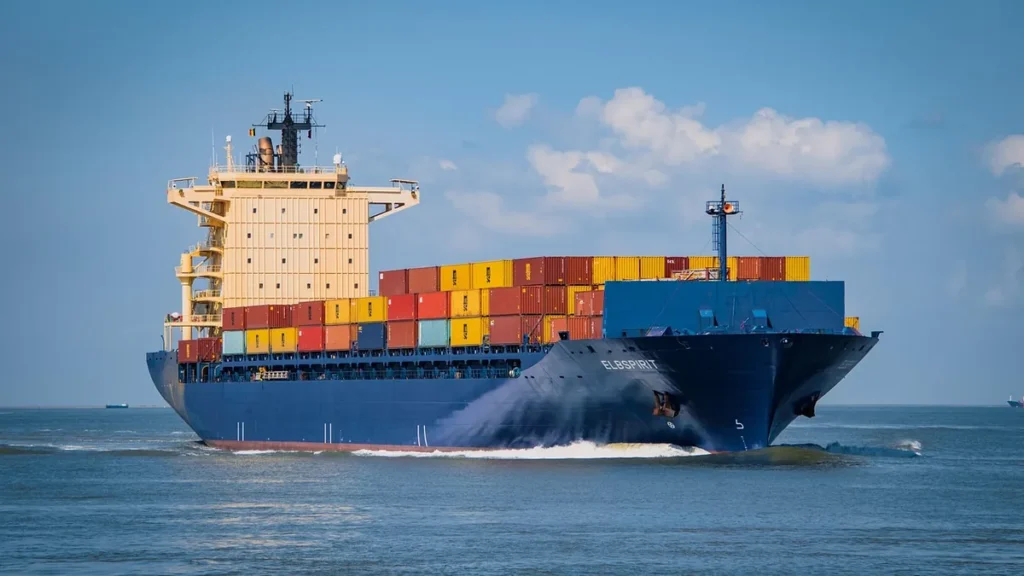
The two stages left MaiaSpace’s facility in Vernon on 19 November 2026, traveled to the port of Le Havre, and were loaded aboard the transport ship Canopée on 22 November 2026 for a 10-day sea voyage to Pariacabo in Kourou. The models will rehearse key operations performed during every Maia launch campaign and validate ground support systems including electrical and fluid interfaces, the company said.
MaiaSpace plans to start combined testing at the Guiana Space Centre during the first half of 2027, beginning with horizontal integration of the two stages before mounting them on a transporter-erector, a vehicle that moves and raises rockets vertically, and moving them to the launch pad. The rockets will use the centre’s former Soyuz launch site, which MaiaSpace is modifying for its partially reusable vehicle after signing an occupation agreement in February 2026.
In July 2026, MaiaSpace told European Spaceflight it had given up a suborbital test flight of the Maia rocket and would move directly to an orbital launch attempt during the second half of 2027. The company was created in April 2022 and set a goal to bring its launcher to the launch pad less than five years after creation, meaning before April 2027.
A timing rule cited by European Spaceflight holds that a rocket aiming for a first flight in the fourth quarter of a year, with more than six months’ notice, will invariably slip to the next year, which could push Maia’s debut into 2028. The source presents this as a reason the end-of-2027 target may not be met.
MaiaSpace CEO Yohann Leroy said the first mission will not reach orbit and that the company will not attempt to recover the initial stage on that flight. “Our first launch will not be an orbital launch, and we will not try and recover the first stage.”
He described a plan of seven to eight flights to progressively demonstrate technologies before a first-stage recovery attempt on flight eight or nine in the 2028 to 2029 period, calling it part of an agile, iterative development approach.
Leroy said MaiaSpace has signed two launch contracts, including a multi-launch agreement with Eutelsat OneWeb won at the start of 2026, and plans to sign additional commercial contracts during 2026. OneWeb will account for more than 50% of launches during the first three years of Maia launcher operations, though Eutelsat did not specify how many launches the agreement involves. He said the company does not want to depend on a single customer and sees the Eutelsat contract as a vote of confidence in its commercial strategy.
MaiaSpace aims to halve the usual development schedule, reducing the typical 10-year span from company creation to first flight to five years, and to cut development costs by a factor of three versus a traditional approach. The company is betting on the Prometheus engine, which had been in development for several years, rather than developing a new engine from scratch. MaiaSpace also plans to develop the Maia vehicle in half the development time of Ariane 6 while accepting greater risk.
Leroy said going faster means not starting from scratch and cutting some corners, and that returning to a traditional approach would shift timelines and raise costs significantly. MaiaSpace aims to begin flying in 2026 to 2027 and expects profitability around 2030, though the initial two to three years of operations are likely to be loss-making.
European institutional satellites need to be launched at a price that is reasonable, Leroy said, arguing that European preference for European launch services was once a taboo question and that institutional satellites are launched with national launchers in the U.S. and elsewhere. Leroy said a profitable launch service operator needs both institutional and commercial customers.
Leroy said the European institutional market is between seven and 10 times smaller than the U.S. institutional market, linking this size difference to the need for European operators to also serve commercial customers. U.K. launcher Orbex entered administration in February 2026 after being unable to raise funds, illustrating the difficult environment for new European launch companies that MaiaSpace hopes to buck. He said MaiaSpace hopes to not only launch but also showcase a speed not often seen from European launch players.


Join the discussion