
Key facts
- The MEGATRON project published four studies in The Open Journal of Astrophysics in 2026, presenting its first substantial body of results connecting the first stars to present-day galaxies.
- Researchers led by the University of Bath, with collaborators at the University of Chicago and the Institut d'Astrophysique de Paris, run the MEGATRON simulation suite.
- Dr. Martin Rey of the University of Bath Department of Physics is a lead contributor to MEGATRON and says the project links JWST views of infant galaxies with stellar archaeology in the Milky Way neighborhood.
- The simulations track supernova explosions that disperse newly forged elements, including carbon, oxygen, and iron, into surrounding gas and later stellar generations.
Researchers led by the University of Bath, working with partners at the University of Chicago and the Institut d’Astrophysique de Paris, published four MEGATRON studies in The Open Journal of Astrophysics in 2026 that connect the universe’s first stars to iron patterns still visible in the smallest dwarf galaxies. The studies mark the collaboration’s initial major publication set, combining cosmological simulations with radiation, chemistry and galaxy formation models, with more papers expected as the project continues.
The MEGATRON simulation suite follows a young galaxy as it evolves over billions of years toward a mass comparable to the Milky Way. Placing early-universe processes and later galaxy development inside one physical framework lets researchers examine how the first stars shaped the systems we observe across cosmic time.
The simulations begin with pristine gas containing no heavy elements, reproducing conditions shortly after the Big Bang. The models then follow the birth of the first stars, their radiation, supernova explosions, and the dispersal of newly forged elements into later generations of stars and galaxies, building up chemical complexity over time.
Theories place the formation of the first generation of stars about 100 to 400 million years after the Big Bang. Population III stars formed from primordial gas that had not yet been enriched with heavier elements. Even Hubble and JWST cannot resolve these ancient stars when observing the early universe and its infant galaxies, leaving their properties to be inferred indirectly.
MEGATRON research indicates that Population III stars formed within small dark-matter halos (invisible structures detected by their gravity) before early stellar radiation altered conditions for further primordial star formation. The research links early Cosmic Dawn events to later structures observable in the present-day universe, showing how the first stars set the stage for later galaxy assembly.
MEGATRON tracks supernova explosions that disperse newly forged elements, including carbon, oxygen, and iron, into surrounding gas and later stellar generations. Rey says stars forged carbon, oxygen, iron and other elements enabling life, making knowledge of the first stars essential to understanding elemental origins and the chemistry of life.
Fiery supernovae from Population III stars injected newly created heavy elements into the interstellar medium and the gas surrounding galaxies, where they joined later generations of stars and galaxies. The simulations track enrichment from pristine gas through Population III stars to later stellar populations over billions of years of cosmic evolution.
A 2026 MEGATRON paper titled “MEGATRON: how the first stars can create an iron metallicity plateau in the smallest dwarf galaxies” proposes that Population III explosions created iron patterns still visible in today’s dwarf galaxies. The study appears in volume 9 of The Open Journal of Astrophysics, with DOI 10.33232/001c.169605, as one of the four initial studies focused on iron patterns in small galaxies.
MEGATRON research examines an iron-metallicity feature in the smallest dwarf galaxies to test whether Population III enrichment signatures survive in later systems. One published study focuses on this plateau to determine if chemical signatures from the first stars persist in small galaxies observed now, linking ancient explosions to present-day chemical patterns.
Ancient stars in and around the Milky Way act as a fossil record preserving chemical fingerprints of earlier stellar generations. These stars emerged from material altered by earlier stars, so their chemistry preserves evidence of ancient enrichment that researchers can compare with MEGATRON predictions to test theoretical models of early star formation.
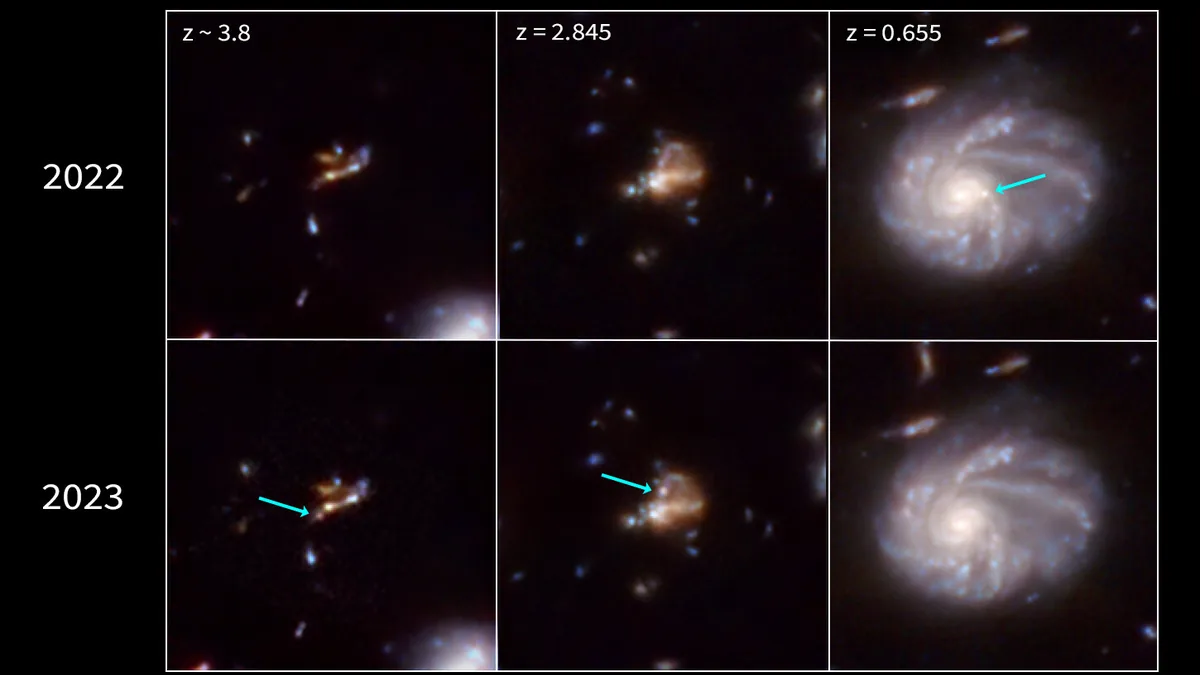
MEGATRON connects JWST observations of young galaxies with chemical signatures in ancient stars, allowing tests of competing first-star models. JWST captures distant galaxies from billions of years in the past, while ancient stars supply chemical evidence surviving from earlier phases of galactic evolution, creating two independent windows on the same early history.
Dr. Martin Rey of the University of Bath Department of Physics is a lead contributor to MEGATRON. Rey says the project links JWST views of infant galaxies with stellar archaeology in the Milky Way neighborhood, with JWST offering a direct view of the infant cosmos and stellar archaeology studying relics closer to home.
Dr. Martin Rey offered a direct assessment of the stellar origin of key elements. “The elements that make our world and life possible – carbon, oxygen, iron and many others – were forged by stars,” Rey says.
Rey explains that stellar archaeology studies relics in our galactic neighborhood. The bridge allows testing of competing first-star models. “MEGATRON provides a physical bridge between the two,” he says, joining observations of the infant universe with the chemical record preserved in nearby stars.
MEGATRON simulates radiation moving through gas while tracking chemical changes at high resolution using a non-equilibrium chemistry network (a model that tracks chemical reactions out of balance). This allows examination of Population III star formation environments and tracking of their remnants into later cosmic history, giving researchers a detailed view of the gas around the first stars.
Simpler models may underestimate the effect of stellar radiation and detailed chemical changes on gas around galaxies. MEGATRON’s high resolution captures gas structures that simpler approaches miss, improving predictions for current and future observations by fully representing physical processes.
The project explores how the first stars and galaxies illuminated the dark cosmos and enriched it with chemical elements. MEGATRON began in 2023 and runs through 2030, spanning a period that includes the publication of initial results and the development of next-generation simulations.
The research team includes institutions beyond Bath, such as the Kavli Institute for Cosmological Physics, Lund Observatory, Cambridge Kavli Institute for Cosmology, Cavendish Laboratory, KIPAC, Sterrenkundig Observatorium, Laboratoire d’Astrophysique, and EPFL. These institutions joined the Bath-led team in presenting four papers in The Open Journal of Astrophysics, broadening the collaboration’s expertise.
MEGATRON received 40 million processor hours on the UK’s national supercomputers, which equals the output of 5 million laptops running together for one year. The resources enable higher-resolution simulations with more complete physical models for direct comparison with JWST observations and ancient star chemical records, supporting the project’s detailed modeling goals.
Rey and colleagues at Bath are developing the next generation of MEGATRON simulations. Researchers aim to connect theoretical models with new observational data gathered by JWST and large stellar surveys, extending the project’s reach as new measurements become available.
As JWST continues collecting observations of distant galaxies, large stellar surveys provide measurements of old stars to investigate galaxy chemical history. Researchers combine MEGATRON simulations with JWST observations and chemical measurements from ancient stars to study how the universe shifted from nearly pristine gas to a cosmos filled with more complex stars and galaxies.
MEGATRON offers a physical bridge between JWST’s direct view of infant galaxies and the chemical fossil record in ancient stars. This bridge lets researchers test competing models of the first stars and trace how Population III explosions seeded the iron patterns seen in dwarf galaxies.

Join the discussion