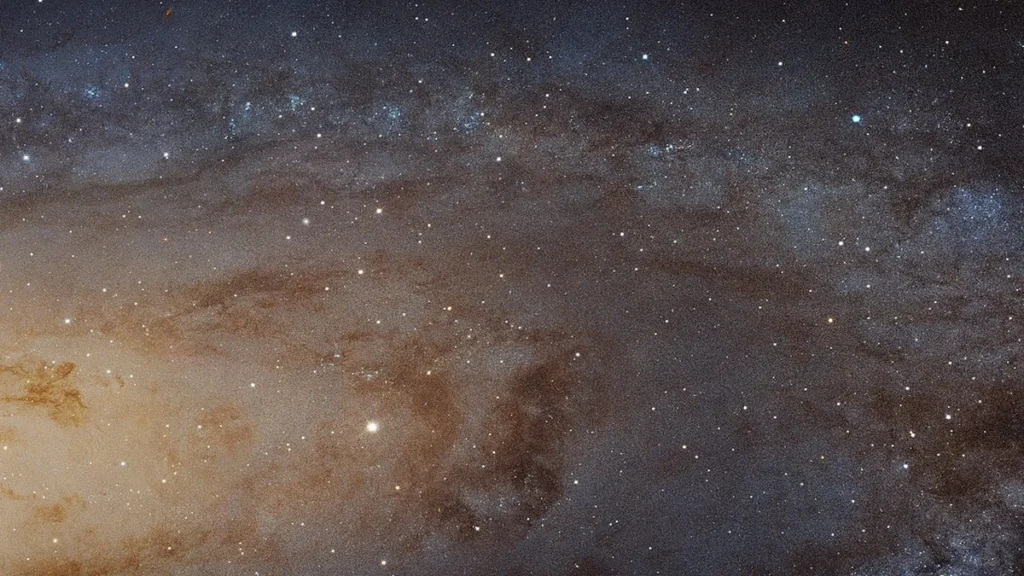
Columbia University researcher Viraj Karambelkar and colleagues reported in a Nature study on Nov. 18, 2026, the first observed case of a star spiraling inside a shared envelope around a giant companion in the Andromeda galaxy.
The system is formally known as AT 2025abao and nicknamed Bao. The newly single object may be rejuvenated by the collision. Sci.News describes Bao as a newly single star formed by a merger in Andromeda.
Models estimate Big Bao at seven solar masses. The larger star measures 350 solar radii. It shines with 18,000 times solar brightness.
Little Bao is about 0.7 solar masses. These figures come from modeling of the system described in the Nature paper. The merger took just seven orbits after contact. That span was roughly seven years.
Smaller-star mergers usually require thousands of orbits. The report notes that contrast as part of the merger details.
Roughly 0.1 to 0.2 solar masses of material were blown off during the AT 2025abao eruption. Sci.News includes the ejected mass as part of the eruption details.
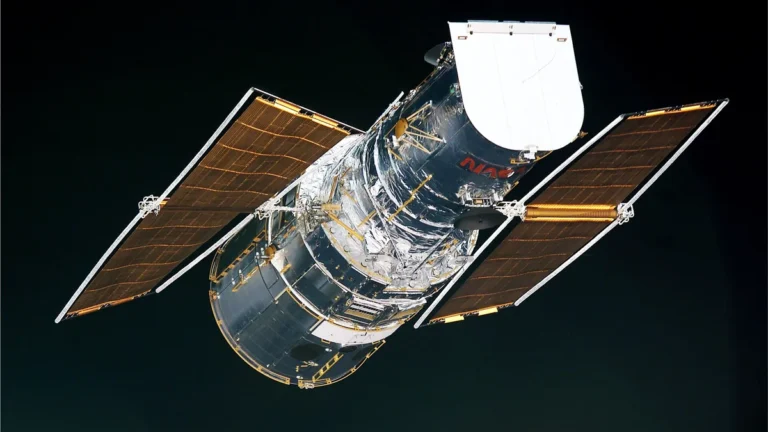
Researchers first detected AT 2025abao in 2023 using NASA’s NEOWISE data. Karambelkar said the group spotted something odd in 2023 and kept watching the system. The outburst peaked in October 2025. Webb observed the system 47 days later, the earliest follow-up of its kind.
Webb’s data characterized the system in the pre-merger, merger and post-merger phases. The shared envelope is the common-envelope phase. In it, a smaller star spirals inside a giant companion. Karambelkar said, “It lasts for a few years, maybe a few decades,” describing how long the stage can run.
This is the first direct observation of common-envelope evolution. No one had ever caught the phase in the act before this observation. Dr. Viraj Karambelkar said, “Stellar mergers are very, very difficult to observe in real time because they are hard to predict,”



Join the discussion