Key facts
- In 2026, The Planetary Society gave Alarcon's team a $50,080 STEP Grant to make AsteroiDB a publicly accessible service through an open, international competition.
- Miquel Serra-Ricart of Light Bridges and IAC and Javier Licandro of IAC serve as co-investigators on the AsteroiDB team.
- Studying how an asteroid's brightness changes with time and wavelength lets scientists estimate its size, density, shape, rotation rate, and structure.
- The Minor Planet Center maintains an online database of asteroid sky positions that observers worldwide contribute to, letting scientists determine orbits and possible Earth collision courses.
In 2026, The Planetary Society awarded a $50,080 STEP Grant to Miguel R. Alarcon’s team through an open international competition, with the goal of turning AsteroiDB into a publicly accessible asteroid brightness database.
As director of scientific operations at Light Bridges, Miguel R. Alarcon serves as principal investigator for AsteroiDB. He also holds affiliations with Instituto de Astrofísica de Canarias and the Observatorio Astronómico del Teide in Guimar, Spain. Miquel Serra-Ricart of Light Bridges and IAC and Javier Licandro of IAC serve as co-investigators on the team. Alarcon leads astronomers building a public database for asteroid brightness measurements that can reveal Solar System history and Earth impact danger.
The database aims to act as a central hub where observers everywhere can combine their asteroid brightness measurements. Brightness measurements offer a powerful way to explore an asteroid’s chemical makeup and how easy it might be to deflect.
Studying how an asteroid’s brightness changes with time and wavelength lets scientists estimate its size, density, shape, rotation rate, and structure. These characteristics can indicate how much danger an asteroid presents to Earth and what the Solar System was like billions of years ago. Asteroids are leftover building blocks from when planets formed around the Sun, so their details hint at the early Solar System.
The Minor Planet Center maintains an online database of asteroid sky positions that observers worldwide contribute to, letting scientists determine orbits and possible Earth collision courses. This existing database collects where asteroids are in the sky rather than brightness observations. No standardized, public-facing clearinghouse for asteroid brightness observations currently exists.
AsteroiDB already operates as a pilot program holding over 11 million measurements and covering over 400,000 asteroids. The STEP Grant will fund expansion of AsteroiDB into a contribution-ready service with infrastructure built to support a broader base of users. This expansion builds on the pilot’s existing collection of brightness observations.
The service will bring together an expert panel to decide on standard formats for community brightness measurements. Alarcon says the network creates many telescopes and much data, which makes finding a common sharing format important. This panel work addresses the challenge of setting a measurement standard for the distributed network of observers.
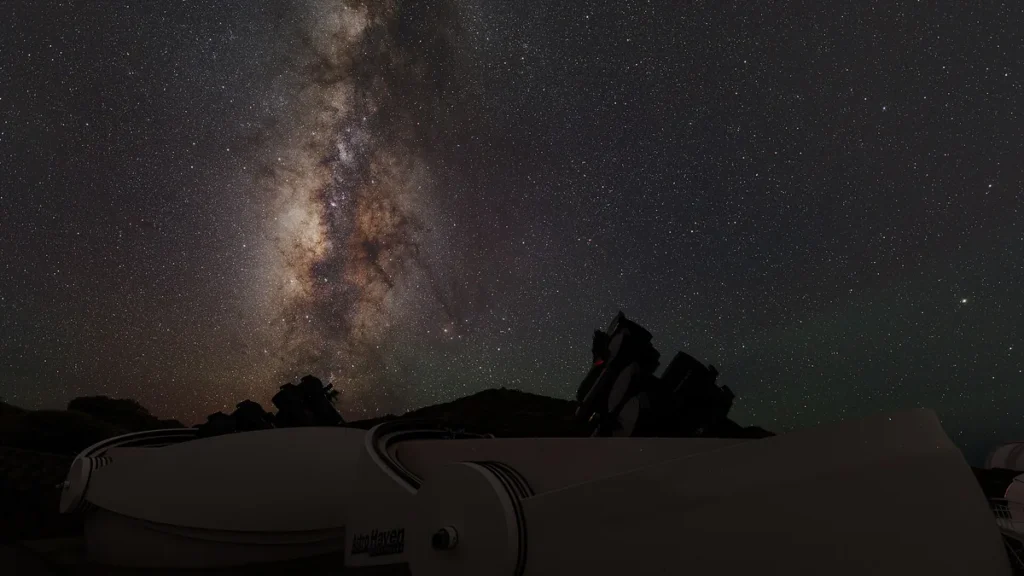
Light Bridges operates Teide Observatory in the Canary Islands and will offer observing time on three research-grade telescopes so observers can collect new measurements and test sharing them with AsteroiDB. Amateur and professional observers can apply for the observing time. Members of The Planetary Society will be notified when proposals are invited.
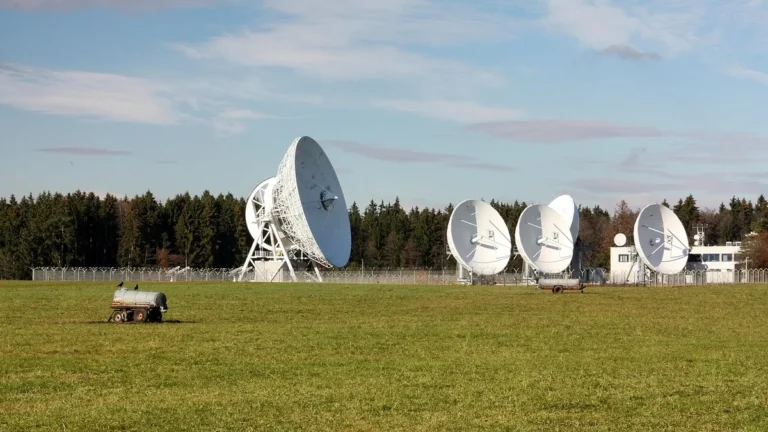
Hundreds of researchers and amateur astronomers worldwide use small telescopes for asteroid studies and contribute to data collected by larger observatories. A common contact point is especially useful because small Solar System bodies are typically observed with only a matter of weeks available for follow-up after discovery. A single large telescope can observe only particular targets at particular times, so a global network of observers has stepped in to study asteroids instead.
Alarcon says the goal is to make asteroid information public rather than relying on email, WhatsApp, or informal messages that ask whether someone has more data. “The idea is being able to share all this information in a public way,” Alarcon said.
Recipients of the 2026 STEP Grant are developing tools including a replicable polarimeter, a public photometry database, and an occultation prediction platform scaled for the Rubin era (the era of the Rubin survey). AsteroiDB is one of the public photometry database efforts supported by these 2026 grants. The grants fund multiple tools for characterizing small bodies in the Solar System.

Join the discussion