Key facts
- These outputs are then used to infer gas surface density, velocity dispersion, radial velocity, and the star formation rate.
- The model finds a low CO-to-H2 conversion factor that changes with radius in the range αCO=0.5–1.5 M⊙pc−2/(Kkms−1), near the standard benchmark for this class of system.
- On the small spatial scales studied here, carbon monoxide (3-2) does not reliably trace the gas mass surface density.
- Molecules such as HCO+(3-2), which have a higher critical density, better represent the gas surface density on these small scales than carbon monoxide (3-2).
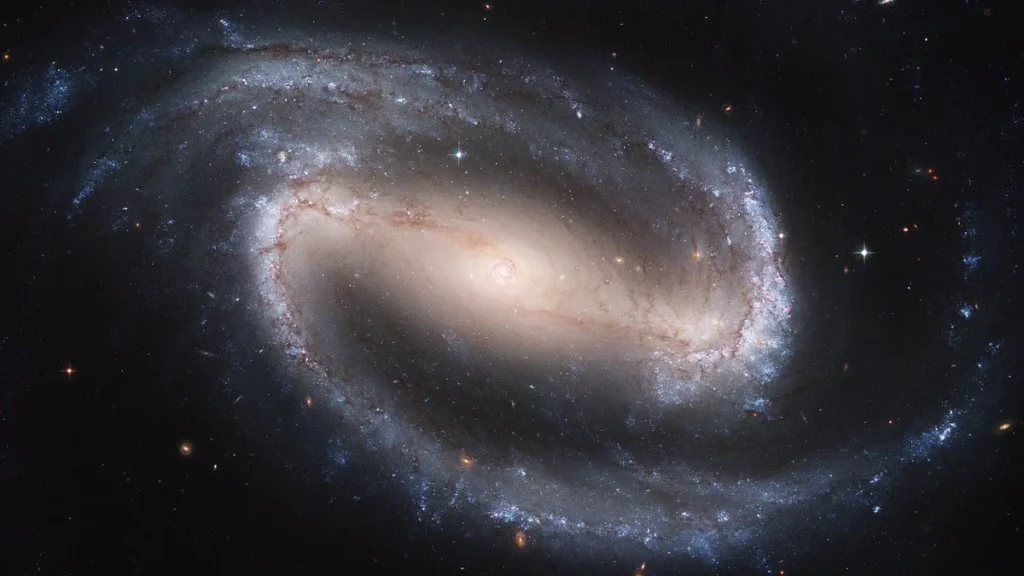
Researchers introduced an analytical model of a turbulent, clumpy, star-forming disk in the Circinus Galaxy on Nov. 25, 2026. The study centers on the inner 30 parsecs of the galaxy, where spatially resolved data across six molecular lines and three dust continuum bands were matched by the model. The observations span 250 to 700 GHz. Astrobiology Web reported the work.
The research team spans four institutions across Europe and South America. B. Vollmer and D. Iung, the first two authors, are based at the Observatoire astronomique de Strasbourg in France, while K.R.W. Tristram works at ESO in Santiago, Chile, R.I. Davies at MPE in Garching, Germany, and W.M. Goesaert at Leiden Observatory in the Netherlands. The group includes researchers from France, Chile, Germany, and the Netherlands.
The work appeared as a preprint on the arXiv server in November 2026 and has been accepted for publication by the journal A&A. The manuscript completed peer review. Version 1 of the manuscript was submitted on Nov. 20, 2026 at 10:23:03 UTC under the astrophysics of galaxies category (astro-ph.GA) and carries the arXiv identifier 2611.27419. The file is 887 KB.
The model takes the stellar disk as its input and is constrained by matching the observed line and continuum emission, with the fit returning key physical parameters. It derives the Toomre Q parameter, the mass accretion rate, metallicity, and the cosmic ray ionization rate. They then feed into the calculation of how dense, turbulent, and fast-moving the gas is, and how quickly stars form.
Those outputs are then used to infer gas surface density, velocity dispersion, radial velocity, and the star formation rate. The inferred quantities follow directly from the parameters the model extracts from the observations. This chain connects the measured emission to the physical state of the disk.
The model finds a low CO-to-H2 conversion factor, αCO, ranging from 0.5 to 1.5 M⊙pc−2/(Kkms−1) across radius. That value stays near the standard benchmark for this class of system as it varies. It determines how observers translate carbon monoxide brightness into molecular hydrogen mass.
On the small spatial scales studied in the Circinus Galaxy center, carbon monoxide (3-2) does not reliably trace the gas mass surface density. Molecules such as HCO+(3-2), which have a higher critical density, better represent the gas surface density on these scales. The authors identify the higher critical density as the reason HCO+(3-2) is the more faithful indicator. That makes HCO+(3-2) better suited to the compact conditions there.
The model therefore points to higher-critical-density tracers as more faithful indicators.
The model finds a steep relationship between gas surface density (ΣH2) and star formation rate surface density (Σ̇∗), matching the pattern seen in compact starburst systems. An averaged star formation rate of 10 M⊙kpc−2yr−1 across the disk generates enough power to drive an outflow. That level of activity places the region in the starburst regime.
Compared with ordinary large-scale galactic disks, this central region draws its energy mainly from gas flowing through the disk rather than from supernovae. In most large-scale galactic disks, supernovae supply the dominant energy input to the interstellar medium (ISM). The energy injection rate into the interstellar medium comes mainly from gas inflow rather than from the supernova rate.
The inflow rate drops toward smaller radii, and the authors offer two explanations: a wind removing gas, or a recent rise in the supply of gas arriving from larger scales. Either possibility would produce the observed radial trend. The researchers also propose that these changes may connect to the nested spiral structures previously detected in the Circinus Galaxy. That connection offers a possible dynamical origin for the varying mass supply.
The model targets predictions of HCN, HCO+, multiple carbon monoxide lines, and dust emission to support the interpretation of high-frequency observations of star formation in galaxies. Its goal is to give observers a way to read physical conditions out of high-frequency data from star-forming systems. HCN, HCO+, and multiple CO transitions join dust emission as the outputs the model is built to predict.


Join the discussion