Key facts
- Roscosmos launched the Progress 97 cargo spacecraft from the Baikonur Cosmodrome in Kazakhstan on Nov. 24, 2026, at 5:17 a.m. EST aboard a Soyuz rocket.
- Progress 97 will arrive at the station on Nov. 26 and dock with its Poisk module, according to Space.com.
- Cosmonauts Pyotr Dubrov, Anna Kikina and Sergey Teteryatnikov will unload Progress 97 through the Poisk module.
- Engine burns that raise the station's orbit work best from the PrK port, and Progress freighters regularly provide this service.
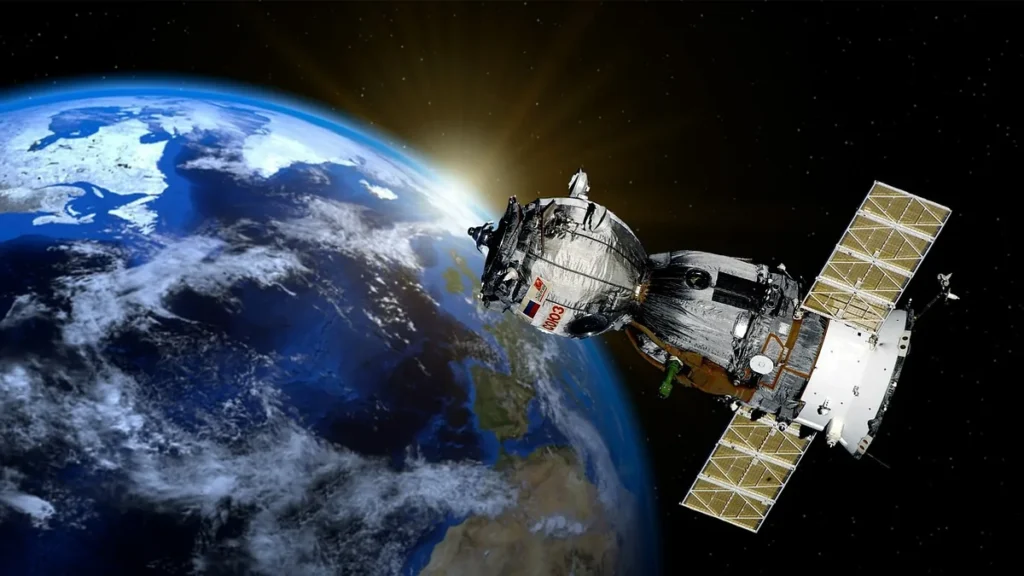
Roscosmos launched the Progress 97 cargo spacecraft from the Baikonur Cosmodrome in Kazakhstan on Nov. 24, 2026, at 5:17 a.m. EST aboard a Soyuz rocket. NASA says the craft is circling Earth and heading to deliver supplies to the Expedition 75 crew aboard the International Space Station. Space.com lists the liftoff as 1013 GMT and 3:17 p.m. Baikonur time.
NASA says the vehicle carries about three tons of food, fuel and supplies for the Expedition 75 crew, and the agency has scheduled an automatic docking with the station’s Rassvet module at 7:11 a.m. on Thanksgiving Day. It describes the linkup as automatic and targeted for the holiday.
Space.com places the arrival on Thursday, Nov. 26, and says the craft will dock with the Poisk module. Cosmonauts Pyotr Dubrov, Anna Kikina and Sergey Teteryatnikov will unload Progress 97 through the Poisk module, and the three are the cosmonauts currently living on the station.
Once unloading ends, Progress 97 is expected to shift to the aft port of the PrK transfer tunnel leading to Russia’s Zvezda service module, according to journalist and space historian Anatoly Zak, who operates RussianSpaceWeb.com. Engine burns that raise the station’s orbit work best from the PrK port, and Progress freighters regularly provide this orbit-boosting service. Space.com says the craft cannot unload through PrK because the transfer tunnel remains sealed by an air leak first documented in 2019 that is still ongoing.
Anatoly Zak calls Progress 97 “the first cargo mission scheduled to unload its cargo and perform orbit corrections of the ISS at different docking ports,” a characterization he published on RussianSpaceWeb.com. Russia calls the mission Progress MS-36.
Anatoly Zak says Progress 97 was set to launch in August, yet delays kept moving the liftoff chiefly because Baikonur’s Site 31 service platform collapsed in November 2025 and repairs lasted roughly three months. The delay pushed the flight into a series of later dates, and it lifted off on Nov. 24, 2026.
Space.com says the freighter is expected to remain docked to the ISS for roughly six months before being packed with trash and sent back to burn up in Earth’s atmosphere. Japan’s HTV-X and Northrop Grumman’s Cygnus are expendable like other craft, while SpaceX’s Dragon capsule remains the only reusable ISS cargo vehicle currently in operation, returning to Earth via parachute-aided ocean splashdowns.
Astronomy Magazine reported that before the launch, NASA had listed the Progress 97 flight only as no earlier than fall 2026 and had not given a date. The outlet reported on Nov. 23 that Roscosmos was targeting 5:13 a.m. EST on Nov. 24 to launch Progress MS-36 aboard a Soyuz-2.1b from the Baikonur Cosmodrome in Kazakhstan, according to Next Spaceflight.
NASA flight engineer Anil Menon and CSA flight engineer Joshua Kutryk maintained workout equipment inside the Tranquility module. Menon examined, wiped down, and lubricated the advanced resistive exercise device that mimics free weights on Earth. Kutryk examined the COLBERT treadmill, photographed its parts, and tested whether it works.
NASA says cosmonauts Pyotr Dubrov and Sergey Teteryatnikov took air samples to check for airborne bacteria and mold, then put them in an incubator to look for microbial growth. Flight engineer Anna Kikina split her shift between life support upkeep and biomedical research while studying how spaceflight affects the immune and nervous systems. She gathered and stored hair and saliva samples, took a timed memory test, and wore a heart activity monitor for a continuing Roscosmos investigation.
A SpaceX Falcon 9 rocket is targeted to launch Northrop Grumman’s Cygnus XL cargo spacecraft at Florida’s Cape Canaveral Space Force Station, with liftoff set for no earlier than 10:47 a.m. and the date set for Sunday, Nov. 29, as the year’s final cargo mission. NASA describes the flight as the final station delivery of the year, coming after Progress 97.
NASA flight engineers Jessica Watkins and Luke Delaney are due to grapple Cygnus XL with the station’s Canadarm2 robotic arm on Tuesday, Dec. 1 during their shift. After capture, ground controllers will remotely take over Canadarm2 and guide the spacecraft toward the Unity module’s Earth-facing port for berthing.
NASA says the spacecraft is loaded with roughly 11,000 pounds of science experiments and lab hardware meant to keep station operations running. The cargo includes research on cancer cell movement and engineered muscle tissues, plus DNA-inspired particles meant to promote human health both on Earth and in space.
NASA says Jessica Watkins and Luke Delaney of Expedition 75 used the EchoFinder-2 ultrasound device to scan each other’s organs during a space health study assisted by augmented reality and artificial intelligence, while doctors on the ground observed the procedure live. Before the Cygnus XL mission, the pair studied the upcoming cargo flight, rehearsed robotic capture methods, and met with flight controllers for a pre-mission conference.


Join the discussion