Key facts
- Near-Earth asteroid 1998 KY26 is about 36 feet (11 meters) across, travels around the sun between Earth and Mars, and spins once every five and a half minutes.
- 1998 KY26 shows peculiar accelerations that push it off a normal solar orbit, unlike the steady path predicted by Johannes Kepler's laws of planetary motion.
- The researchers calculate that even if water made up only one percent of 1998 KY26's mass, the ice would vanish in roughly 2,000 years.
- David Jewitt, director of the Institute for Planets and Exoplanets at the University of California, Los Angeles, said light photons carry momentum and that their pressure can move bodies that are not too big.
On October 28, 2026, Korbin Hansen and Masatoshi Hirabayashi released a peer-reviewed study in Icarus. The Georgia Institute of Technology researchers said sunlight pressure from photons accounts for the asteroid’s non-gravitational acceleration.
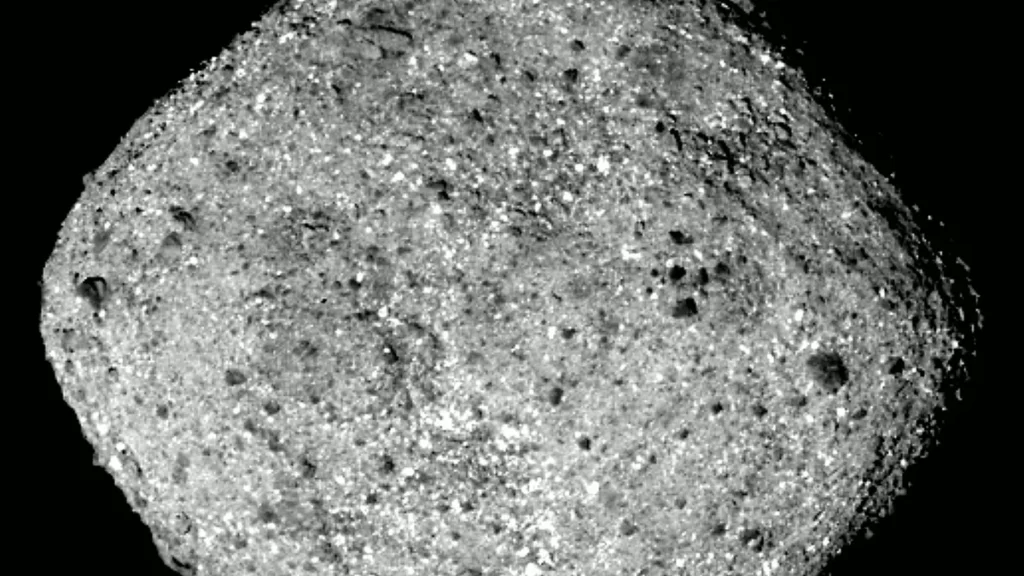
Near-Earth asteroid 1998 KY26 measures about 36 feet (11 meters) across and circles the sun between Earth and Mars. The small body completes one rotation every five and a half minutes. EarthSky characterizes the object as small, while The Debrief gives the same size and rotation period and identifies it as an asteroid.
1998 KY26 undergoes unusual accelerations that push it away from a typical solar orbit. The motion does not match the steady path that Johannes Kepler’s laws of planetary motion would predict. EarthSky says the movements made the object stand out and that Kepler’s laws expect a neat orbit. The Debrief calls the acceleration subtle but unusual and says it has baffled astronomers.
The researchers ran three-dimensional computer simulations to see whether the asteroid could retain enough buried ice for comet-style outgassing. The Debrief explains the simulations tested whether buried ice could drive the observed acceleration. They found temperatures are likely too warm for water ice to persist long. EarthSky gives the object’s temperature as minus 53 degrees Fahrenheit and says that is too warm for ice to exist on the asteroid in space.
The researchers say that if water represented just one percent of 1998 KY26’s mass, the ice would disappear in roughly 2,000 years. The Debrief presents the 2,000-year loss estimate as part of the team’s temperature model results. Those results refine understanding of the asteroid’s composition, according to the outlet. The calculation assumes water is present at all, which the temperature model casts in doubt.
The estimate supports the team’s broader argument against ice-driven outgassing.
A paper from 2025 cut the estimated size of 1998 KY26 to one third of the previous estimate, suggesting that forces other than gravity could explain its acceleration. EarthSky links the smaller size estimate to the possibility that non-gravitational forces are acting on the object. The outlet connects the size reduction to the idea that something other than gravity is pushing the asteroid. The revision precedes the Hansen and Hirabayashi study.
Davide Farnocchia, a navigation engineer at NASA’s Jet Propulsion Laboratory in Pasadena, California, said photons from the sun might push the asteroid through radiation pressure. Radiation pressure is the push from particles of light. EarthSky attributes the radiation-pressure idea to Farnocchia after the 2025 size revision and frames it as a question about whether the sun drives the object’s motion. The lab is located in Pasadena, California.
David Jewitt leads the Institute for Planets and Exoplanets at the University of California, Los Angeles. He said light photons carry momentum and that their pressure can move bodies that are not too big. “Light photons carry momentum; it’s very small per photon,” Jewitt said. EarthSky offers Jewitt’s remark as a physical explanation for how photon pressure can act on small bodies such as 1998 KY26.
His comments show how light can influence a small body’s motion.
Radiation pressure combined with the Yarkovsky effect might explain 1998 KY26’s acceleration. EarthSky describes the Yarkovsky effect as heat re-radiation after sunlight absorption. The effect differs from direct radiation pressure because it relies on re-emitted heat. The outlet says the two effects combined might account for the observed acceleration of the object.
The researchers contend that pressure from sunlight and thermal radiation better accounts for the asteroid’s observed non-gravitational acceleration than ice-driven outgassing. The Debrief quotes the researchers: “the water outgassing rate on 1998 KY26 would be too high to maintain buried ice.” The team advanced sunlight and thermal radiation pressure as a stronger alternative after challenging the dark-comet interpretation. The outlet says the researchers presented the pressure model as the more plausible driver.
The researchers position thermal radiation as a leading non-gravitational force.
The paper’s full title is “Thermally unfavorable conditions of volatile existence in near-Earth asteroid 1998 KY26, the Hayabusa extended mission’s target.” The object has been considered a comet, an asteroid, or an old space probe, though researchers favor an asteroid. Dark comets lack visible tails, yet the researchers say KY26 is too warm to be one. EarthSky groups these hypotheses as part of the debate over the object’s true nature.
EarthSky reports that The New York Times covered the study on November 16, 2026. The Debrief provides the paper’s complete title and verifies the journal. Both outlets rely on the peer-reviewed Icarus publication as the basis for their reporting.
Alexander Nazaryan wrote about the Hansen and Hirabayashi findings for The New York Times on November 16, 2026. EarthSky describes Nazaryan’s article as the newspaper’s coverage of the new findings. The Times piece appeared on the same date Seligman spoke to the newspaper, placing both items in the same day’s coverage.
Darryl Z. Seligman of Michigan State University told The New York Times on November 16, 2026, that an icy body qualifies as a comet, that the absence of ice means there is no comet, and that KY26’s surface is too warm. EarthSky points to Seligman’s ice remark to back the conclusion that KY26 is not a comet or dark comet. His comments tie the temperature findings to the classification debate. The New York Times article dated November 16, 2026, carried Seligman’s ice assessment.
Darryl Z. Seligman of Michigan State University said on November 16, 2026, that very near-Earth objects present study challenges because they are extremely small and faint, with little data available. He made the remark to The New York Times, according to EarthSky. The outlet cites his comment on data scarcity to show why small near-Earth objects are difficult to study despite their proximity. Observers have limited information on bodies that pass near Earth, making detailed tracking difficult.
The sources disagree on Japan’s 2031 mission to 1998 KY26. EarthSky says the Japanese space agency called off the Hayabusa2 visit in 2026 because of engine problems. The Debrief says Hayabusa2 will reach the asteroid in 2031. The two outlets offer different timelines for the Japanese spacecraft.
Avi Loeb said 1998 KY26 might be the lost Soviet Phobos-1 probe launched in 1998 for Mars, though he does not see it as a spaceship. He first proposed the idea last May in a co-authored paper. He also speculated about ‘Oumuamua as a possible spacecraft in the past, though EarthSky notes he does not apply that reasoning to KY26 here. Loeb is affiliated with Harvard University, according to EarthSky.
NASA Administrator Jared Isaacman said no evidence exists showing that 1998 KY26 is anything other than an asteroid. Bryce T. Bolin of Eureka Scientific Inc. said the object is far too heavy and dense to be ordinary space junk. EarthSky connects Bolin’s remark with Isaacman’s to support the view that the object is not space debris. The report positions Isaacman’s remark after the Phobos-1 idea as a statement that no evidence supports anything other than an asteroid.

Join the discussion