Key facts
- The mission is in its early characterization phase, designed to give researchers a broad understanding of both asteroids and their surroundings with particular attention to Dimorphos.
- ESA's Hera spacecraft reached the Didymos asteroid pair on November 4, 2026, more than two years after departing Cape Canaveral, Florida, to study what followed NASA's 2022 DART strike.
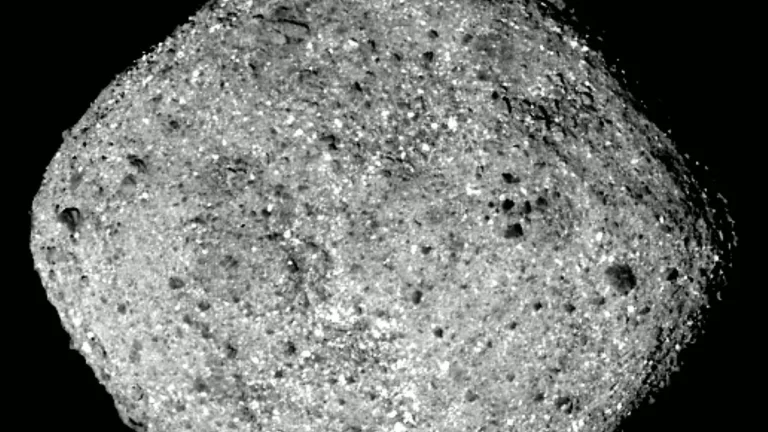
- Hera's Asteroid Framing cameras captured an image of Didymos from roughly 28.5 kilometers away with features down to about 2.7 meters per pixel, revealing its spinning top shape.
- The Thermal Infrared Imager, supplied by JAXA, maps surface temperature and indicates how solid Didymos is because solid rock dissipates heat more slowly than porous or fragmented rock.
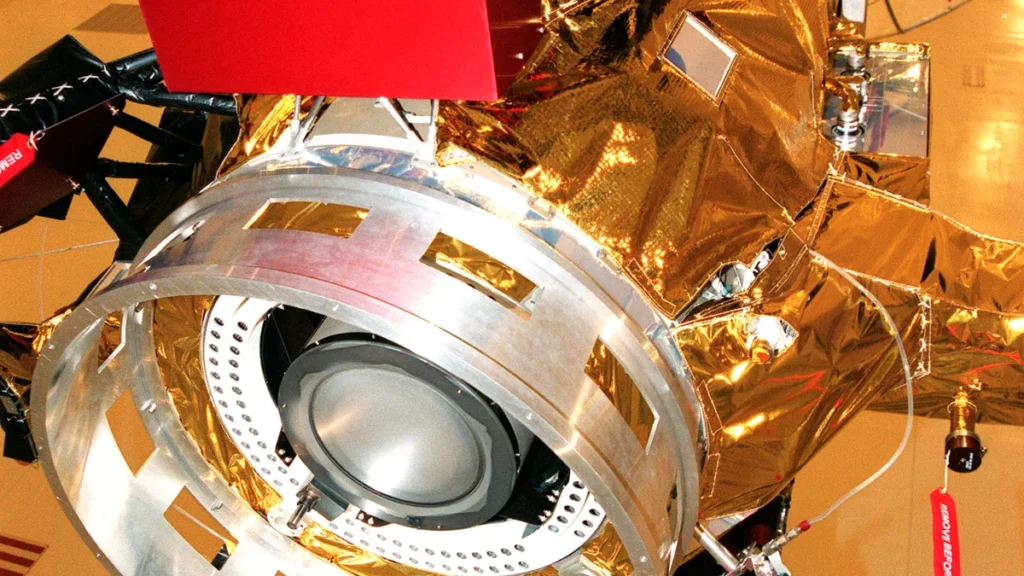
ESA’s Hera spacecraft arrived at the Didymos asteroid pair on November 4, 2026, more than two years after leaving Cape Canaveral, Florida, to investigate the results of NASA’s 2022 DART impact.
NASA’s 580-kilogram DART spacecraft hit Dimorphos on September 26, 2022, moving at approximately 6.1 kilometers per second and sending a debris cloud across roughly 10,000 kilometers of space. DART’s strike reduced the time Dimorphos takes to orbit Didymos by approximately 33 minutes and changed the pair’s path around the sun. Scientists had predicted a smaller shift, and the actual result suggests current models did not fully capture how the asteroid responded.
Researchers remain uncertain whether DART carved out a large crater or significantly altered Dimorphos, and they want better data on its mass, makeup, and internal structure. DART and Hera were built to work as a pair, with DART carrying out the deflection and Hera gathering precise measurements of the result. The work should help experts develop planetary defense techniques and improve general understanding of asteroids.
The spacecraft is about the size of a small car, flying about 25 to 30 kilometers from the Didymos asteroid system as it starts its first scientific observations. The mission is in its early characterization phase, meant to give researchers a broad understanding of both asteroids and their surroundings, especially Dimorphos. This first observation period is focused on big-picture findings that support the mission’s planetary defense goals. Michael Kueppers said, “Our aim right now is to gather the big-picture findings of relevance to supporting the mission’s planetary defense goals.”
Hera moves around the two asteroids’ shared center of gravity at approximately 12 centimeters per second, about as fast as a crawling insect. Hera fires thrusters while pulling away from the asteroids during repeating spans of three days followed by four days, turning 90 degrees to create rectangular flight patterns. The maneuvers keep the spacecraft roughly 25 to 30 kilometers from the asteroid pair and draw on experience from ESA’s Rosetta comet mission.
If a planned thruster firing fails, the spacecraft will naturally drift farther from the asteroids rather than toward a potentially dangerous collision, and each course correction needs very little propellant. The rectangular approach adds an important safety margin because the spacecraft moves so slowly. ESA’s ESOC mission control center in Darmstadt, Germany directs the mission, and controllers stay in touch with Hera for about eight hours each day even though the spacecraft is approximately 196.5 million kilometers from Earth.
Four Deep Space Antennas, each 35 meters in diameter and located in Argentina, Spain, and Australia, handle communications. ESA’s Flight Dynamics team uses data from Hera to calculate its exact location relative to the two asteroids and develop commands that guide it safely between planned positions. The team works closely with mission control to support safe navigation around the binary asteroid system.
Next month, Hera is expected to start its detailed characterization phase, switching to bowtie-shaped hyperbolic trajectories at distances of approximately 20 kilometers. This stage will bring the spacecraft much closer to Didymos and Dimorphos for more thorough measurements.
Didymos is about 780 meters across, or 2,560 feet, and its gravitational pull is roughly 40,000 times weaker than Earth’s. Dimorphos is just 151 meters wide, or 495 feet, and its gravity is roughly 200,000 times weaker than Earth’s. Because gravity is weak around these small bodies, a conventional circular orbit is impractical, and the mission needs a special navigation strategy. Dimorphos is the smaller companion asteroid that NASA deliberately struck with DART in 2022.
Hera’s cameras imaged Didymos from about 28.5 kilometers away, showing detail at roughly 2.7 meters per pixel and revealing a spinning top shape. Hera’s HyperScout H instrument observes the asteroid using 25 different color bands for spectroscopy, comparing results from those bands to experiments on meteorite samples on Earth to determine composition. JAXA supplied the Thermal Infrared Imager, which maps surface temperature and can show how solid Didymos is because solid rock dissipates heat more slowly than porous rock.
Dimorphos appears as a tiny sunlit speck in visible-light images, tucked almost entirely into Didymos’ shadow. That explains why Dimorphos is missing from many of the first round of picture releases.
Hera performed an arrival maneuver on October 15, 2026, and ESA released a close-up photo on November 5, 2026, from about 37 miles away. Another image arrived on November 12, 2026, from about 35 miles away, showing large boulders, smooth areas, and a sharp equatorial ridge on Didymos.
Hera will carry scientific instruments to study Dimorphos over the coming months and release two small CubeSats, each shoebox-size, to collect additional measurements before landing. Two CubeSats named Juventus and Milan will eventually launch from Hera, using radar to study the ground and attempting to land on Dimorphos. Hera is now about 20 miles from the asteroids and will move even closer in December, deploying two CubeSats early next year, with Juventas set to land on Dimorphos.
Scientists expect impact-ejected material traveled roughly one kilometer from Dimorphos to Didymos, and some surface characteristics may come from this transport of material. Previously, Dimorphos kept the same face toward Didymos, like the moon with Earth. Researchers suspect DART changed that and want to see how it resets.
DART kicked up debris on Dimorphos that can help researchers examine fresh rock previously protected from charged particles. Images of both asteroids will be shown on November 25 at a live event at the Berlin Museum of Natural History. Patrick Michel said, “Hera wants to be the detective, like Inspector Colombo, going back to the crash scene.”
Join the discussion