Key facts
- SpaceX will use Falcon 9 first stage booster B1100 on its 11th flight, having previously launched NROL-105, USSF-385, and eight Starlink missions.
- The rocket is targeted to lift off from Space Launch Complex 4 East at Vandenberg Space Force Base at 8:32 p.m. PST (11:32 p.m. EST / 432 UTC) on Nov. 19, 2026.
- Five previous ‘R' missions include USSF-366 (R-1) on Aug. 16, USSF-153 (R-2) on Sep. 10, USSF-385 (R-3) on Sep. 26, USSF-432 (R-4) on Nov. 06, and USSF-627 (R-5) on Nov. 12.
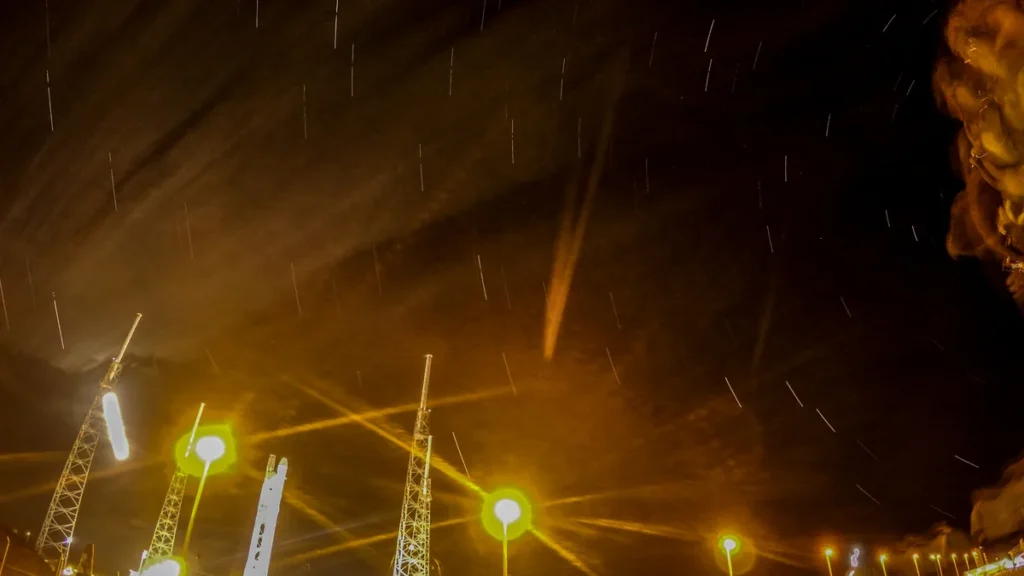
- SpaceX's Falcon 9 rocket is standing at Space Launch Complex 4 East at Vandenberg Space Force Base ahead of the USSF-317 launch.
SpaceX will launch the classified U.S. Space Force payload designated USSF-317 aboard a Falcon 9 from Vandenberg Space Force Base on Thursday night, Nov. 19, 2026.
- Target liftoff: 8:32 p.m. PST on Nov. 19, 2026 (432 UTC)
- Primary window: 6:46 p.m. to 10:46 p.m. PT on Nov. 19
- Backup window opens: 8:14 p.m. PT on Nov. 20
Spaceflight Now lists the target liftoff at 8:32 p.m. PST, or 11:32 p.m. EST and 432 UTC. News Channel 3-12 gives a four-hour primary window opening at 6:46 p.m. Pacific Time, while Yahoo Tech, citing a launch alert, says the window opens at 8:28 p.m. PT. A backup four-hour window is designated for Friday, Nov. 20, starting at 8:14 p.m. Pacific Time, for the day after the primary attempt, according to News Channel 3-12. The Federal Aviation Administration operations plan advisory indicates a next-day backup if the launch is postponed, Yahoo Tech reported.
The Falcon 9 rocket is standing at Space Launch Complex 4 East at Vandenberg Space Force Base ahead of the USSF-317 launch. Upon leaving the pad, the rocket will fly on a south-easterly trajectory. Spaceflight Now provided both details.
SpaceX will fly first stage booster B1100 on its 11th mission. The booster launched NROL-105, USSF-385 and eight Starlink missions, and Spaceflight Now and News Channel 3-12 confirm its assignment to USSF-317.
A little more than eight minutes after liftoff, B1100 will target a landing on the Of Course I Still Love You droneship awaiting in the Pacific Ocean. If successful, it will be the 235th landing on that vessel and the 679th Falcon booster landing to date.
Landing the booster on the droneship allows SpaceX personnel to recover it for reuse in future spaceflights, Yahoo Tech reported. The Falcon 9 is a two-stage, 230-foot rocket described as the most active in the world, with hundreds of launches from Florida and California. Yahoo Tech linked the rocket to the Southern California launch window opening at 8:28 p.m. PT on Nov. 19, 2026.
Spaceflight Now will begin live coverage about 30 minutes before liftoff. SpaceX will start its webcast about ten minutes before liftoff on the company’s website, with possible updates on X, and the webcast can also be watched on SpaceX’s X/Twitter account, News Channel 3-12 said. Viewers can follow the launch through Spaceflight Now’s coverage or SpaceX’s own webcast.
USSF-317 is the latest in a recurring series of ‘R’ missions assigned to SpaceX, according to Spaceflight Now. The previous five include USSF-366 (R-1) on Aug. 16, USSF-153 (R-2) on Sep. 10, USSF-385 (R-3) on Sep. 26, USSF-432 (R-4) on Nov. 06, and USSF-627 (R-5) on Nov. 12, in the outlet’s recap of the series.
After each of the five previous R-series launches, 23 satellites have entered catalogues, but the U.S. Space Force has not confirmed details about them or verified successful deployments, according to Spaceflight Now. Before the month ends, SpaceX plans to fly at least two missions for the U.S. Space Force, Spaceflight Now said. The mission carries an undisclosed number of satellites, Spaceflight Now and Yahoo Tech reported.
An Astronomy Magazine report on Nov. 9 had earlier targeted 10:03 p.m. EST on Monday, Nov. 9, for a USSF-627 launch from Space Launch Complex 4 East at Vandenberg Space Force Base in California. The same report said SpaceX would return to Vandenberg at 11:23 p.m. EST on Thursday, Nov. 12, for USSF-317, another classified Space Force mission on a Falcon 9, with both boosters slated to land on Of Course I Still Love You.
News Channel 3-12 said residents across the local region could hear one or more sonic booms, with how far the sound travels depending on weather and other conditions. Residents of Santa Barbara County, San Luis Obispo County and Ventura County are most likely to hear them, and the booms could last for up to 10 minutes after liftoff, Yahoo Tech reported. Vandenberg said the booms could last that long as the booster falls back through the atmosphere at supersonic speeds and generates shock waves. “areas local to Vandenberg Space Force Base will hear the initial low rumble of take-off,” Vandenberg warned, and Yahoo Tech included the warning alongside details on sonic booms and the 8:28 p.m. PT window opening on Nov. 19.


Join the discussion