Key facts
- LRDs have unusual V-shaped spectra that defied usual astrophysical explanations, according to Dr. Daniel Whalen.
- Scientists theorized LRDs were early quasars with active galactic nuclei powered by seeds that grow into supermassive black holes.
- Previous attempts to explain LRDs' rapid formation, abundance and spectral characteristics failed to account for everything JWST revealed in deep field surveys.
- A new theoretical study posted to arXiv on May 29 argues LRDs could be black holes in rare violent feeding bursts exceeding theoretical limits.
An international team led by Dr. Daniel Whalen of the University of Portsmouth’s Institute of Cosmology and Gravitation proposes that JWST’s puzzling Little Red Dot objects are remnants of collapsed supermassive primordial stars, according to research published in The Astrophysical Journal Letters.
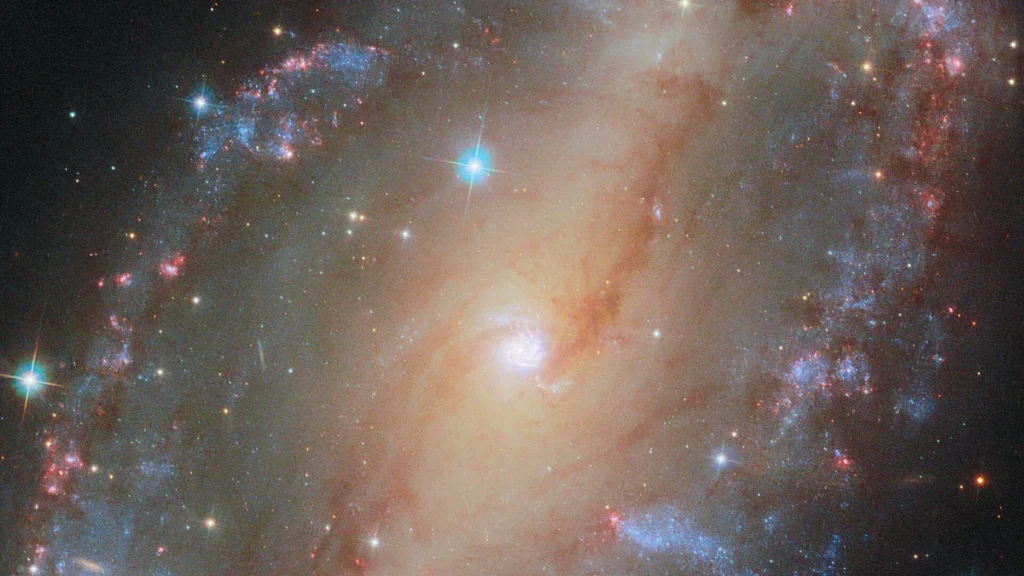
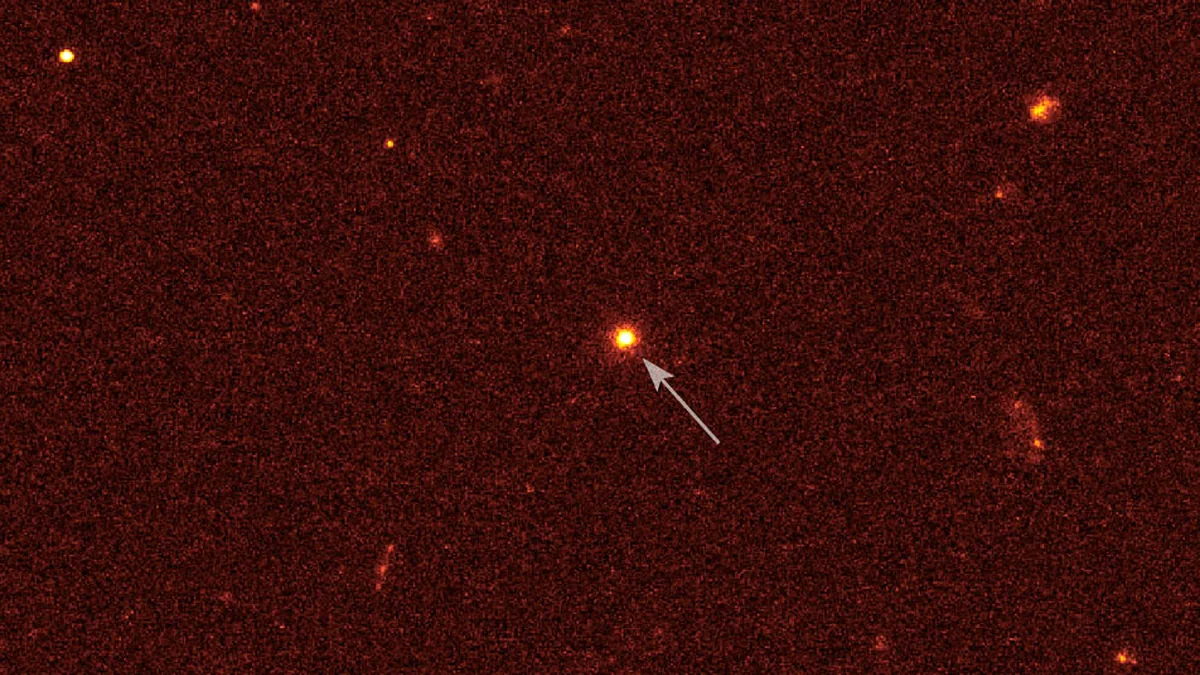
JWST’s deep field surveys revealed numerous bright red galaxies nicknamed Little Red Dots, far more abundant than cosmological models predicted. When JWST observed several deep fields, astronomers were surprised to see galaxies that defied expectations; the objects appeared numerous, bright and red. The objects are compact, only a few hundred light-years across, yet as bright as much larger galaxies. Tiny faint LRDs appear in the early universe in far greater numbers than expected since JWST began its deep universe survey.
LRDs have unusual V-shaped spectra and lack detectable X-ray and radio emissions, according to Dr. Daniel Whalen. They also show a distinctive V-shaped spectrum bright in ultraviolet and optical light with a dip between, plus broad emission lines hinting at active black holes, while lacking X-ray, radio and infrared emission and not looking like ordinary galaxies or completely like quasars.
Whalen described LRDs in a University of Portsmouth press release as among the most surprising JWST discoveries, noting their small size and unusual brightness. Whalen said the spectra and the lack of detectable X-ray and radio emissions left astronomers struggling to explain what the objects are. “LRDs have been one of the most surprising discoveries made by the James Webb Space Telescope,” Whalen said.
Scientists previously theorized LRDs were early quasars with active galactic nuclei powered by seeds that grow into supermassive black holes, less than one billion years after the Big Bang. Previous attempts to explain LRDs’ rapid formation, abundance and spectral characteristics failed to account for everything JWST revealed in deep field surveys, with each earlier theory explaining some characteristics but none explaining everything. Direct Collapse Black Holes theory argues supermassive black hole seeds formed directly from massive clouds of cold gas but faces theoretical and environmental challenges, requiring a massive cloud of cold gas to collapse under its own gravity without fragmenting into Population III stars.
New simulations by an international team indicate LRDs may be remnants of collapsed supermassive primordial stars. A model proposes LRDs are galaxies with active galactic nuclei powered by massive black holes formed through the collapse of supermassive primordial stars, concealed by dense massive gas discs. Black holes at the center of these primordial galaxies are about 10 million Solar masses, far below previous estimates of up to 100 million Solar masses. LRDs could represent galaxies in an evolutionary phase predating the luminous quasar phase.
The team based this on available data and said the research offers the most fitting explanation to date, though unlikely to be the final word. Dr. Daniel Whalen from the University of Portsmouth’s Institute of Cosmology and Gravitation led the study, with colleagues from United Arab Emirates University, Aristotle University of Thessaloniki, University of Edinburgh, and Harvard & Smithsonian Center for Astrophysics. The paper was published in The Astrophysical Journal Letters.
A separate theoretical study posted to arXiv on May 29 argues LRDs could be black holes in rare violent feeding bursts exceeding theoretical limits. The work comes from Yangyao Chen of Nanjing University and Houjun Mo of the University of Massachusetts, working within the standard cosmological model.
Yangyao Chen of Nanjing University and Houjun Mo of the University of Massachusetts place seed formation above redshift 20 inside mini-halos built from the first stars, while the universe was still less than 200 million years old. These seeds sit in the intermediate-mass black hole regime but are not massive enough to power an LRD alone. Growth through super-Eddington accretion at up to roughly 10 times the theoretical maximum rate during nuclear bursts bridges the gap to supermassive status.
By redshift 5, roughly a billion years after the Big Bang, LRD black holes grew from 100,000 to 1 million solar masses through repeated nuclear bursts. Young stars from nuclear bursts give blue UV light while the super-Eddington black hole gives red optical glow, producing the V-shaped spectrum.
The Chen and Mo model finds LRDs emerge as a natural outcome of the ΛCDM paradigm, the standard cosmological model, without fine-tuning, through self-consistent seed formation and black hole-galaxy-halo co-evolution. Massive galaxies and brightest cluster galaxies may swallow some LRDs by today, while others in near isolation resemble compact dwarf galaxies or evolve into ultra-compact dwarfs or globular cluster-like objects. JWST has found only the brightest examples; a larger population of less luminous black holes in the same violent growth phase hides below JWST’s current detection limit.
The researchers say their model is among the first to include these processes within a cosmological context. Their approach treats seed formation, black hole growth and galaxy evolution as one connected system. “allowing the emergence of the LRD population as a natural outcome of the ΛCDM paradigm, rather than a result of fine-tuning,” researchers Yangyao Chen and Houjun Mo said.
New supercomputer simulations with Japan’s ATERUI III suggest LRDs are rapidly growing black holes that used early Universe conditions no longer existing today, according to material dated Sept. 17, 2026. Sunmyon Chon of the Max Planck Institute for Astrophysics led the research using ATERUI III at the National Astronomical Observatory of Japan. Intense far-ultraviolet radiation from nearby galaxies can prevent ordinary star formation in some gas clouds, letting gas collapse into a single supermassive star that creates a black hole seed. Black hole seeds surrounded by thick disks of dense gas can consume material more efficiently and grow dozens of times faster than possible today.
Some supermassive black holes contain millions or billions of solar masses yet existed less than 600 million years after the Big Bang, a puzzle astronomers have struggled with for years. Astronomers expected JWST to help by detecting fainter, more distant galaxies than previous telescopes. JWST can peer farther back in time than earlier observatories; because light travels at finite speed, a galaxy 11 billion light-years away appears as it was 11 billion years ago, and one 12 billion light-years away appears as it was 12 billion years ago.
Instead of immediately resolving early black hole growth, JWST’s data revealed an unexpected large population of small red objects called LRDs. The Chon et al. model says conditions to create and rapidly grow black holes developed naturally in the early Universe without exotic assumptions or rare coincidences. As JWST finds more LRDs and future telescopes look deeper, the model could provide a framework for understanding how early black holes formed, grew and shaped cosmic evolution.
Journal reference: Sunmyon Chon et al., Overmassive black holes and little red dots naturally form in simulations, Nature 2026; 657(8132):621, DOI: 10.1038/s41586-026-10985-8. The research was published in Nature. The paper lists Sunmyon Chon, Shingo Hirano, Tomoaki Ishiyama, Seok-Jun Chang and Volker Springel as authors. The simulations indicate extreme radiation helped create massive seeds and dense gas allowed growth dozens of times faster than today; if correct, this could solve how enormous black holes formed soon after the Big Bang.
Little Red Dots appear to vanish completely before the universe reaches two billion years of age. New research suggests they may be connected to primordial black holes born from density fluctuations just after the Big Bang. Such primordial black holes would exist before stars, interstellar dust, or heavy elements beyond hydrogen and helium. Scientists theorized about primordial black holes since Stephen Hawking proposed them in the 1970s, but no hard evidence has presented itself.
Researchers used JWST data to test whether QSO1, also known as blackAbell 2744-QSO1, could host a primordial black hole. QSO1 lies around 13.1 billion light-years from Earth and appears as it was just 700 million years after the Big Bang. QSO1 is almost entirely composed of hydrogen and helium, the universe’s first elements, so it could be more unspoiled and primordial than other LRDs. De Luca and colleagues at Johns Hopkins University modeled how QSO1 could form from a primordial black hole under specific circumstances.
One issue is distinguishing primordial black holes from traditional black holes formed by supernova death and collapse of massive stars. “A black hole is an object born from the gravitational death of a star,” Valerio De Luca said. Physical Review Letters published the team’s findings in June. The team plans to examine the other 100 or so LRDs seen by JWST to determine how many could have started as primordial black holes.
All sources agree LRDs are compact, red, numerous in JWST deep fields, show V-shaped spectra, and lack X-ray and radio emission, but disagree on their physical origin. Competing explanations include remnants of collapsed supermassive primordial stars with about 10 million solar masses concealed by gas; super-Eddington accretion bursts growing seeds to 100,000-1 million solar masses by redshift 5; rapidly growing black holes in dense gas discs growing dozens of times faster than today; and primordial black holes from density fluctuations after the Big Bang.

Join the discussion