Key facts
- NASA is offering $1 million through a new Moon Base Challenge that asks U.S. student teams to create concepts for a permanent lunar outpost.
- Student teams from U.S. high schools and colleges or post-secondary schools must register through the NASA STEM Gateway, with registration open until January 25, 2027, per ScienceDaily, or Jan. 25, 2027, per Mirage News.
- NASA announced the challenge during a MAX POWER event at Kennedy Space Center Visitor Complex in Florida as part of a Golden Age of Science initiative.
- Carlos García-Galán, manager of NASA's Moon Base Program, said NASA wants to use all ingenuity and innovation to weigh every need for lunar explorers, and that students bring the bold ideas the agency seeks.
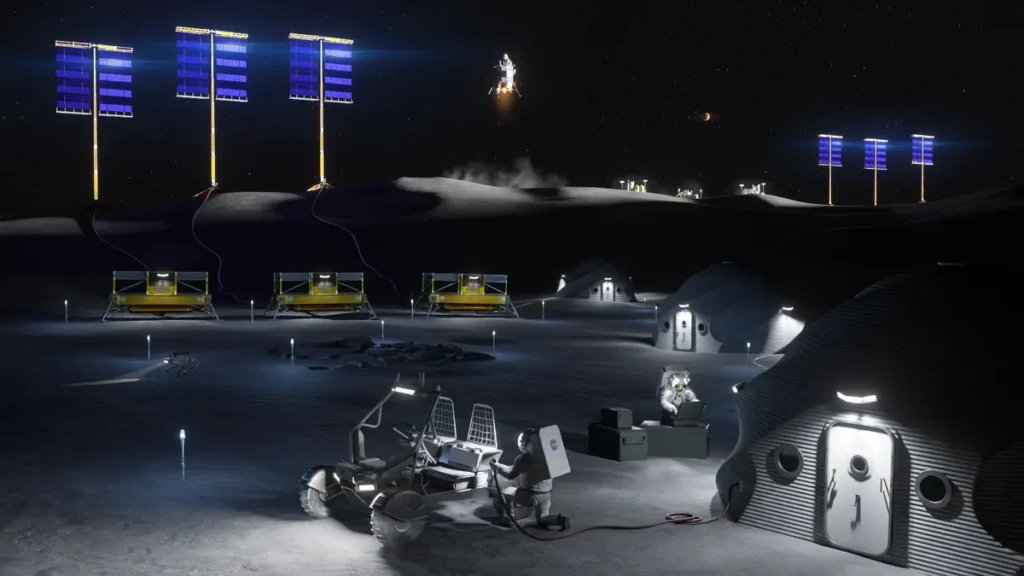
NASA is putting $1 million behind a new Moon Base Challenge, asking U.S. student teams to develop concepts for a lasting lunar outpost. The agency unveiled it at the MAX POWER event at the Kennedy Space Center Visitor Complex in Florida under the Golden Age of Science initiative, and ScienceDaily dates the announcement to Nov. 16, 2026. Mirage News published its report on Nov. 8, 2026 and described the announcement as occurring on Sunday.
The six fields are power generation and storage, construction, life-support systems, surface mobility and communications networks, plus astronaut safety. NASA built the competition around actual lunar conditions and mission requirements that shape daily life on the Moon, and the agency says each technical area addresses practical obstacles to running a lunar base over the long term. Team outputs will look like industry work — trade studies, stakeholder briefings, concept proposals, evaluations of competing technical options, design proposals, and presentations for project stakeholders — mirroring real space-industry tasks and offering career-relevant experience without demanding prior specialized engineering knowledge or related technical background. U.S. high school and college or post-secondary teams may register through the NASA STEM Gateway until Jan. 25, 2027, a window meant to let interested teams sign up before the multiphase competition’s design work begins.
NASA plans to put a Moon Base at the lunar South Pole where astronauts would live, conduct research, and explore the region as part of the path to future crewed missions to Mars. The Office of STEM Engagement created the Moon Base Student Challenge alongside the agency’s Moon Base Program, and the Institute of Competition Sciences runs the competition under contract through NASA’s Center of Excellence for Collaborative Innovation, part of the Research and Technology Mission Directorate. NASA calls the six fields key to operating a lunar base and positions the challenge within a broader workforce development effort. The MAX POWER event cast the competition as a chance for young innovators to help design the planned lunar base.
The agency welcomes students from technical and vocational programs and other academic backgrounds, and it does not require prior specialized engineering knowledge or related technical background. The multiphase challenge advances the agency’s commitment to building technical skills for the future aerospace workforce and to developing new concepts for Moon Base technology. NASA hopes the work builds skills for tomorrow’s aerospace professionals through hands-on design work that encourages collaboration, creative problem-solving, and taking part in future space exploration, giving students technical and professional abilities that can support aerospace careers as they contribute concepts for the planned Moon Base near the Moon’s South Pole.
Jared Isaacman, the NASA administrator, said the agency wants students prepared to think creatively, work together as a team, and take on real Moon-related problems before graduation. “You do not have to wait until graduation to contribute,” Isaacman said. NASA says the contest will gather ideas about power systems and astronaut safety, among other subjects that could support lasting human life on the Moon and future travel to Mars.
Carlos García-Galán, who manages NASA’s Moon Base Program, said the agency wants to bring all ingenuity and innovation to bear on every need of lunar explorers, and that students supply the bold ideas it seeks. “Students bring exactly the bold ideas that we’re looking for, and I’m looking forward to their fresh perspective,” García-Galán said. He said the base is ultimately for students who will inhabit a continuously occupied Moon.
Elaine Ho, associate administrator for NASA Headquarters’ Office of STEM Engagement, said students make up the coming generation of explorers and innovators and said their unique perspectives matter when imagining a future away from Earth. She spoke as the challenge rolled out at the Kennedy Space Center Visitor Complex in Florida, where NASA cast the competition as part of the Golden Age of Science and linked student ideas to the planned lunar base at the South Pole and to future Mars missions.
Keeping a lasting human presence on the Moon will take talent from many industries and disciplines, and the base will serve the generation that will see continuous human presence on the Moon. NASA wants wide-ranging disciplines represented among young innovators contributing ideas for lunar habitation, and student concepts are central to the base rather than optional.

Join the discussion