Key facts
- A study by researchers at the University of Wisconsin–Madison and Princeton University modeled a one-megaton nuclear detonation 500 kilometers above the South Atlantic Anomaly.
- In that simulation covering 13,300 active low-Earth-orbit satellites as of January this year, 25 percent of the fleet would be disabled after one day.
- The same model projects 78 percent of satellites disabled by the end of day three, 98 percent after one week and 99.4 percent by day 15.
- Even satellites given strengthened radiation protection would see 99.3 percent of the fleet disabled within 30 days in the simulation.
Researchers at the University of Wisconsin–Madison and Princeton University modeled the effects of a one-megaton nuclear detonation 500 kilometers above the South Atlantic Anomaly, projecting that 99.4 percent of low-Earth-orbit satellites would be disabled within 15 days. ScienceAlert reported the study on Nov. 12, 2026.
The paper exists as a preprint on arXiv and has not been peer-reviewed. Zach Petersen, a University of Wisconsin–Madison student majoring in astronomy and physics, led the research. Researchers at the University of Wisconsin–Madison and Princeton University chose the South Atlantic Anomaly as the detonation site because its unusually weak magnetic field would trap radioactive particles and magnify blast effects, they said.
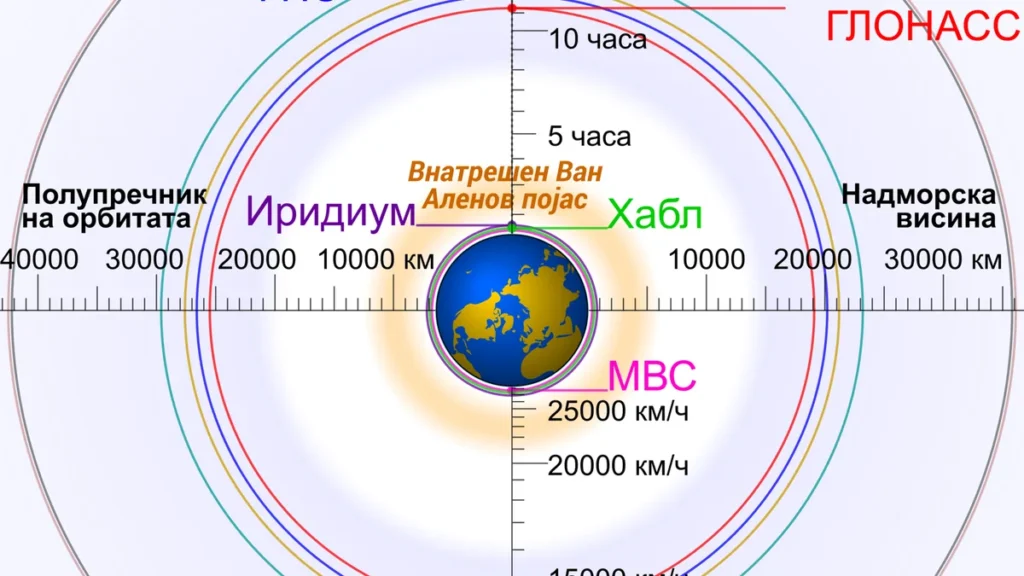
The simulation covered 13,300 active satellites in low-Earth orbit as of January 2026, and in that model the fleet would lose 25 percent of its satellites after one day, according to the researchers. Low-Earth orbit currently holds more than 13,000 tracked satellites that support weather forecasts, telephone service, data communications and satellite internet. The modeled detonation site sits near the South Atlantic Anomaly. The current orbital environment is far more crowded than in 1962, and the researchers warn that a comparable burst would strike an orbital setting far more crowded than during the Cold War.
By day three, the model puts disabled satellites at 78 percent of the fleet. One week in, the projection reaches 98 percent. By day 15 it reaches 99.4 percent. Those figures come from the University of Wisconsin–Madison and Princeton simulation of the one-megaton burst over the South Atlantic Anomaly.
Even satellites with strengthened radiation protection would lose 99.3 percent of the fleet within 30 days in the model. To restore orbital services, operators would have to replace lost spacecraft and make sure new satellites can endure lingering radiation and debris, the researchers say. New spacecraft sent up afterward would have to withstand the radiation and debris left behind, and the team calls restoring the fleet a gamble.
The projected losses accumulate through radiation exposure over time rather than through an immediate blast. An artificial radiation belt of trapped electrons from fission-product decay exposes spacecraft on repeated orbital passes. Researchers observed that mechanism after Starfish Prime, and they say the weak magnetic field over the South Atlantic Anomaly would magnify it.
Starfish Prime, a 1.4-megaton test in 1962, detonated 400 kilometers above the Pacific Ocean and disabled several satellites at the time. Radioactive decay left charged particles trapped in Earth‘s magnetic field, forming an artificial radiation belt that harmed satellites. A testing pause followed a year later.
Eighteen high-altitude nuclear explosions took place during the Cold War, the United States and the Soviet Union launching them from the upper atmosphere into space, with Starfish Prime the largest of them. The two nations halted above-ground testing under the Partial Nuclear Test Ban Treaty, with the suspension coming a year after Starfish Prime.
In the researchers’ estimate, a weaker 100-kiloton warhead would neutralize 99 percent of satellites in that scenario, but it would take a year to do so. They ran that weaker detonation as a second hypothetical case next to the one-megaton scenario. ScienceAlert reports the researchers’ view that even a warhead weaker than Starfish Prime could wreak havoc in low-Earth orbit, framing the calculation as a warning about present-day vulnerability.

The team puts the number of collisions at roughly 20 in the first two years after the detonation, counting from when satellites lose maneuverability. Collision risk rises once the first satellites are disabled because they can no longer maneuver. Ten years after the event, those collisions would have produced about 3,900 new pieces of orbital debris.
The team says debris production could continue past the simulated decade as long-lived objects keep crashing, possibly causing runaway growth over century timescales. New replacement craft would face lingering radiation and orbital junk, making further launches risky. The researchers call sending up replacement satellites after such a calamity a gamble.
The team argues that space nuclear weapons must be prevented because using them would bring quick, large losses of orbital infrastructure and prolonged disruption. The findings reinforce the need to prevent deploying and using nuclear weapons in space, the team says.
Nuclear policy researcher James McKeon called the findings very bad in an online post and said nuclear weapons use in space must be prevented. ScienceAlert presents McKeon’s post as a reaction to the preprint’s findings.
In his online post, McKeon described the result as bad, very bad, and very, very bad, and said everything must be done to prevent it from ever happening.
The claim rests on a single unpeer-reviewed simulation of radiation trapping in the South Atlantic Anomaly rather than on immediate blast effects. It projects satellite loss over days to weeks instead of instantaneous failure, with debris effects measured over years and decades. The simulation’s figures concern low-Earth orbit specifically.




Join the discussion