Key facts
- Observers could spot up to 10 to 15 meteors per hour during the shower, BBC Weather reported on 7 November 2026.
- The meteors are visible with the naked eye and require no binoculars or telescope, according to BBC Weather on 7 November 2026.
- Observers should allow 20 to 30 minutes for their eyes to adapt to the dark for the best chance of spotting meteors, BBC Weather advised on 7 November 2026.
- Clear skies are essential for watching the meteor shower, BBC Weather stated on 7 November 2026.
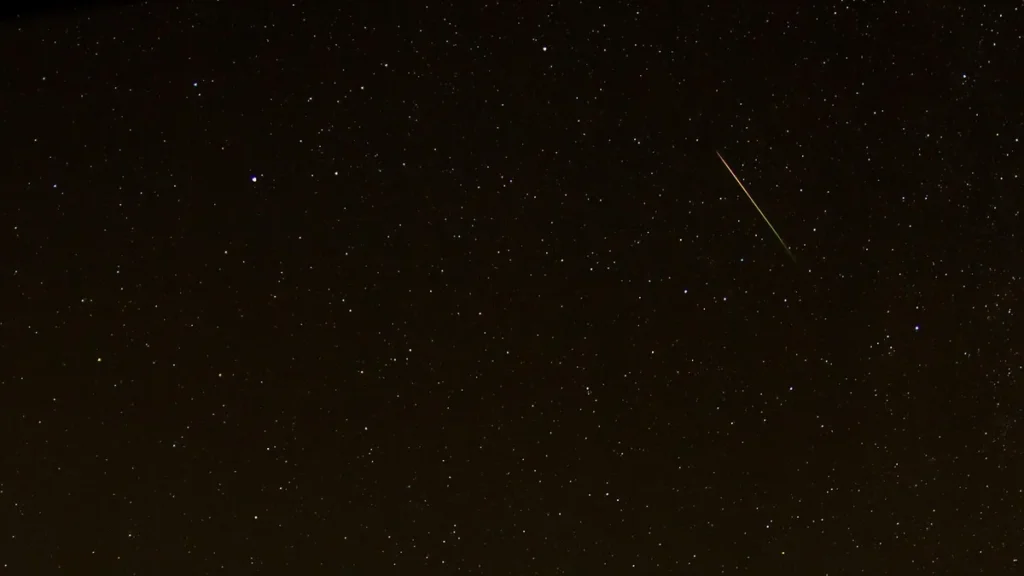
BBC Weather said on Nov. 7, 2026 that the Leonid meteor shower is visible across the UK from Nov. 7 until Nov. 30, with the peak taking place on the night of Nov. 17. The outlet described the event as a celestial spectacle taking place from now until 30 November, with the peak taking place on the night of 17 November.
Viewing conditions around mid-November look promising because the Moon will be below the horizon around midnight, BBC Weather said on Nov. 7, 2026. Less moonlight means darker skies, CW39 Houston explained on Nov. 5, 2026. That makes it easier to spot faint meteors that moonlight might otherwise wash out.
For the strongest rates, observers should go out after 2 a.m. The radiant in Leo rises after midnight and reaches a useful height by around 2 a.m., Telescope Advisor said on May 17, 2026. The source notes almost no Leonids are visible before midnight as the radiant is still below the horizon. “The Leonid radiant in Leo rises after midnight and reaches a useful height by around 2am.”
Leo rises in the eastern sky around 11 p.m. local time and remains in the southeast through 4 a.m., according to NASA via KJRH on Nov. 17, 2022. From the US at 2 a.m. in mid-November, Leo sits 20 to 30 degrees above the eastern horizon, Telescope Advisor said on May 17, 2026. Viewers should face east or southeast rather than north because Leo rises in the east, the same guide advised. The source says facing east maximizes the visible sky as the radiant rises.
Star-tracking apps such as SkySafari or Stellarium can show the radiant altitude, Telescope Advisor said on May 17, 2026, and Leo’s Sickle asterism helps orient viewers. At 2 a.m. in mid-November from the US, Leo is 20 to 30 degrees above the eastern horizon, the same source said.
The shower consists of dust particles from Comet 55P/Tempel-Tuttle, which leaves a trail of debris as it follows its path around the Sun, BBC Weather said on Nov. 7, 2026. Comet 55P/Tempel-Tuttle orbits the Sun once every 33 years, NASA said in 2022 according to KJRH on Nov. 17, 2022. Its dust and ice enter Earth’s atmosphere, burn up, and streak across the sky.
The source explains the comet’s orbit and the mechanism that produces the annual shower.
Leonids enter Earth’s atmosphere at up to 44 miles (71km) per second, making these streaks the fastest meteors in the sky, BBC Weather reported on Nov. 7, 2026. The source attributes the speed to particles hitting the atmosphere and calls the resulting streaks the fastest meteors in the sky. The Leonids’ radiant is around the head of the constellation Leo, making that the best part of the sky to focus on, BBC Weather said on Nov. 7, 2026. The source identifies the radiant as the point from which meteors seem to appear and ties it to the head of Leo.
Observers could spot up to 10 to 15 meteors per hour during the shower across the UK, BBC Weather reported on Nov. 7, 2026. The source gives this as the possible hourly rate for the Leonids across the UK. NASA said in 2022 that the Leonid peak could bring roughly 15 meteors per hour, with meteors visible through Dec. 2, KJRH reported on Nov. 17, 2022. The source cites NASA for the historical rate and visibility window from a 2022 report.
The Leonids are best known for producing meteor storms in past decades, CW39 Houston reported on Nov. 5, 2026. The source describes the shower’s historical reputation as background for the 2026 event. Every three decades the Leonids produce an all-out storm with more than 1,000 meteors per hour, KJRH reported on Nov. 17, 2022 citing NASA. The source describes the storm cycle as historical context for the shower.
NASA said viewers in 1966 saw thousands of meteors per minute during a 15-minute period, and the last Leonid storm took place in 2002, KJRH reported on Nov. 17, 2022. Leonid fireballs can leave persistent glowing trains that last 5 to 30 seconds and drift in upper-atmosphere winds, Telescope Advisor said on May 17, 2026.
The meteors are visible with the naked eye and require no binoculars or telescope, according to BBC Weather on Nov. 7, 2026. Telescope Advisor advised that meteors are naked-eye events and should be watched with wide-field vision, ideally with peripheral vision centred 40 to 50 degrees from the radiant where paths appear longest. The source discourages binoculars or telescopes because meteors move too fast to track.
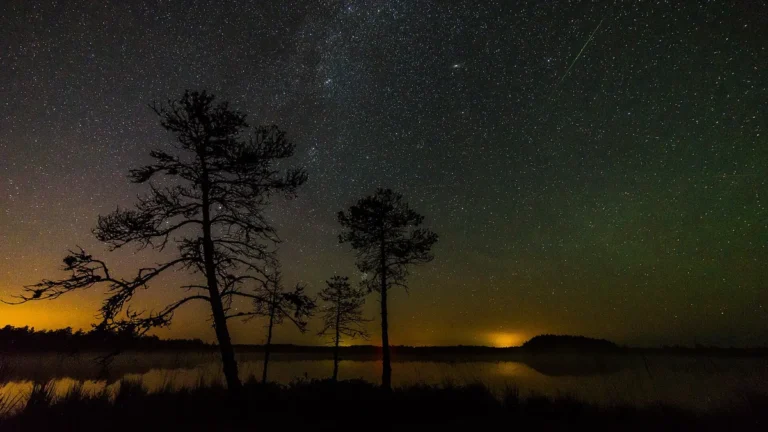
Experts advise finding a safe, dark location away from light pollution such as street lights to spot the Leonids, BBC Weather said on Nov. 7, 2026. The source links dark sites away from street lights to better chances of seeing the shower. A wide open space is the best place to watch because it gives a full view of the night sky, BBC Weather said. The source recommends open areas for observing so the full sky is visible.
Observers should allow 20 to 30 minutes for their eyes to adapt to the dark for the best chance of spotting meteors, BBC Weather advised on Nov. 7, 2026. The source presents dark adaptation as a way to improve viewing success during the shower. If watching before moonset, keep the moon low in the west behind you or out of your direct line of sight to preserve dark adaptation, Telescope Advisor said on May 17, 2026. The source explains how to handle moonlight during early viewing hours.
November nights are cold for hours of still outdoor observing at 2 to 4 a.m., so viewers should wear thermal layers, fleece, a windproof outer layer, thick socks, gloves and a hat, Telescope Advisor said on May 17, 2026.
Clear skies are essential for watching the meteor shower, BBC Weather stated on Nov. 7, 2026. This weekend’s UK forecast calls for mostly dry weather but large amounts of cloud in many areas with a chance of rain or drizzle, BBC Weather reported on Nov. 7, 2026.
The best chances for clear skies on Friday and Saturday nights are in southern and western England and Wales, while northern England, Northern Ireland and Scotland have more cloud, according to BBC Weather on Nov. 7, 2026. By Sunday night more parts of the UK are likely to be clear, BBC Weather said on Nov. 7, 2026.
Fog could form where skies remain clear and obscure the view, BBC Weather warned on Nov. 7, 2026. The source identifies fog as an additional viewing hazard in clear areas. Overnight temperatures will drop into single figures with a chance of frost in a few locations, so viewers should wrap up warmly, BBC Weather said on Nov. 7, 2026. The source connects cold overnight temperatures to the need for warm clothing while observing.
Mars and Jupiter will appear close together in the sky on Nov. 15 and Nov. 16, CW39 Houston reported on Nov. 5, 2026. The source lists this conjunction as another reason to stargaze in November. November’s full moon peaks on Nov. 24 and will be the first of three consecutive supermoons, CW39 Houston reported on Nov. 5, 2026. The source places the full moon after the Leonid peak within the month’s celestial calendar.

Join the discussion