Key facts
- Blue Origin has set January 2027 as the target for the next New Glenn launch, moving past an earlier goal of liftoff before the end of 2026.
- A major explosion during a May 2026 hot-fire test inflicted extensive damage on Blue Origin's Florida launchpad at Cape Canaveral.
- The postponed New Glenn flight was intended to transport Amazon internet satellites, and S3 specifies 48 satellites in Amazon's Leo internet-from-space service.
- Chief Executive Dave Limp called the schedule change a small adjustment and said returning New Glenn to flight remains the company's top priority.
Blue Origin set January 2027 as the target for the next New Glenn launch from Cape Canaveral, replacing an earlier goal of liftoff before the end of 2026.
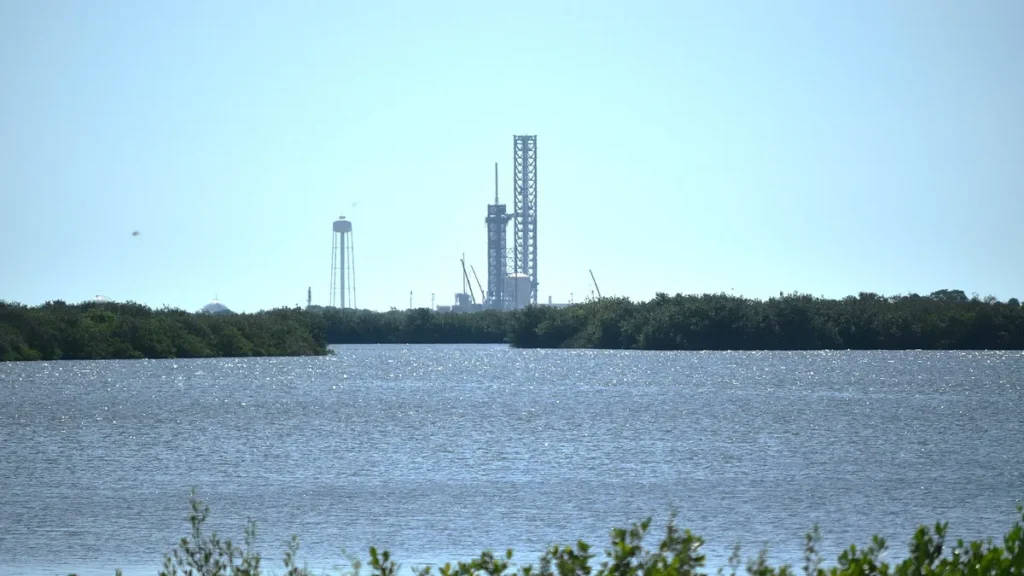
A major explosion during a May 2026 hot-fire test inflicted extensive damage on the Florida launchpad. Rebuilding of the damaged Cape Canaveral launch pad continues after a catastrophic explosion nearly six months ago. Company officials describe January 2027 as the present best estimate for completing repairs and tests on the damaged pad. Dave Limp called the schedule change a small adjustment and said returning New Glenn to flight remains the company’s top priority.
The postponed flight was intended to transport Amazon internet satellites. One report specified 48 satellites in Amazon’s Leo internet-from-space service, and the explosion came just days before a planned deployment of those satellites. Blue Origin repaired the launch facility and changed its pad configuration after the explosion.
Dave Limp told employees on Wednesday that delays rebuilding the Cape Canaveral pad shifted the schedule, with bad weather over the summer contributing. He cited recovery progress and described the rebuilding pace as difficult. “rebuilding at this pace hasn’t been easy.”
Ars Technica said NASA, Amazon, and the Space Force await the rocket’s return. The New Glenn schedule slip has hurt Amazon’s Leo constellation buildout, a project that relies on Blue Origin for some launches.
New Glenn measures 98 meters, also reported as 322 feet, and completed three flights beginning with its 2025 debut. Ars Technica reported that Blue Origin revealed a new kick stage, a small upper-stage engine that raises or circularizes a spacecraft’s orbit, for New Glenn and a new rocket engine design during an afternoon briefing on Thursday.
NASA has given Blue Origin contracts under the Artemis return-to-the-moon program that include development of a lunar lander. Last month Blue Origin disclosed fresh investments for its Florida launch sites, targeting weekly flights before the decade ends.
Jeff Bezos told Fox News last month that Blue Origin still expected New Glenn to fly again in December.
During the pad outage, Blue Origin may continue assembling rockets in parallel, though no launch can occur until the facility passes requalification, the re-certification of a launch pad for flight operations. Teams must assess the damage, rebuild, test systems individually and together, then run pad checks before mounting a customer payload.
The return-to-flight mission slipped from December to January 2027, a change Ars Technica’s Rocket Report calls minor and widely expected. Tech Insider said the move amounts to a few months at most from the pre-end-2026 goal, and no source has set a precise launch day. One report put the slip at roughly a 10-day delay from the earlier launch plan.
Dave Limp gave no launch date, repair milestone, payload count or word on whether the January target carries schedule margin. “This small adjustment doesn’t diminish what we’ve accomplished or the importance of the work still ahead.”
Tech Insider said monthly delays set back coverage, revenue and regulatory milestones tied to satellites in orbit, and repeated slips would not be manageable. It said flying a customer satellite load tests Blue Origin’s commercial credibility, and missing the date hands rivals a talking point.
Tech Insider said operators generally split launches among several providers to limit reliance on one vehicle’s schedule, and the pause strengthens that incentive. Its reporting sets no count on earlier New Glenn postponements, even though headlines call the delay a repeat. As New Glenn remains grounded, demand moves to flying vehicles, aiding competitors short-term and pressing customers who need a second heavy-lift option.
Tech Insider cited NASA’s Ka-band relay awards, which totaled $1.07 billion across three firms, as evidence that space contracts increasingly favor providers with dependable schedules. The same reporting said space hardware funding reached $17 billion, up 34-fold.
Because Blue Origin is private, Blue Origin has no stock to fall on the news. Tech Insider said Seeking Alpha and marketscreener.com carried the story but found no quantified market reaction. A grounded rocket has zero launch capacity for the period it is down, regardless of its design capability.
Tech Insider said Jeff Bezos founded the company, and the delay shines an unwanted spotlight on his venture; a repair-driven slip is easier to defend than a design flaw. It said Amazon has deployment goals for the satellites on the manifest, and the coverage describes no friction between the companies.
Tech Insider said through the winter, management attention is the scarce resource, and other Blue Origin programs are likely to compete for what remains.





Join the discussion