
Key facts
- Leap designs mass-producible rockets and intends to manufacture vehicles using modular factories, each designed to build more than 30 vehicles a year, alongside transportable launch equipment.
- Highlands and Islands Enterprise owns the peatland near Tongue where Sutherland Spaceport is located.
- Orbex halted construction at Sutherland in December 2024, entered administration in February, and had received more than £70 million ($94 million USD) in public funding.
- HIE first proposed the Sutherland Spaceport in 2018.
Colorado-based Leap signed a memorandum of understanding with Highlands and Islands Enterprise to develop recurring launch operations at Sutherland Spaceport in northern Scotland, marking the company’s first launch location outside the United States.
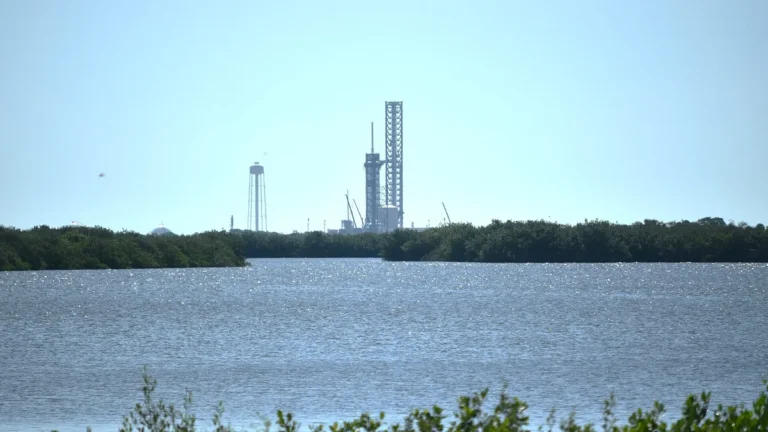
Sutherland Spaceport lies on the Melness Crofters Estate, an area of small-scale farms on the A’ Mhoine Peninsula in Sutherland in the northwest Highlands near Tongue. The proposed spaceport occupies a 10.4-acre site on the peninsula, and earlier infrastructure work included a 2.5-kilometer access road. Highlands and Islands Enterprise owns the peatland near Tongue and holds a 75-year lease on the land. The agency first proposed the spaceport in 2018.
The site has been idle since the original developer folded. Orbex, the Moray-headquartered original operator, suspended construction in 2024, later collapsed, and liquidators sold off its assets before Highlands and Islands Enterprise acquired them in August. Orbex halted construction at Sutherland in December 2024, entered administration in February, and had received more than £70 million ($94 million USD) in public funding. Sutherland Spaceport Ltd entered liquidation in June, and the agency has since been seeking a new operator.
Leap plans to begin operations at Sutherland with its Bullfrog vehicle before progressing to Bighorn suborbital, point-to-point and orbital missions. In May, Bullfrog flew for the first time from the Friends of Amateur Rocketry pad in Mojave, California, reaching about 40 kilometers, the ceiling set by the range, and took off less than 30 hours after it arrived on site. The flight generated data across engine performance, ground equipment and mission operations that feed directly into Bighorn development. Bullfrog is reusable.
The company designs mass-producible rockets and intends to manufacture vehicles using modular factories, each designed to build more than 30 vehicles a year, alongside transportable launch equipment. Leap calls itself a logistics business building inexpensive, mass-producible rockets that can haul cargo to any point on Earth or into orbit in minutes. Those vehicles serve a logistics network meant to shift critical payloads to anywhere on Earth within minutes and to loft small satellites into orbit.
The UK is under strong consideration as Leap’s European headquarters, and discussions cover manufacturing, testing, supply chain ties, local hiring and university partnerships across the Highlands and Islands. The company first announced its UK ambitions at Space-Comm Glasgow in 2025 and has since visited prospective sites in Edinburgh, Glasgow, Machrihanish and Inverness while holding talks with the UK Space Agency, the Civil Aviation Authority and the Scottish Government.
The European Magazine reported that Sutherland still has no scheduled launch date and that Leap has not disclosed its planned investment or potential job numbers at the site. StartUp Beat reported that the memorandum is not binding and that launches still depend on technical assessment, regulatory approval and final commercial agreements. Under the MOU, Leap and Highlands and Islands Enterprise will set up a dedicated workstream to work out a practical route to the first launch.
We're not just building a rocket. We're building a global logistics network, and a network needs launch sites wherever customers require them.
Chris Beckman, CEO of Leap, BBC News
Highlands and Islands Enterprise and Economy Secretary Stephen Flynn have welcomed the agreement. Stephen Flynn called the memorandum good news for Scotland’s space sector and said it could help open up the Sutherland Spaceport’s economic potential for businesses and communities across the Highlands and Islands. Dorothy Pritchard, chair of the Melness Crofters Estate, said the estate welcomes Leap as a potential launch operator.
This MOU with LEAP is a significant step forward for the site
David Oxley, HIE's director of strategic projects, StartUp Beat
David Oxley said there is worldwide demand for modern launch facilities and Sutherland is perfectly positioned to help establish Scotland as a major center of European spaceflight. Highlands and Islands Enterprise welcomed the memorandum as a significant step forward for the site after acquiring the assets from liquidators. The agency had been seeking a new operator following the collapse of the previous developer.
Scotland's attractiveness not only as a launch location, but as a place to build and grow space operations
Dr Natasha Nicholson, CEO of Space Scotland, EU Reports
Dr. Natasha Nicholson, the chief executive of Space Scotland, said the deal could bring real economic value to communities across the Highlands and Islands. She said the memorandum demonstrates Scotland’s appeal as both a launch site and a base for building and expanding space operations, citing its launch infrastructure, supply chain and ties across UK and European space sectors.
According to the Scottish Government, Scotland’s space sector brought in 381 million pounds in income, and it employs more than 7,000 people, against a government target of 20,000 jobs. Glasgow builds more small satellites than any other European location, while Scotland accounts for about one-fifth of all UK space jobs. Launch providers prize Scotland’s northern position and its open-sea access for certain satellite missions, particularly ones needing polar and sun-synchronous orbits.
The UK has yet to host a vertical launch, and SaxaVord in Shetland holds the country’s only full vertical spaceport license. SaxaVord, on Unst, is the United Kingdom’s first fully licensed spaceport, with permission for as many as 30 rocket launches each year. Rocket Factory Augsburg moved its RFA One rocket to the pad there in July, but its first flight faces delays.
The UK and German governments said they planned to use SaxaVord in Shetland as part of increased co-operation between the two countries, following a meeting between Prime Minister Andy Burnham and Chancellor Friedrich Merz in Berlin. The governments said in a joint statement they would deepen strategic co-operation on civil, commercial, security and defence interests in space.
Isar Aerospace flew Europe’s first commercial launch from Andøy on September 5, 2026, completing the first commercial launch from European soil.
EU Space Commissioner Andrius Kubilius warned that launch capacity is falling behind demand. Galileo, Copernicus and the IRIS2 secure connectivity constellation will need 62 launches by 2034 under EU flagship programmes. Ariane’s planned flight rate is ten times a year, while the EU projects 14 Ariane launches in 2031. Vega faces a similar launch gap, with eight launches needed in 2030 against a planned six a year.
Europe accounts for just 11 percent of global public space investment, compared with 60 percent for the United States. Brussels has proposed €131 billion for defense and space in the 2028 to 2034 EU budget, five times the current figure, and plans to publish an action plan on access to space in 2027. The UK sits outside the EU but remains a member of the European Space Agency. By mass sent to orbit, Europe sits fourth in the world, behind the United States, China and Russia.
The European Space Agency’s 2026 Space Economy Report found that European space budgets grew 12 percent to 13.5 billion euros in 2025, while global public space investment fell 3 percent and private investment in European space companies slipped 8 percent. Europe has one operational spaceport in French Guiana. Around 50,000 satellites are expected to go up worldwide over the next decade, pushing up competition for launch slots and the prices operators pay. EU launch demand could rise nearly sixfold by 2035, with national defence satellites expected to climb from about 20 launched between 2016 and 2024 to nearly 300, and government satellites from about 70 to nearly 630.


Join the discussion