Key facts
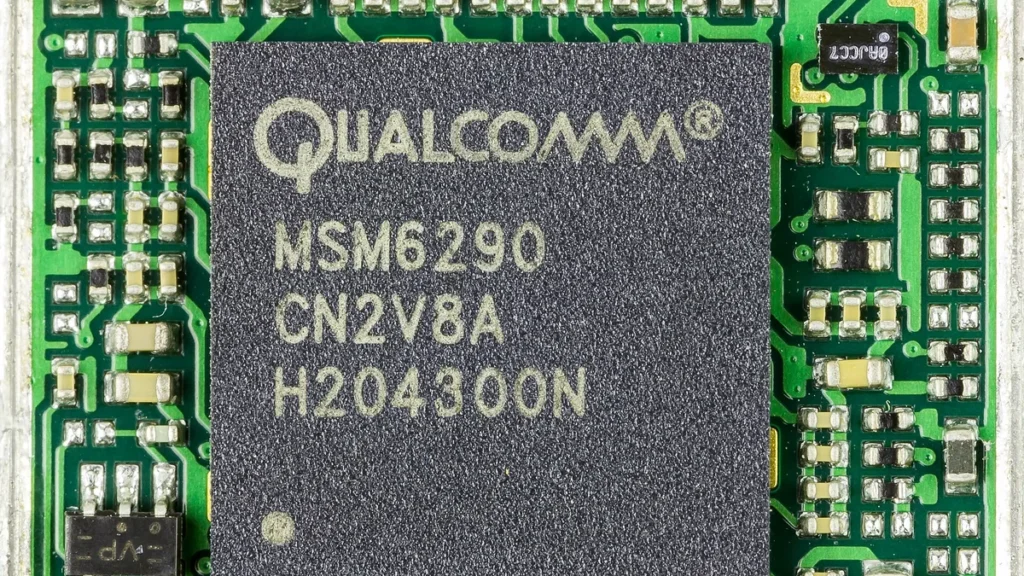
- Starlink Mobile cell sites will use Qualcomm's Dragonwing QRU100 radio unit with Massive MIMO in a 64T64R setup of 64 transmit and 64 receive paths, tuned for the 2 GHz band.
- Starlink Mobile will deploy Qualcomm's Dragonwing QDU100 platform for latency-sensitive physical layer baseband signal processing.
- The multi-year agreement makes Qualcomm the primary hardware vendor for SpaceX's hybrid satellite-cellular network's terrestrial ground segment.
- Qualcomm said the integrated chipsets improve performance per watt on busy towers, support 5G and lay groundwork for AI-native 6G protocols.
SpaceX selected Qualcomm Technologies on Nov. 4, 2026 to build the terrestrial portion of the planned nationwide Starlink Mobile network. The deal extends SpaceX’s effort to blend satellite and cellular coverage into a single United States mobile service.
The multi-year accord makes Qualcomm the lead supplier for the terrestrial ground segment of SpaceX’s hybrid satellite-cellular network. Construction starts in 2027, and tens of thousands of base stations will go in across the United States over several years. The accord comes after SpaceX bought AWS-4 and H-block spectrum from EchoStar and held preliminary talks about buying its Boost Mobile subsidiary.
Under the accord, Qualcomm will provide Dragonwing gear for tens of thousands of base stations. The gear combines radio, baseband and commercial-grade software at Layer 1, the physical layer of a network. The Dragonwing QRU100 radio unit applies Massive MIMO in a 64T64R arrangement. It has 64 transmit and 64 receive paths for the 2 GHz band.
The Dragonwing QDU100 platform manages latency-sensitive physical layer baseband signal processing. Radio processing is handled by the QRU100, while the QDU100 manages high-performance, low-latency Layer 1 work aimed at better efficiency per watt.
Qualcomm said the integrated chipsets lift performance per watt on busy towers. The products also support 5G and prepare for AI-native 6G protocols. The company added that the platforms increase coverage, capacity and spectral efficiency while carrying more traffic and saving energy, and it described the pact as its largest 5G agreement to date.
Chief Executive Cristiano Amon said Qualcomm will begin recognizing revenue late in fiscal 2027. He also said the company expects a major financial contribution in fiscal 2028 once tower sites go live, comments he made on Qualcomm’s quarterly earnings call.
Satellites cover rural and unserved areas. Orbital beams face capacity limits in dense urban and suburban zones, so those areas depend on small cells and macro base stations for high-capacity throughput. SpaceX will develop the software and network functions at higher layers for the base stations, drawing on Qualcomm’s technology as the foundation. The announcement gives no map of initial service areas, and a nationwide 5G rollout will require years to complete.
Starlink satellite links should extend past ordinary mobile networks. The terrestrial 5G sites will add capacity where traffic is heaviest. A blend of satellite and ground sites may serve urban, suburban and rural areas. Nationwide coverage will depend on licensed airwaves along with satellite and terrestrial gear.
Beyond the radios, building out the network requires site acquisition, backhaul and power. It also requires tying the network into existing mobile services. How quickly Starlink Mobile builds a viable nationwide network will depend on the size and speed of construction. Picking equipment is just one step in a longer rollout, and no map shows where service arrives first.

The accord expands Qualcomm’s infrastructure business past phone chips and provides SpaceX with the tools to construct a cellular network of its own. Qualcomm’s recent quarterly results showed a 26% year-over-year drop in handset revenue. Automotive sales rose sharply.
Elon Musk posted on X about the deal. He praised Qualcomm’s technology. He also said one network would finally have good signal everywhere. The posts tied to the announcement about Dragonwing support for Starlink Mobile’s terrestrial base stations.
SpaceX executive Michael Nicolls described the aim as an integrated satellite and terrestrial network. He said it keeps people connected everywhere, but called it an aim rather than a current coverage claim.
SpaceX still needs to secure spectrum, build sites, test devices and persuade users that the combined satellite-ground service works reliably. SpaceX and Qualcomm have not disclosed the contract value. They also have not disclosed the consumer launch date or tariffs.
In October, TechBooky said SpaceX had agreed to buy low-band spectrum in the United States in a separate deal. That deal still awaits final regulatory approval. The Qualcomm announcement does not resolve it.
Tim Farrar of TMF Associates said leases for towers and spectrum matter more than the hardware deal. He also said acquiring the remaining EchoStar assets and reaching deals with tower firms would be the fastest route. He made the comments while Starlink prepares to deploy equipment next year. The company also faces difficulty leasing towers.
Carriers in the United States rejected it as an MVNO. Boost Mobile has MVNO deals with T-Mobile and AT&T, but a note from MoffettNathanson cited by TeleCompetitor views those agreements as unlikely to move to Starlink Mobile. Major US carriers turned Starlink down as an MVNO, and how it can lease towers remains unclear.
Qualcomm said the deal may also underpin future AI-native 6G infrastructure that blends communications, computing and intelligence. The current pact centers on terrestrial 5G, yet the firms see it as a basis for better network management and new radio access network capabilities.


Join the discussion