
Key facts
- Globalstar asked the FCC to review how its supplier relationship with Rocket Lab could change after Rocket Lab acquires rival Iridium.
- Globalstar said the supplier relationship would give Rocket Lab reason and ability to favor Iridium over Globalstar after the acquisition closes.
- The FCC approved Amazon's acquisition of Globalstar last week.
- Globalstar said Iridium made repeated attempts to reach Globalstar's licensed mobile-satellite spectrum via regulatory submissions.
Globalstar asked the FCC to review how its supplier relationship with Rocket Lab could change after Rocket Lab acquires rival Iridium, in a Friday submission to the agency. The request appeared in Globalstar’s FCC filing about the Rocket Lab/Iridium acquisition and raises competitive implications of the deal. Globalstar said it does not oppose the acquisition.
Globalstar warned that Rocket Lab’s current supplier role could become a competitive risk if the acquisition closes. The warning arrived in a Friday submission to the FCC that cited Rocket Lab insight into satellite architecture, operations and scheduling.
Globalstar said the supplier relationship would give Rocket Lab both reason and ability to favor Iridium over Globalstar once the acquisition closes. The two companies currently share common goals, according to the filing. The company warned that “that same supplier relationship will give Rocket Lab both the incentive and the means to advantage Iridium at a competitor’s expense.” Globalstar also urged the commission to review Iridium’s earlier regulatory actions and the incentives tied to Rocket Lab’s supplier position.
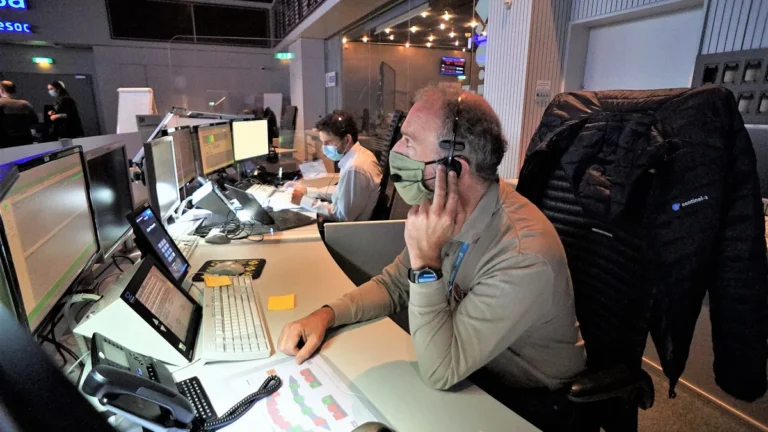
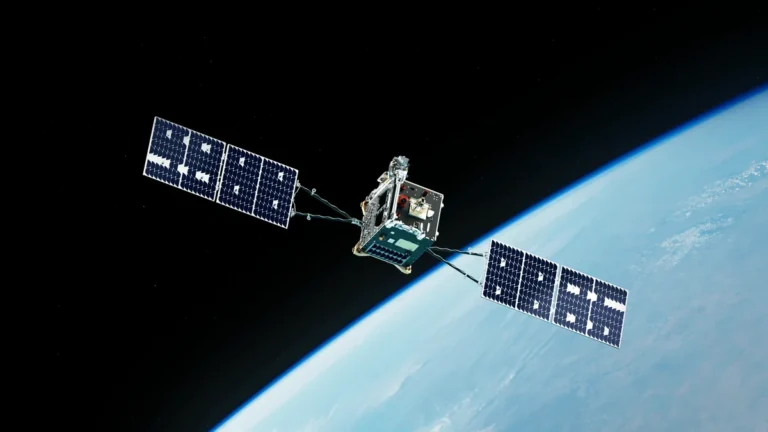
Rocket Lab builds Globalstar’s refreshed satellite buses as an MDA Space subcontractor, supplies the flight and ground software for those satellites, and constructed the operations control center used by the network. The company is preparing to own rival Iridium while still serving Globalstar, whose satellite network refresh depends on that supplier relationship. Once both the Rocket Lab/Iridium and Amazon/Globalstar deals close, the two combined companies would compete in mobile-satellite service and direct-to-device markets.
- $143 million MDA subcontract covering construction of 17 satellite platforms
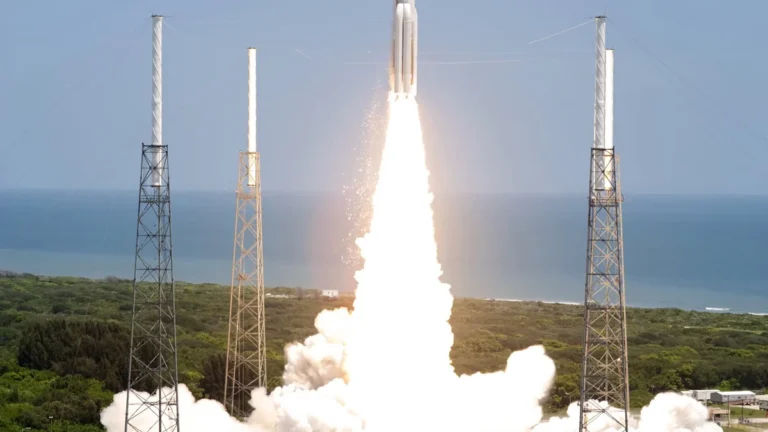
- First eight of the 17 platforms reached orbit in August
The platforms are part of Globalstar’s satellite network refresh under the MDA subcontract. The supplier relationship lets Rocket Lab see Globalstar spacecraft plans, daily operations and delivery timing.
The FCC approved Amazon’s acquisition of Globalstar last week. Amazon intends to enter direct-to-device markets and plans to operate Globalstar as a subsidiary while keeping its corporate identity.
Globalstar and Iridium hold exclusive operating rights in part of the mobile-satellite-service (MSS) spectrum known as the Big LEO band. The commission confirmed those rights earlier in the year after turning down an Iridium request to change the band, and it affirmed the rights while rejecting an Iridium request to revise the band. Both companies rely on exclusive rights in this MSS spectrum.
Globalstar said Iridium made repeated attempts to reach its licensed mobile-satellite spectrum through regulatory submissions, a practice the company said hurt its operations and used up commission staff time. Globalstar pointed to a 2013 Iridium petition that Iridium withdrew in 2017, one example the company cited of Iridium’s repeated spectrum-related regulatory filings.
The company also pointed to a December 2025 petition the agency rejected in April 2026. Globalstar described both petitions as examples of repeated Iridium spectrum filings. The company also said Iridium’s signals might interfere with radio astronomy observations.
Rocket Lab said in a November 2 filing that the deal would not damage competition or harm the public interest. The company said it does not possess mobile-satellite-service spectrum and cannot soon enter Big LEO mobile-satellite-service offerings. Rocket Lab argued that the transaction would not raise market concentration or cut competition, a point it raised in its November 2 filing addressing competitive concerns. The company has not replied directly to Globalstar’s newer submission.
Rocket Lab and Iridium frame the transaction as vertical integration that lowers costs and supports a next-generation constellation, while Globalstar and others ask the commission to examine conflicts stemming from Rocket Lab’s dual role. The companies said the deal would form a combined American space company that boosts competition and speeds up a future Iridium network.
Rocket Lab and Iridium told the commission in a joint reply filed the previous week that objections from SpaceX and Ligado existed before the deal and should be handled elsewhere. The companies said SpaceX’s concerns involve ground station coordination while Ligado’s concerns relate to possible interference from its operations. They also said SpaceX is not opposing the transaction and that current radio astronomy safeguards will still apply to Iridium. The companies made these points as part of their argument that the merger should be approved.
The combined company’s plans cover better positioning, navigation and timing, wider direct-to-device service, and a next-generation satellite grouping with 20 times the beams per spacecraft. Existing Iridium services would continue after the transaction.
The Rocket Lab/Iridium transaction carries an $8 billion enterprise value and a per-share offer of $54, split between $27 cash and Rocket Lab stock under a collared exchange ratio. Iridium shareholders approved the merger in September, supporting it with 99.6% of ballots cast in a near-unanimous vote.
The firms expect to complete the purchase by the middle of 2027 if outstanding regulatory approvals and conditions are met. Responses and oppositions in the Rocket Lab/Iridium proceeding must be answered by November 9, the agency’s next filing deadline. The deadline follows responses and oppositions already submitted in the proceeding.
Rocket Lab and Iridium began talks on December 1, 2025, with the price rising from an initial $42.50 all-share offer to a final $54 per share split evenly between cash and stock. The talks were followed by a CEO call on December 15 and further meetings in January and February.
The day after Amazon’s April 14 announcement concerning Globalstar, Rocket Lab opened with a $42.50 per share offer paid in its own stock. The offer was revised to $52 per share on June 3 and then to $26 cash plus $26 in shares on June 22. The final offer of $54 per share, comprising equal cash and Rocket Lab shares, was set the day after the June 22 update. Rocket Lab submitted the S-4 registration statement covering the purchase on August 13, and the document described how the negotiations and bidding process produced the agreement.
Stocktwits retail sentiment for RKLB fell to bearish from neutral a week ago as 24-hour message volumes rose by nearly 850%, a shift that coincided with fresh regulatory scrutiny of the Rocket Lab/Iridium deal. RKLB stock has declined 25% year-to-date amid the deal scrutiny and related news.

Join the discussion