
Key facts
- Justin Sun flew aboard Blue Origin's New Shepard NS-34 mission on August 3, 2025.
- The flight was Blue Origin's 14th human spaceflight.
- Sun delayed the flight due to scheduling issues and later flew on August 3, 2025.
- Notable New Shepard passengers include Jeff Bezos, William Shatner, Oliver Daemen, and Katy Perry.
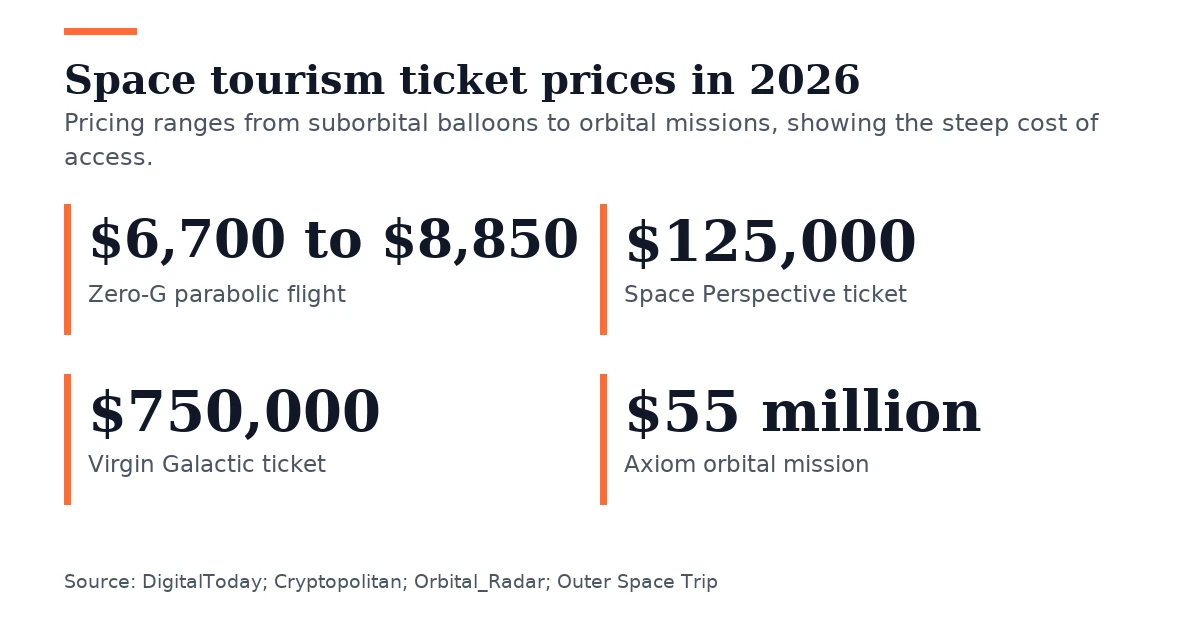
Virgin Galactic resumed ticket sales in Apr. 2026, offering suborbital flights at $750,000 per seat, while Axiom Space charges about $55 million for each orbital seat to the ISS.
Space Perspective advertises a price of $125,000 per seat, reached about 100,000 feet in an uncrewed test flight in Sep. 2024, and has not flown paying passengers. Blue Origin’s New Shepard rocket has flown 38 times, carrying 98 people past the edge of space, and notable passengers have included Jeff Bezos, William Shatner, Oliver Daemen and Katy Perry.
Justin Sun flew aboard Blue Origin’s New Shepard NS-34 mission on August 3, 2025, which was the vehicle’s 14th human spaceflight. He had won a 2021 auction for a seat with a bid of $28 million, which Blue Origin said was a one‑off donation to its Club for the Future charity rather than a standard ticket price, and he delayed the flight because of scheduling conflicts before finally launching on August 3, 2025.
Zero‑G parabolic flights, which create weightlessness through a series of parabolas, normally offer five to eight minutes of microgravity per session. Recent ticket prices for those flights ranged from $6,700 to $8,850, but the service is currently suspended due to maintenance problems.
Virgin Galactic has conducted six paying-passenger flights between 2023 and 2024, reaching an altitude of about 86 kilometers. More than 675 people remain on its waiting list for future trips, and while the company retired its earlier spaceplane VSS Unity in 2024, the first flight of its Delta‑class successor is now targeted for Feb. 2027.
Blue Origin said it will halt New Shepard flights for at least two years from Jan. 30, 2026. Axiom Space has flown four private missions to the International Space Station, from Ax‑1 in 2022 through Ax‑4 in 2025. NASA has approved a follow‑on private mission, Ax‑5, with a launch target after Jan. 2027.
These figures and schedules show that, in 2026, space tourism remains a niche activity limited to those who can afford the high costs and accommodate the limited flight cadence. Operators continue to develop their offerings while adjusting to technical and scheduling constraints, reflecting the current state of the industry.


Join the discussion