
Key facts
- According to NASA and USGS, commercial data would complement ongoing government Landsat operations, while government purchases would reduce company risk and expand the market for Landsat-quality data.
- NASA is studying lower-cost ways to maintain Landsat imagery flow together with Landsat Next, the planned follow-on to Landsat 8 and 9.
- In Canada, EarthDaily joined the federal satellite-imagery standing offer in September and is constructing an AI-based border-monitoring platform for the RCMP under a federal defence research contract.
- If validation succeeds, it will form a foundation for hybrid mission architectures mixing government-owned orbital assets with commercial constellations.
NASA awarded EarthDaily Analytics a task order valued at about $4.2 million ($US 3 million) on Oct. 26, 2026, to test whether the company’s commercial satellite imagery can sit alongside the U.S. Landsat Earth-observation record.sources
The award falls under the Sustainable Land Imaging commercial transition initiative, which NASA and USGS run together. USGS runs the Landsat satellites and archive, and agency scientists will compare EarthDaily data to Landsat standards for calibration, stability and geometric performance.sources
Agency scientists will assess EarthDaily imagery using Landsat benchmarks for calibration, stability and geometric performance with the same processing systems applied to raw Landsat and Sentinel-2 data. The procurement notice adds higher-level products including vegetation indices and evapotranspiration, and the work will also review products prepared for machine-learning systems. Researchers want to learn whether EarthDaily data can produce Landsat-grade surface reflectance, meaning the sunlight the ground bounces back after the atmosphere removes them, along with surface temperature.sources
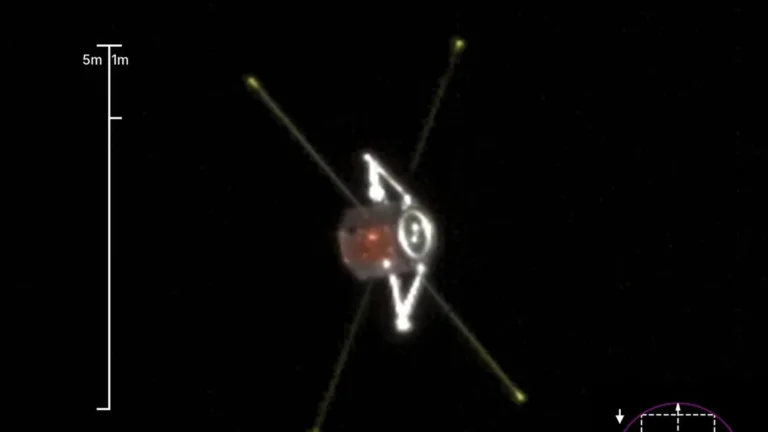
Of the 10 satellites EarthDaily plans, eight are in orbit, and the constellation gives complete coverage of Earth’s landmass every two days. At full operations it will image roughly 92 percent of landmass daily excluding Antarctica. The sources disagree on the current revisit frequency, with one saying the constellation covers all Earth’s landmass every other day, another saying it images 92 percent of Earth’s landmass daily, and a third saying eight of 10 satellites cover 100 percent every two days with 92 percent daily at full operations. The constellation’s sensors capture visible and near-infrared light at 5 meters natively, short-wave infrared at 95 meters and thermal infrared at 120 meters, without sharpening, compared with Landsat’s 30 metres.sources
NASA chose EarthDaily as the sole source for the Sustainable Land Imaging work using a non-competitive contract reserved for cases where one responsible source can meet agency needs. A July 22 SAM.gov notice said NASA planned to give the contract to EarthDaily Analytics USA, based in Maple Grove, Minn. Competing firms had until Aug. 6 to show capability, and the agency said it would review any responses only to decide whether to open competition. The notice covers about 110,000 multispectral and short-wave infrared scenes from new collection and EarthDaily’s archive, along with pipeline improvements, reprocessing as requirements change and the development of new capabilities, and it lists no dollar value.sources
Starting in 2023, NASA put roughly two dozen companies under its Commercial Satellite Data Acquisition contract, including Planet Labs, Airbus, Montreal’s GHGSat and MDA’s geospatial arm in Richmond, B.C. EarthDaily is not on that contract. The July notice used the CSDA name even though EarthDaily is not part of it. CSDA serves as the agency’s multiple-award vehicle for purchasing commercial satellite data for Earth science research.sources
The U.S. National Reconnaissance Office gave EarthDaily a contract in May to study its multispectral imagery for possible national security use. In April, an unnamed U.S. defense contractor purchased an eight-figure data subscription. EarthDaily joined the standing offer for federal satellite imagery in September and is building an AI-based border-monitoring platform for the RCMP under a federal defense research contract.sources
EarthDaily’s chief executive, Don Osborne, said the Landsat record depends on decades of consistent and trusted measurement. He said EarthDaily rests on the belief that understanding change calls for measurements people can trust and compare over time. He added that consistency becomes more important as Earth observation serves as an input to AI.sources
The evaluation will also look at how commercial observations can back AI-ready Earth observation goods and AI foundation models, using capabilities from EarthDaily Analytics’ acquisition of Descartes Labs. EarthDaily calls itself a global Earth intelligence company offering science-grade, AI-ready data and analytics for monitoring and spotting change across broad areas. The company calls the Landsat record a continuous archive covering more than 50 years that is free and openly accessible to users everywhere.sources
If validation succeeds, the result will form a base for hybrid mission architectures blending government-owned orbital assets with commercial constellations. NASA and USGS say commercial data would add to ongoing government Landsat operations, while government purchases would lower company risk and grow the market for Landsat-quality data. NASA is studying cheaper ways to keep Landsat imagery flowing alongside Landsat Next, the planned successor to Landsat 8 and 9. A September strategy from NASA and USGS named initial commercial supplier priorities, describing bathymetry, surface water extent and burned area as quick wins.sources
The evaluation will study whether EarthDaily can add more frequent observations to complement Landsat, and whether combining its data with government satellites could improve resolution and revisit frequency. The company and agency staff will review findings as work advances. The results will help set requirements that commercial capabilities and derived products must meet before joining the Landsat archive. The company’s release gives no duration for the task order or deadline for results, and NASA says it will share purchases under the initiative in the future through regular federal procurement channels.sources

Join the discussion