Key facts
- The European Defence Fund selected French OTV startup OSMOS X to lead a seven-organization coalition studying orbital response capabilities in a 30-month study backed by approximately €4.5 million ($5 million).
- The coalition includes France's ArcSpace and CNRS, Germany's KINETIK Space, Poland's Poznań University of Technology, and Italy's Politecnico di Milano among seven European organizations.
- The coalition plans no initial space launch; its final deliverable will be a preliminary design review.
- Masson said the coalition aims to fit jammers or propulsion units onto non-cooperative spacecraft, limiting allied-satellite surveillance or moving the craft to safer orbits.
The European Defence Fund selected French orbital-transfer-vehicle startup OSMOS X this week to lead a seven-organization coalition studying orbital response capabilities in a 30-month study backed by approximately €4.5 million ($5 million), Payload reported. An orbital transfer vehicle is a spacecraft built to move other satellites between orbits. The announcement came as European defense officials increased attention on orbital security. The fund supports a multinational study rather than an immediate hardware program.
The coalition includes ArcSpace and CNRS from France, KINETIK Space from Germany, Poznań University of Technology from Poland, and Politecnico di Milano from Italy, among seven European organizations, Payload reported. The partners span industry, research, and academia across four countries, combining private startups with national laboratories and technical universities.
The group plans no initial space launch, and its final deliverable will be a preliminary design review, Payload reported. OSMOS X frames the effort as a design phase that precedes any orbital deployment, keeping the initial work grounded on paper. The initial phase includes no orbital hardware.
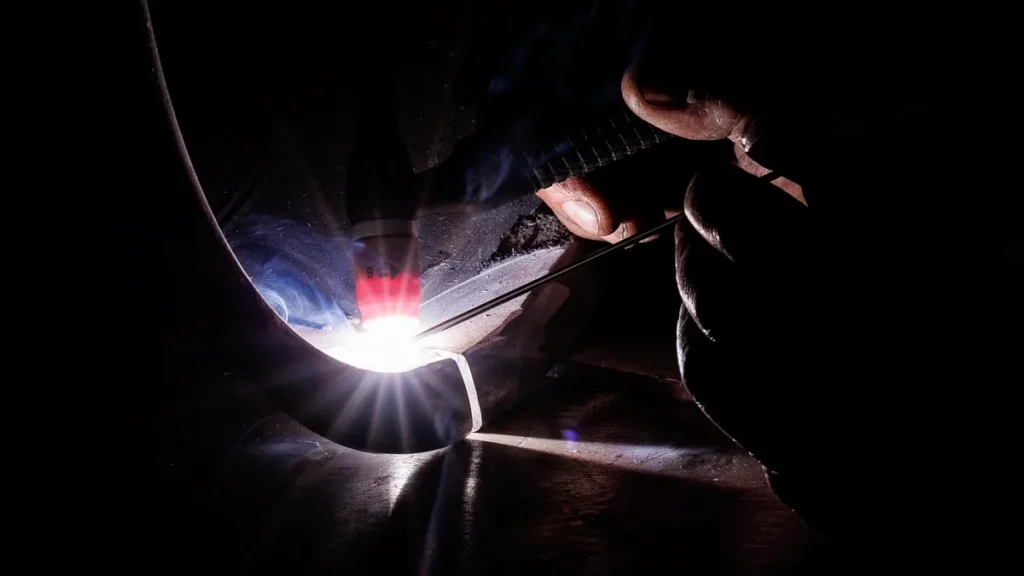
OSMOS X wants a spacecraft able to approach, capture, and manipulate other spacecraft using in-space welding, Payload reported. In-space welding, a technique for joining materials in orbit, aims to address threats directly while avoiding the debris that destructive interception would create. The company presents this as a method to neutralize a threat without adding to the debris environment.
Arnaud Masson, OSMOS X’s chief executive, said the coalition aims to fit jammers or propulsion units onto non-cooperative spacecraft, or satellites that do not assist in an approach or capture, Payload reported. Adding propulsion or jamming payloads to another spacecraft would limit its surveillance of allied assets or change its orbital path without destroying it, the source said.
OSMOS X has not yet flown in space, Payload reported. The company is pre-flight but is already defining the technical path for its first orbital demonstration.
The company plans a first demonstration flight before the end of next year to test a high-power propulsion system with 12,000 mps of total delta-V, Payload reported. Delta-V is a measure of how much velocity change a propulsion system can provide for orbital maneuvers. The upcoming flight is the company’s first planned mission and will exercise the propulsion architecture intended for the larger spacecraft concept.
OSMOS X describes its high-power propulsion system as the foundational technology for the proposed spacecraft, Payload reported.
OSMOS X officials hope European nations will begin ordering the spacecraft in bulk once the study ends, Payload reported. Company officials expect the completed study to generate procurement interest from governments across Europe after the design review ends.
The architecture calls for a few spacecraft rather than a large constellation, Payload reported. The company is not planning a highly proliferated defense force.
Under OSMOS X’s operating model, four satellites can achieve complete coverage of geostationary orbit, or GEO, Payload reported. GEO is the high orbit where satellites match Earth’s rotation and remain over one location above the equator at all times. The company’s model relies on a small constellation to maintain continuous geostationary-orbit presence.
The scenario calls for two new vehicles annually with two-year lifetimes, maintaining four spacecraft in space at all times, Payload reported. Building and launching two spacecraft annually with two-year service lives would keep four vehicles on orbit for rapid repositioning. That fleet would be able to reach any GEO position within two days.
Last week, European defense ministries observed a Russian satellite pass within 50 m of an ICEYE satellite gathering intelligence over Ukraine, Payload reported. The ministries were monitoring the encounter as it took place over Ukrainian territory. It was not clear what the Russian satellite was doing so close to the ICEYE satellite. The source said the close encounter demonstrated a gap in European ability to address comparable orbital threats, framing the event as evidence of a European capability gap in orbital response.
Masson said the defense fund demonstrates European Union capacity to observe, listen, and act, Payload reported. He tied the fund’s purpose to demonstrating that Europe can perform orbital observation, listening, and action in orbit. Arnaud Masson told Payload, “The defense fund is exactly aligned with a purpose to prove to the world that the European Union is capable”.



Join the discussion