Key facts
- The European Space Agency has extended existing industrial agreements to construct four more Galileo Second Generation satellites, increasing the planned next-generation navigation fleet to sixteen spacecraft.
- The contracts cover two additional satellites each for Thales Alenia Space of Italy and Airbus Defence and Space of Germany.
- The prime contracts for Galileo Second Generation were already running since 2021, with Thales Alenia Space and Airbus each contracted to build six satellites before four more were added.
- The second generation spacecraft will join 38 first generation satellites, of which all except four have already been launched.
The European Space Agency extended industrial pacts to construct four additional Galileo Second Generation spacecraft, with signings Oct. 23 in Rome and Oct. 26 in Ottobrunn.
The award splits the new spacecraft evenly, giving two additional vehicles to Thales Alenia Space in Italy and two to Airbus Defence and Space in Germany. The prime agreements date to 2021, when each contractor was already building six satellites under the original arrangement. With this extension, Thales Alenia Space is responsible for eight of its own Galileo Second Generation satellites, and the planned fleet reaches 16 spacecraft. Giampiero Di Paolo, deputy CEO and senior vice president for observation, exploration and navigation at Thales Alenia Space, said, “I would like to sincerely thank ESA, EUSPA and the European Commission for renewing their trust in our company”
ESA acted on EUSPA’s behalf as the satellite navigation system’s service provider, working for the European Union, which owns the system. The European Commission oversees and pays for Galileo within the EU Space program, and ESA retains technical launch authority plus responsibility for designing, developing and qualifying the space and ground segments. ESA handles launch procurement for Galileo. Laurent Jaffart, ESA director of resilience, navigation and connectivity, said, “These contracts represent an investment in Europe’s ability to navigate its own future, independently and with confidence.”
The new vehicles match the second-generation satellites already under development and are set for delivery in 2031, with launch to follow immediately. Each vehicle will carry an upgraded atomic clock setup and links that let satellites exchange data directly. The G2 design includes reprogrammable digital payloads, satellite-to-satellite links, extra and better clocks, hardened authentication and an encrypted Public Regulated Service for government-authorized users. Each G2 satellite will carry six atomic clocks rather than four, and test models will fly alongside operational units.
The spacecraft also include an improved navigation antenna, fully digital payloads and an advanced atomic clock arrangement. Operators can rewrite the digital payloads while in orbit so the satellites can offer new signals and services as user needs change. The spacecraft use anti-jamming and anti-spoofing measures to defend Galileo navigation signals.
Work to develop and qualify the first twelve second-generation satellites is nearing completion, and the vehicles are already under construction. Teams are running integration and compatibility tests now, ahead of integration and flight testing for the first satellites in 2027 and the initial G2 launch in 2028.
Of 38 first-generation satellites, all but four have flown, and four more first-generation vehicles remain scheduled for launch. Two more first-generation satellites are set to lift off before 2026 ends.
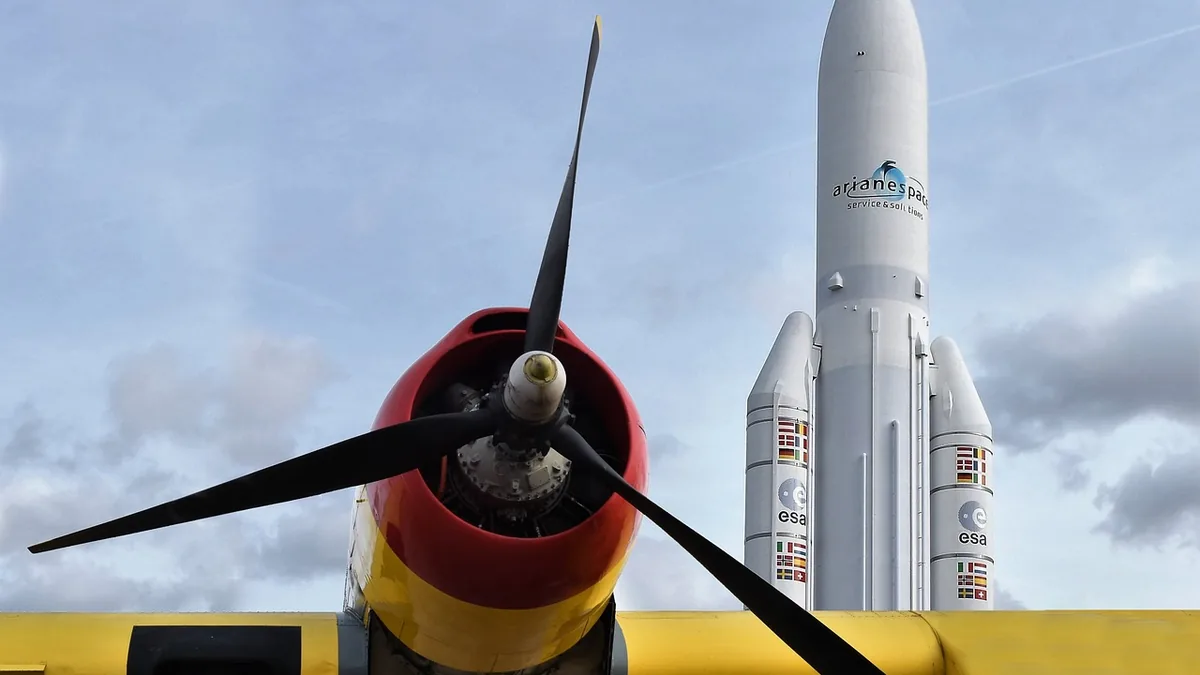
Ariane 6 carried its first Galileo payloads in December 2025. An Ariane 6 rocket with two boosters carried the pair to space, and SAT 33 and SAT 34 have joined the active constellation. SAT 33 went into service in May 2026, followed by SAT 34 on July 23, 2026. After the December 2025 launch, operators ran in-orbit tests from the Galileo Control Centre in Germany, checking the navigation payload, clocks, transponders and security features before moving the pair to their orbital slots; ESA characterized the Ariane 6 injection as the most precise in the program’s history for Galileo.
Delivery dates have shifted. When the contracts were signed in 2021, the first satellites were expected in orbit by the end of 2024, but the opening pair is now assigned to Ariane 6 flights in 2026 and 2027, following the final two first-generation launches. An allocation made in 2024 put the first pair of second-generation satellites on two Ariane 6 launches planned for 2026 and 2027.
Splitting the build between two prime contractors in two countries gives the program two independent supply chains. Airbus plans to build, integrate and test the vehicles at locations including Backnang near Stuttgart, Friedrichshafen, Getafe near Madrid, Ottobrunn and Toulouse. Full-scale production of the German-built satellites started at Friedrichshafen in late 2023 after Beyond Gravity in Switzerland delivered the first structure. Alain Fauré, head of space systems at Airbus, said, “This latest award for two additional sophisticated Galileo satellites underscores Airbus’ satellite manufacturing expertise.”
Thales Alenia Space, a joint venture between Thales holding 67 percent and Leonardo holding 33 percent, will assemble and test the pair at its Space Smart Factory in Rome. Thales Alenia Space now oversees delivery of eight satellites it built for the second-generation constellation, and the company also manages the Ground Mission Segment. It leads a European consortium including partners from 14 European countries and also heads the Celeste In-Orbit Demonstration constellation, which aims to add a future low-Earth-orbit navigation layer beside Galileo’s medium-Earth-orbit system.
The original 2021 satellite contracts were worth EUR 1.47 billion together, with Thales Alenia Space putting its own portion at EUR 772 million. ESA has also awarded about EUR 900 million in further contracts since summer 2022 for system testbeds, ground segment work and engineering support. The overall European commitment to Galileo Second Generation is put at nearly EUR 3 billion under the current financial framework.
Galileo serves billions of users around the world and has ranked as the world’s most precise satellite navigation system since its Open Service started in 2016. Galileo must be enabled on every smartphone sold in the European Single Market, and the system supports rail, maritime, agriculture, financial timing and rescue operations. The system operates beside the American GPS and Russian Glonass networks, and planners envision a full constellation of 24 operational satellites plus six spares.
The first-generation vehicles weigh about 700 kilograms apiece and carry two solar panels measuring five square meters each. CNES released the four 2018 satellites into a 22,922-kilometer-altitude orbit and later guided them to their final working orbits, while SpaceOpal spent six months testing the quartet to confirm it was ready for service.

Join the discussion