Key facts
- Andersen departs the United States on 19 October and is expected to arrive on "The Ice" around 25 October.
- Astrobiologist Dale Andersen filed an Antarctic field report dated October 25, 2026, stating that storms, blowing snow, and low visibility have forced a stop-and-go rhythm on the research team.
- Andersen's team is scheduled to depart Cape Town at about noon on Monday in UTC+2 time and arrive in Antarctica about six hours later.
- Scientists plan to collect sediment cores two to three meters long from Lake Untersee during the Fall 2026 field season for dating and geochemical study.
Astrobiologist Dale Andersen left the United States on Oct. 19 for his second Lake Untersee expedition of the 2026 field season, and on Oct. 25 he reported from Cape Town that storms, low visibility and blowing snow had forced a stop-and-go rhythm on the team.
His cargo is traveling from U.S. airports toward Cape Town and then Antarctica. Two crates left for Cape Town on Oct. 15 and arrived the next morning, while three more fly there on Saturday. The expedition starts at Ultima Airbase, operated by Ultima Antarctic Logistics out of Cape Town.
The team includes two postdocs and a PhD student. Researchers from Birgit Sattler’s Innsbruck lab are on the team, along with Caltech postdoc Jessica Todd. Scientists plan to collect sediment cores two to three meters long during the Fall 2026 season and to sample nearby moraines for dating in Japan.
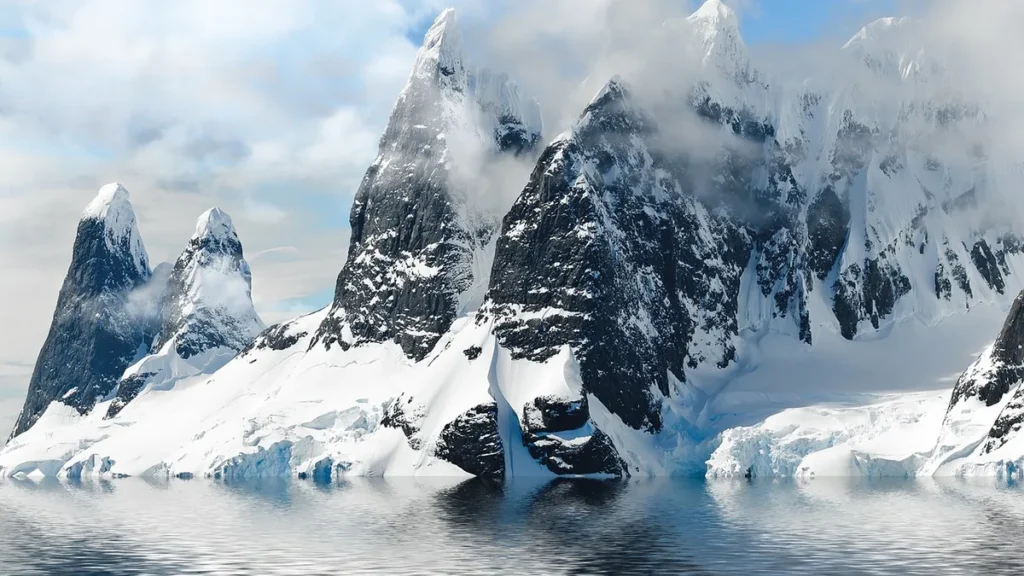
Lake Untersee sits at 71.342° S, 13.473° E in Queen Maud Land’s mountains. Winds there can reach 110 mph, and four months of darkness come with cracking ice and howling winds. The Anuchin Glacier flows from the north and stops at the lake’s edge, while surrounding peaks block the continental ice.
A storm hit Schirmacher Oasis shortly after the team reached Cape Town, burying 70 to 80 percent of the runway surface under roughly 30 cm of snow. Crews cleared it all before aircraft could land. Once the winds eased, the airbase crew worked long, hard hours to prepare the surface. The team plans to depart Cape Town at about noon on Monday in UTC+2 time and reach Antarctica about six hours later.
Andersen described the rhythm in his Oct. 25 field report as “Hurry up and wait,” a phrase for the way polar weather decides when work can proceed. The fieldwork supports research into environments where extraterrestrial life might exist, including Mars and icy moons around Jupiter and Saturn, and explains how astronauts might work at a planned lunar base before traveling to Mars. The SETI Institute calls Lake Untersee a permanently ice-covered Antarctic lake that serves as an analog for icy ocean worlds.
Radiocarbon dating alone cannot establish a reliable chronology for the lake’s sediments because melting glacial ice adds ancient carbon dioxide to the water while the year-round ice cover limits contact with the atmosphere. Surface mats return apparent radiocarbon ages of about 10,000 years, a reservoir effect documented in Antarctic lakes though its size varies. Beneath the thick perennial ice, cyanobacterial mats grow undisturbed in conditions resembling an early atmosphere nearly devoid of oxygen.
Andersen worked with Japanese researchers in 2018 at places including Syowa Station and the Sôya Coast, making the coming season a reunion on the ice. Logistics problems hampered an Indian team’s brief 2012 visit, and 2026 offers a new chance for joint research. Keith Cowing and Andersen first met in 1987 at NASA Headquarters’ old Life Science Division and have reported together since 1996.
After reaching the ice around Oct. 25, Andersen expects to travel to Lake Untersee a few days later using an overland traverse, though the trip depends on logistics and weather. Once the team loads snowmobiles and tractors, it will head south to the lake. Andersen hopes his next report will come from Queen Maud Land.

Join the discussion