Key facts
- Researchers Maria Coelho, Rafael Rianço-Silva, Diogo Gonçalves, Pedro Machado, and Zita Martins use Titan as a testbed to develop and validate a cross-section-based approach for HRCCS template construction.
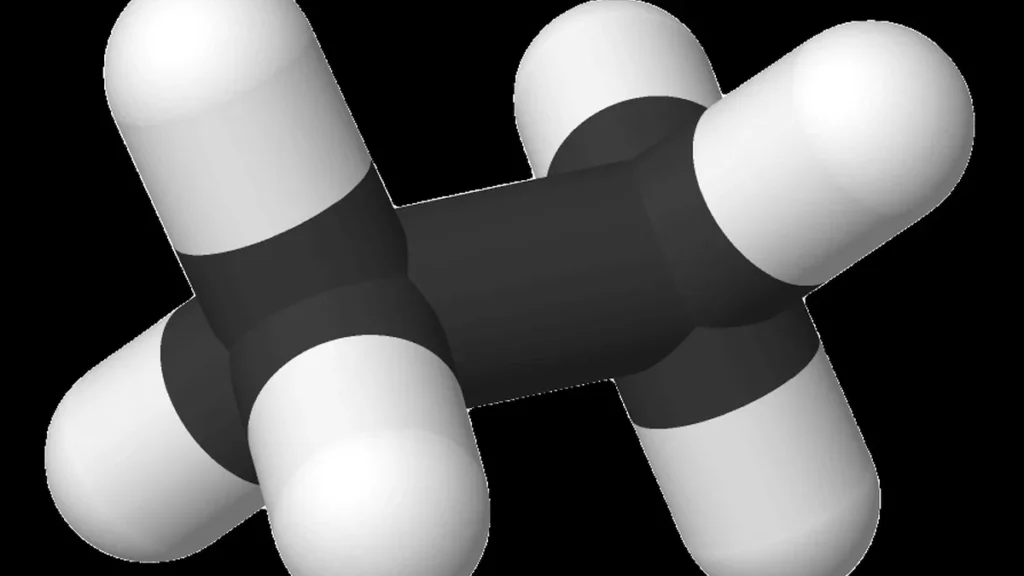
- Analysis recovers known hydrocarbons methane (CH4) and acetylene (C2H2).
- Researchers say the ethane detection relied only on cross-section-based templates since no high-resolution line list exists for ethane.
- The paper presents Titan as a standard for checking molecular detection methods that apply to solar system and exoplanet atmospheres.
In research accepted for publication in August 2026, Maria Coelho, Rafael Rianço-Silva, Diogo Gonçalves, Pedro Machado, and Zita Martins reported the first high-resolution cross-correlation spectroscopy, or HRCCS, detection of ethane in the atmosphere of Titan. The ethane signal reached a significance of SNRpeak (peak signal-to-noise ratio) = 5.17 ± 0.07. The detection succeeded using only cross-section-based templates, because no high-resolution line list is available for ethane.
HRCCS is a technique that can identify molecules when their individual spectral lines are too faint for researchers to pick out directly. The researchers note that the technique’s effectiveness depends on having high-resolution opacity data that is both available and of good quality. A significant number of molecules that are important for atmospheric and astrobiological studies do not have complete line lists, the catalogs of spectral lines that traditional template-based searches rely on. Line lists record the wavelengths at which molecules absorb and emit light, and without complete lists, traditional searches cannot build the templates they need.
The researchers chose Titan as a proving ground for a new way to build HRCCS templates, one based on cross-sections rather than line lists. Instead of relying on line lists, this approach builds templates from cross-sections, which describe how a molecule absorbs light across a range of wavelengths. The team examined K-band CRIRES+ data of Titan covering wavelengths from 1.99 to 2.48 micrometers. CRIRES+ is the spectrograph that gathered the observations, and K-band names the wavelength range.
The researchers calculated cross-correlation functions with two types of templates: line-by-line templates and cross-section-based templates.
The analysis brought back the signals of methane (CH4) and acetylene (C2H2), two hydrocarbons already known to be present in Titan’s atmosphere. It also produced the first-ever HRCCS detection of ethane (C2H6). Given that no high-resolution line list exists for ethane, the detection succeeded using only cross-section-based templates, and it still reached a strong detection significance.
The findings show that constructing templates from cross-sections offers a workable way to apply HRCCS to molecules that lack reliable line lists. This matters because many molecules of atmospheric and astrobiological interest currently fall outside the reach of traditional template-based searches due to incomplete line lists. In the paper, Titan serves as a reference for testing molecular detection methods that work for atmospheres both within our solar system and around exoplanets.
The authors suggest that applying the method to other ground-based spectrographs, to JWST’s highest-resolution modes, and to future facilities such as the ELT could grow the list of molecules researchers can detect in planetary atmospheres. Applying the cross-section-based approach more broadly would expand the catalog of molecules researchers can study in atmospheres across the solar system and beyond.
RAS Techniques and Instruments accepted the paper for publication in August 2026. Rafael Rianço-Silva submitted version 1 of the manuscript on Thu, 3 Sep 2026 at 15:12:56 UTC, and the file measured 8,544 KB. The paper is categorized under Earth and Planetary Astrophysics, Instrumentation and Methods for Astrophysics, Solar and Stellar Astrophysics, Atmospheric and Oceanic Physics, and Space Physics.

Join the discussion