Key facts
- Roman launched from Kennedy Space Center in Florida on Aug. 30, 2026, at 7:26 a.m. EDT aboard a SpaceX Falcon Heavy rocket.
- Schlieder said even very small image flaws could mask the small signals Roman aims to measure.
- Roman carries two instruments: the Wide Field Instrument (WFI) and the Coronagraph.
- Roman's five-year mission includes the High-Latitude Time-Domain Survey to hunt thousands of Type Ia supernovae for measuring cosmic expansion.
NASA’s Nancy Grace Roman Space Telescope entered science commissioning on Oct. 22, 2026, after finishing a full checkout and refining the performance of the observatory and its main instrument. Julie McEnery is Roman’s senior project scientist. She works at NASA’s Goddard Space Flight Center in Greenbelt, Maryland. McEnery said the observatory is fully functional.
She added that Roman can guide itself, take exposures, move data correctly, and slew across the sky to observe different targets.
The commissioning team is now examining the fine quality of the images Roman collects. Engineers had worried that crowded star fields or dusty nebulae might confuse Roman’s guidance setup, which holds steady on individual guide stars. Tom Barclay, the Roman operations project scientist at NASA Goddard, said tests of crowded and dusty fields showed strong performance in every case. Josh Schlieder, the Wide Field Instrument scientist at NASA Goddard, explained that Roman’s strict observing requirements need a clear view without pointing jitter or out-of-focus images.
Even flaws could hide the faint signals the mission aims to measure.
Controllers are running planned test observations to check observatory performance, calibrate instrument responses to light, and sharpen image quality before full science operations begin. Jeremy Perkins works as Roman’s observatory integration and test scientist at NASA Goddard. He said commissioning observations of familiar sky targets reveal excellent detail quickly. Schlieder said a typical Wide Field Instrument observation detects objects a hundred million times fainter than human sight.
Rapid surveying will make large mosaics routine and turn rare sightings into ordinary events. Some Roman systems already exceed requirements, potentially opening new scientific abilities and adding to the mission’s heavy data flow.
The SpaceX Falcon Heavy carried Roman into space from Kennedy Space Center in Florida on Aug. 30, 2026, with liftoff at 7:26 a.m. EDT. About 31 minutes after liftoff, the observatory separated from the upper stage at roughly 740 kilometers altitude and headed toward L2, the second Sun-Earth Lagrange point. L2 is a gravitational parking spot offering a steady, uninterrupted sky view.
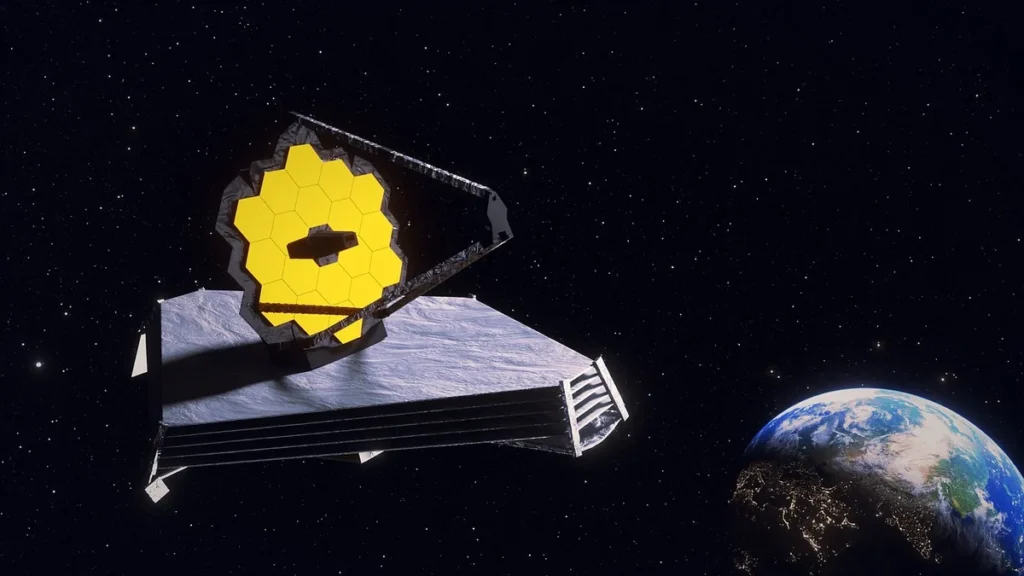
The observatory measures about 42 feet long, 14 feet wide, and weighs about 18,000 pounds. Its hexagonal bus wraps around a central cylinder containing power, propulsion, and attitude-control systems. Roman carries two instruments: the Wide Field Instrument and the Coronagraph. The Wide Field Instrument views sky areas 100 times bigger than Hubble’s and records 300-megapixel images in infrared and visible light.
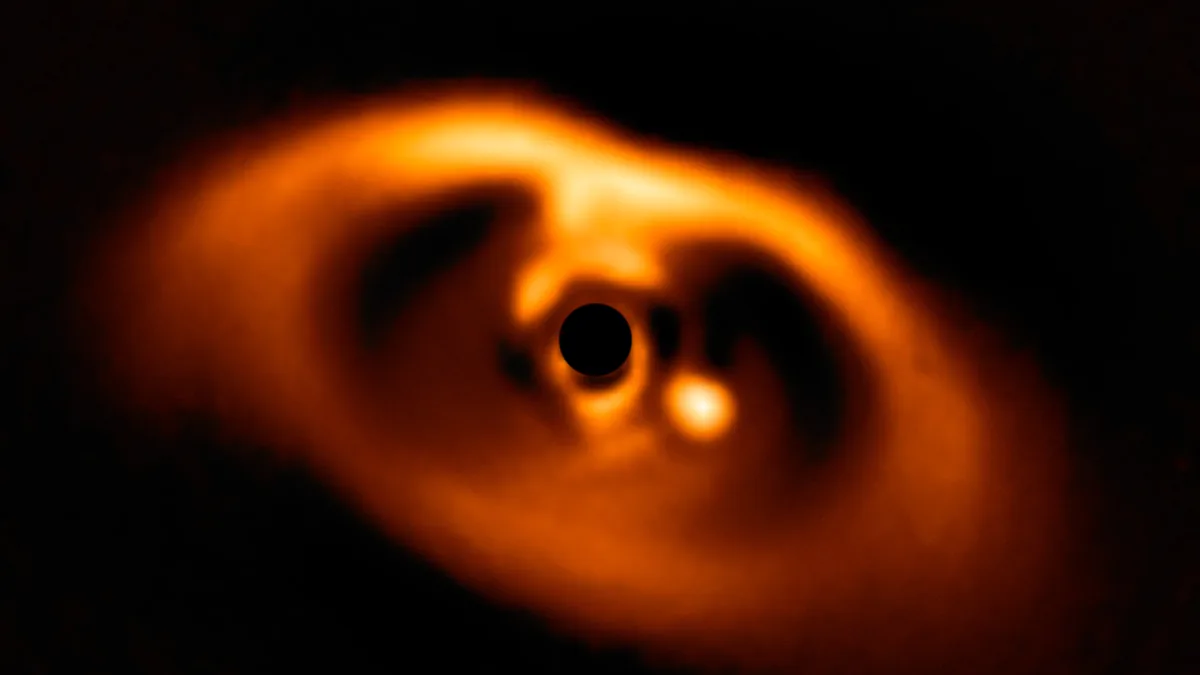
The Coronagraph blocks starlight so faint planets and dusty disks near stars can be seen directly.
NASA put Roman together in April 2026, coming in under budget and before the deadline, and launched nine months earlier than NASA had planned. Congress set development costs at a $3.2 billion cap and appropriated $300 million in 2025 following a 2026 budget request that proposed cuts of roughly 60 percent.
Roman’s five-year prime mission will include three major surveys. The High-Latitude Wide-Area Survey will chart roughly 5,000 square degrees of sky for dark energy research. The High-Latitude Time-Domain Survey will search for thousands of Type Ia supernovae to measure cosmic expansion. The Galactic Bulge Time-Domain Survey expects to find more than 100,000 new exoplanets in the Milky Way’s crowded center.
Roman will send back about 1.4 terabytes of data daily.
Mashable reports NASA expects to share first detailed space images around December and begin surveys in January 2027. Astronomy Magazine reports NASA expects to release Roman’s first public images in early 2027.
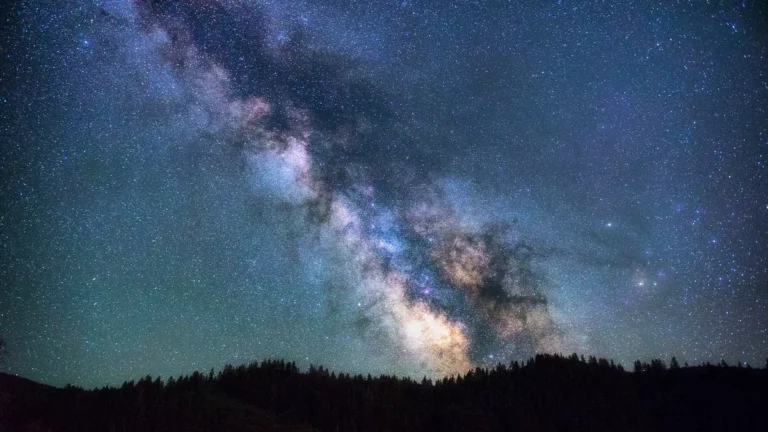
Roman will work alongside Webb, ESA’s Euclid spacecraft, and the NSF’s Vera C. Rubin Observatory in Chile. Once Roman finds new worlds, Webb will aim its more powerful and sensitive instruments to study them in greater detail. Roman’s wide-field camera matches Hubble’s sensitivity but operates 1,000 times faster. A month of Milky Way observations by Roman would require Hubble a century to finish, according to Julie McEnery.
She said, “Roman’s vast reach will allow us to find the weird, the rare and the unusual.” Webb’s vision is even narrower yet precise. It examines objects almost as old as the Big Bang.
Nicky Fox, NASA’s science mission director, said Roman will find thousands of supernovae, plus tens of thousands of planets, billions of galaxies, and tens of billions of stars. Fox said Roman will not search for life. She said Roman will pave the way. Future observatories could answer whether another Earth 2.0 exists.
Join the discussion