Key facts
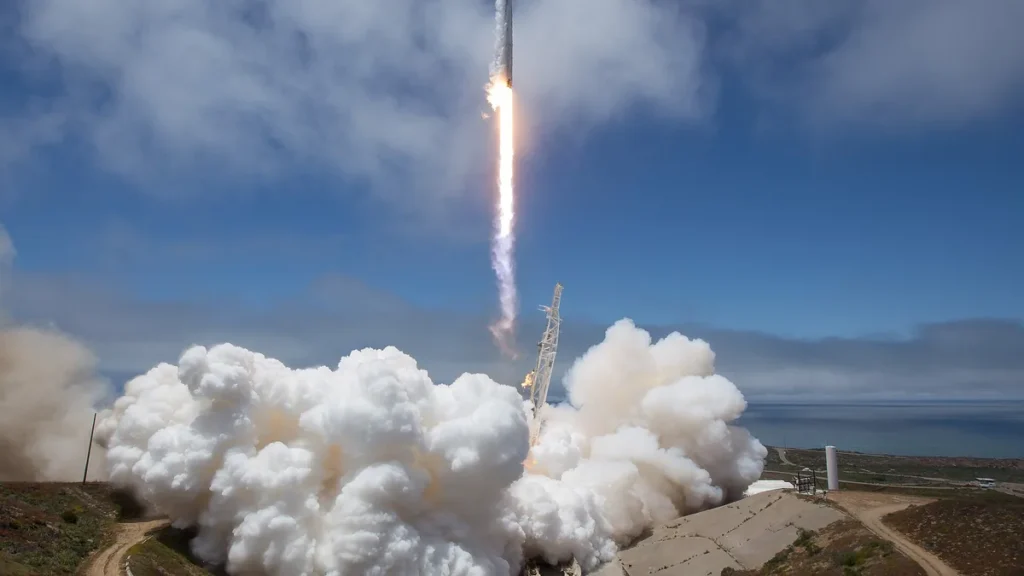
- SpaceX is scheduled to launch 27 Starlink satellites on a Falcon 9 rocket from Vandenberg Space Force Base in California on Tuesday, Oct. 20, 2026.
- Booster B1063 has previously flown Sentinel-6 Michael Freilich, DART, Transporter-7, Iridium OneWeb, SDA-0B, NROL-113, NROL-167, NROL-149, NAOS, and 26 prior Starlink missions.
- The West Coast Falcon 9 launch is scheduled for 5:06 p.m. PDT, which is 8:06 p.m. EDT or 0006 UTC.
- Spaceflight Now will begin live coverage about 30 minutes before liftoff.
SpaceX will send 27 Starlink satellites into orbit aboard a Falcon 9 rocket. The launch takes place at Vandenberg Space Force Base in California. The mission launches Tuesday, Oct. 20, 2026, and News Channel 3-12 says the payload heads to low Earth orbit. Spaceflight Now calls it a Starlink deployment from Vandenberg.
SpaceX changed the T-0 launch time on Oct. 20 at 6:48 p.m. EDT (2248 UTC). The revised target for the West Coast Falcon 9 launch is 5:06 p.m. PDT, which equals 8:06 p.m. EDT or 0006 UTC. The updated schedule comes after the earlier announcement that SpaceX moved the T-0 launch time on launch day. The Falcon 9 will fly on a southeasterly trajectory after leaving the pad.
Spaceflight Now will begin its broadcast about 30 minutes before liftoff, with real-time updates ahead of the West Coast Starlink mission. News Channel 3-12 says a live webcast begins about 10 minutes before liftoff, and viewers can watch it on SpaceX’s X/Twitter account. The outlet gives viewers timing and platforms for watching the launch live.
SpaceX will fly Falcon 9 booster B1063 on the mission, marking its 36th flight and making it one of two vehicles to reach three dozen flights. Spaceflight Now points to the reusability milestone linked to the booster assigned to the Starlink flight. B1063 has flown Sentinel-6 Michael Freilich, DART, Transporter-7, Iridium OneWeb, SDA-0B, NROL-113, NROL-167, NROL-149, NAOS, and 26 prior Starlink missions. Spaceflight Now uses the tail number to identify the booster, while News Channel 3-12 names the missions it has already flown.
Spaceflight Now says B1063 will attempt a landing on A Shortfall of Gravitas, a droneship—a seagoing platform used to catch returning rocket boosters—roughly 8.5 minutes after liftoff. Spaceflight Now gives the recovery timeline and names the droneship for the landing attempt. A touchdown would mark the 229th landing for that vessel and the 673rd recovery of a Falcon booster, totals that depend on a successful touchdown by the booster. News Channel 3-12 says the first stage will return to Earth, naming Of Course I Still Love You as the landing site in the Pacific Ocean.
Vandenberg Space Force Base says the launch will tie the local spaceport’s previous annual launch record. The base is part of a planned increase to as many as 100 launches per year and links the mission to the local site’s annual launch cadence and future growth plans. News Channel 3-12 notes that one or more sonic booms may occur during the launch. The sound’s range depends on launch-day weather and other conditions.
A mid-inclination rideshare launch from Cape Canaveral comes roughly 12 hours before the California mission. Spaceflight Now points out the short gap between the Florida flight and the California Starlink mission. The Florida flight takes place ahead of the West Coast mission. Both involve SpaceX vehicles operating on opposite coasts.
SpaceX President and Chief Operating Officer Gwynne Shotwell said during a Tuesday afternoon earnings call for the third quarter that customers grew by 1.6 million over the three-month period. She said Starlink operated in 174 global markets. The call took place hours before liftoff on the same day as the launch. Shotwell discussed Starlink’s global market reach during the earnings call.
SpaceX said more than 11,100 Starlink satellites made up the constellation in low Earth orbit at the end of the third quarter, including 26 Version 3 satellites deployed on Starship Flight 14. The filing connects the constellation total to hardware sent up on a recent Starship test flight. The count includes hardware from Starship Flight 14 among the Version 3 satellites.
SpaceX’s connectivity segment generated $5.2 billion in revenue for the quarter, marking a 22 percent increase over the previous period. SpaceX said Connectivity segment costs increased $974 million year-over-year due to satellite growth, kit deliveries, and marketing. The document presents quarterly financial results for the company’s connectivity segment. SpaceX attributes the year-over-year cost increase to building more satellites, delivering kits, and marketing.
SpaceX Chief Financial Officer Bret Johnsen said a higher orbital Starship flight rate is key to future Starlink revenue growth. Johnsen said Starlink V3 broadband satellites will reach meaningful deployment volume by year’s end and through 2027. Each Starship launch will provide more than 20 times the downlink capacity of today’s Falcon 9 flights. The CFO laid out the satellite deployment roadmap during the earnings call.
Johnsen said Starlink Mobile V2 satellites will roll out on Starship starting in 2027, backed by an enhanced wireless spectrum portfolio to support direct-to-device service and help the system become a major U.S. mobile carrier. Johnsen tied future mobile Starlink service to Starship and new spectrum assets. Musk said the next Starship launch should happen in November and will try to catch the Ship and Super Heavy booster. SpaceX is seeking Federal Aviation Administration approval for the November Starship launch, and SpaceX awaits regulatory authorization for the planned Starship catch.




Join the discussion