Key facts
- C-COM states that the Q‑band link delivers far more bandwidth than its Ku and Ka‑band antennas and is harder to intercept, suiting backhaul and security‑sensitive applications.
- On October 14, 2026, C-COM Satellite Systems announced the development of a vehicle-mounted Q-band Driveaway Antenna designed to track stratospheric platforms.
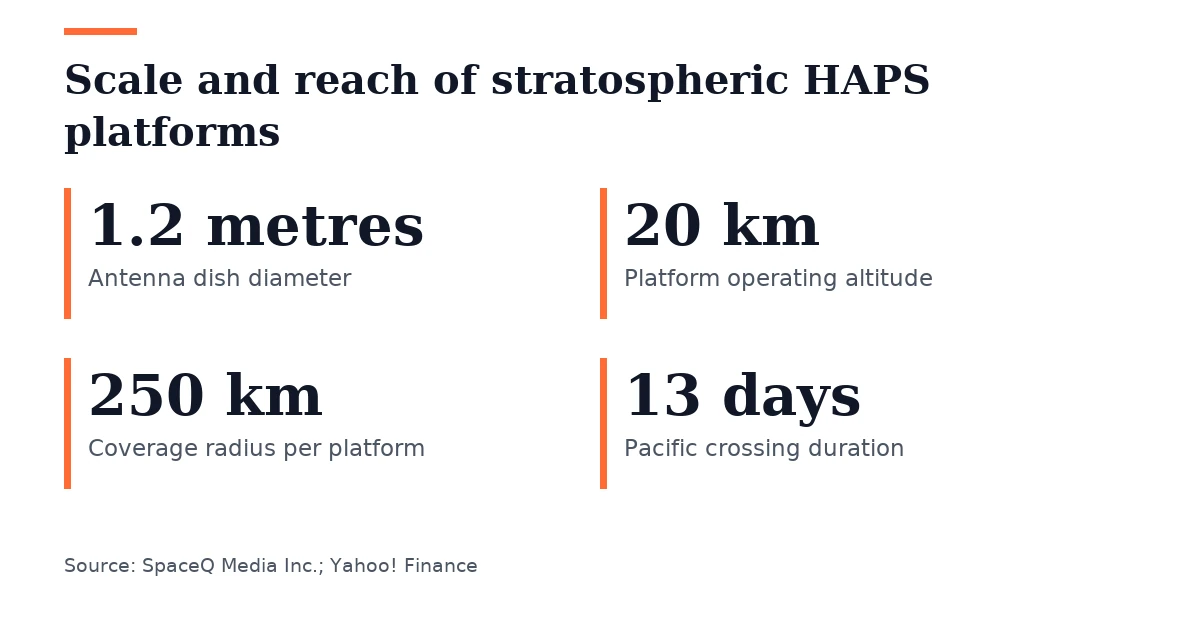
- The iNetVu 1200+ Q-band Driveaway Antenna features a 1.2‑metre carbon‑fibre dish with precision gearing and servomotors for tracking moving stratospheric platforms.
- The October 2026 Q‑band antenna announcement did not specify a sale date, price, or any customer, and did not confirm whether the antenna has established a link with a stratospheric platform in flight.
C-COM Satellite Systems announced on Oct. 14, 2026 the development of a vehicle-mounted Q-band Driveaway Antenna designed to track stratospheric platforms.
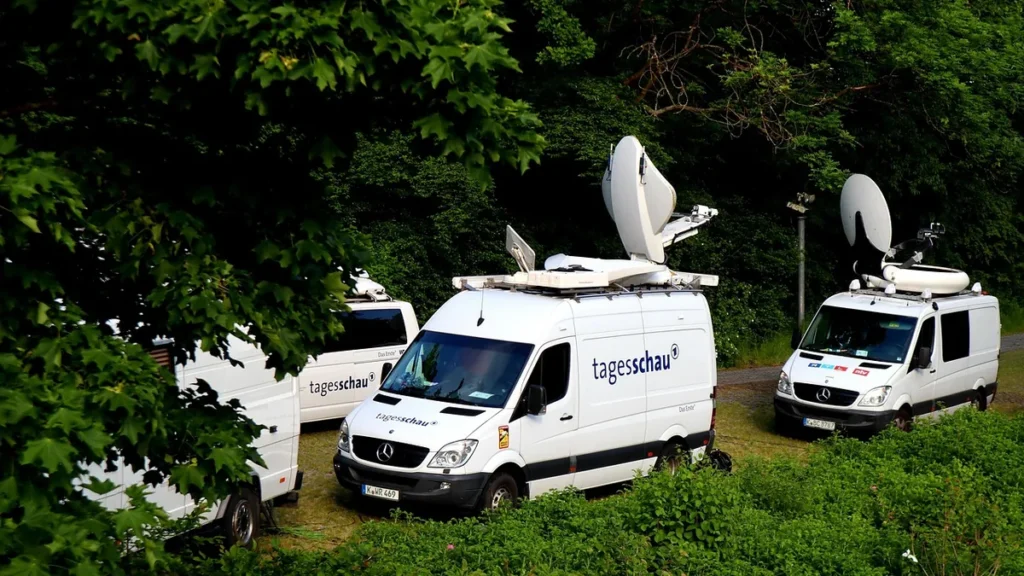
The iNetVu 1200+ Q-band Driveaway Antenna features a 1.2-meter carbon-fiber dish with precision gearing and servomotors that enable it to track a moving stratospheric platform. It can be deployed and connected within minutes without a fixed earth station, making it useful for disaster response and temporary multi‑site coverage. By acting as a mobile gateway, the antenna removes the need for a permanent earth station and can be set up in minutes.
The antenna maintains a Q‑band link at 38‑40 GHz to a stratospheric platform flying around 20 km altitude, forming the feeder connection between the airborne node and a terrestrial gateway. C-COM says the Q‑band link delivers far more bandwidth than its Ku and Ka‑band offerings and is harder to intercept, suiting backhaul and security‑sensitive applications. President and CEO Leslie Klein stated the system was designed for backhauling and emergency services in areas lacking fiber or cellular infrastructure.
Part of the 38‑40 GHz Q‑band range was allocated worldwide for high‑altitude platform station use at the ITU’s 2019 World Radiocommunication Conference, providing a regulatory foundation for stratospheric‑to‑ground links. The iNetVu 1200+ Q-band Driveaway Antenna serves as a gateway within next‑generation Non‑Terrestrial Networks, linking a flying stratospheric node to a terrestrial core network.
Telecom operators including SoftBank are developing high‑altitude platform stations—uncrewed aircraft or airships—that operate in the stratosphere as airborne cell sites. Each HAPS relays its traffic to the terrestrial network through a ground gateway over a feeder link, which is the connection the C‑COM antenna is designed to maintain. In August 2026 SoftBank and Sceye conducted Japan’s first HAPS trial service, reported by the Japanese operator on September 2, 2026; the Sceye platform crossed the Pacific in about 13 days, stationed off Cape Muroto in Kochi Prefecture, where its onboard 4G‑equivalent base station linked to SoftBank’s core network via a ground gateway. The trial demonstrated the platform can maintain station‑keeping, provide backhaul, cover roughly a 250‑kilometer radius, replace hundreds of ground towers, and deliver 4G/5G/6G to unmodified phones with low latency over disaster‑affected areas; SoftBank and Sceye are preparing for commercial HAPS service to begin in 2027.
In May 2026 C‑COM announced the FLY‑101‑LEO Tracker, a transportable antenna for low and medium Earth orbit satellites, with sales expected to begin by the end of August 2026. The October 2026 Q‑band antenna announcement did not specify a sale date, price, or any customer, and did not confirm whether the antenna has established a link with a stratospheric platform in flight; the release is preliminary, leaving commercial details and flight validation pending. SoftBank’s release on the HAPS trial did not specify the equipment or frequencies used for the gateway link.


Join the discussion