Researchers explain that the spider‑like legs of Spider Crater in Western Australia are sandstone ridges that formed after the crater floor rebounded from an ancient meteorite impact that occurred between about 900 million and 600 million years ago.
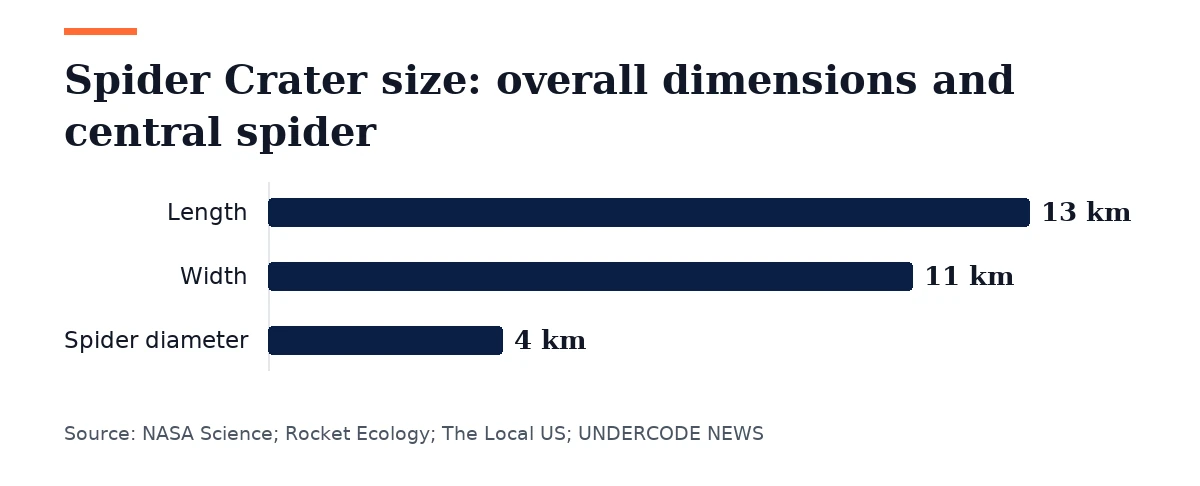
The central spider‑like portion spans roughly 4 kilometers across. Fan‑shaped shatter cones, which arise only when intense shock waves move through rock, are found throughout the central dome of Spider Crater.
Researchers have carried out laboratory analyses of shocked quartz and zircon crystals from the sandstone to help determine the meteorite’s impact angle. Spider Crater resulted from a meteorite impact and has subsequently experienced hundreds of millions of years of erosion.



Join the discussion