Key facts
- Researchers from Columbia University and Imperial College London found that Mars' Valles Marineris canyon system remains tectonically active today, contradicting the assumption that the planet is geologically dormant.
- NASA’s InSight lander detected a marsquake (S0976a) on August 25, 2021, originating beneath western Valles Marineris, caused by rocks slipping along a deep fault.
- The marsquake S0976a was a strike-slip event, where crustal blocks moved horizontally along a steep, deeply rooted fault beneath Valles Marineris, approximately 20 to 40 kilometers (12 to 25 miles) below the surface.
- Jung-Hun Song, lead author from Imperial College London, stated that Valles Marineris was previously assumed to be a 'dead' fossil landscape, but the study proves its faults can still slip and generate marsquakes.
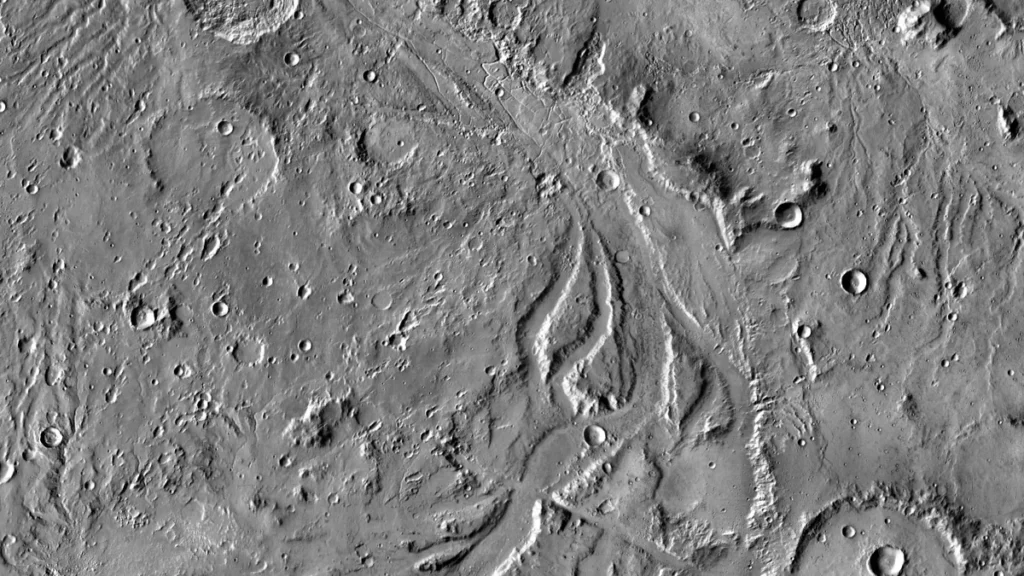
On Oct. 20, 2026, researchers from Columbia University and Imperial College London published a study in Nature Communications revealing that the Red Planet’s massive Valles Marineris canyon system is still tectonically active, which contradicts the assumption that Mars is geologically dormant. The research analyzed seismic data collected by NASA’s InSight lander to trace a marsquake (an earthquake on Mars) to active faulting beneath the canyon.
The seismic event in question, designated S0976a, was detected by NASA’s InSight lander on Aug. 25, 2021. It was the only marsquake during the InSight mission that could be located in Mars’ western hemisphere, making it highly unusual. The event was a strike-slip quake, where crustal blocks moved horizontally along a steep, deeply rooted fault beneath Valles Marineris, at a depth of approximately 20 to 40 kilometers (12 to 25 miles).
Researchers ruled out alternative explanations such as meteoroid impacts, landslides, or other mass movements after analyzing the seismic waves and reviewing satellite imagery of the region, which showed no new craters or large landslides. The seismic wave patterns were consistent only with rocks slipping along a deep fault, confirming that the activity was tectonic in nature.
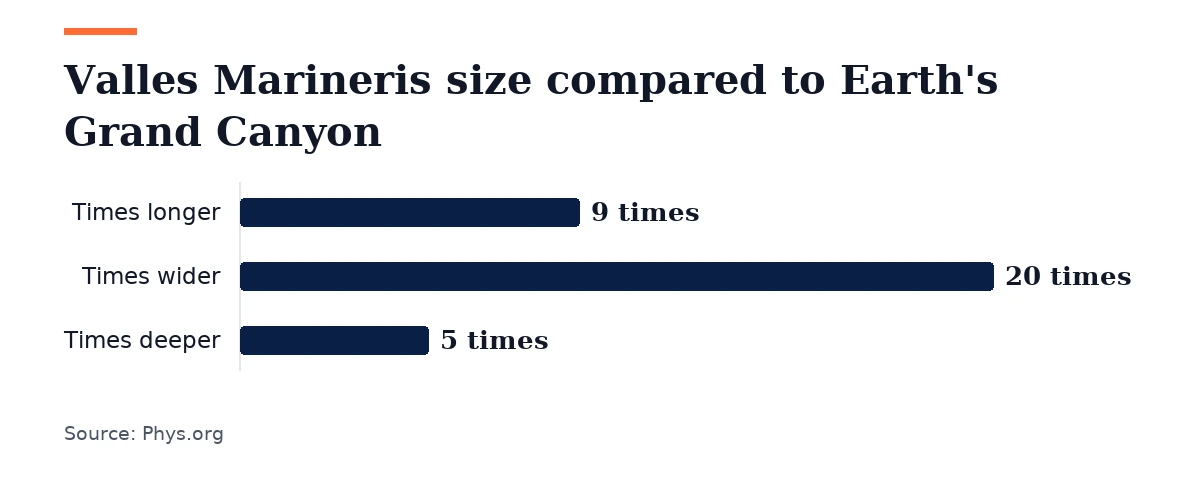
Valles Marineris is the largest canyon system in the solar system, stretching nearly 3,900 kilometers (2,400 miles) long, up to 600 kilometers (370 miles) wide, and over 9 kilometers (5.6 miles) deep. To put that in perspective, the canyon is nearly nine times longer, over 20 times wider, and five times deeper than Earth’s Grand Canyon.
Unlike Earth, Mars lacks plate tectonics and instead behaves as a single, slowly cooling outer shell. This geological setup allows ancient faults to remain active under modern stresses. On Mars, these stresses come from planetary cooling, the massive Tharsis volcanic region, and local effects associated with the Valles Marineris canyon system itself. The S0976a marsquake demonstrates how these forces can reactivate ancient structures, providing a unique natural laboratory for studying fault activity without the complication of moving plates.
The study identifies Valles Marineris as one of at least three regions on Mars where InSight data reveal active faulting. The other two are Cerberus Fossae and southern Elysium Planitia, indicating that crustal stresses vary across the planet rather than following a uniform pattern. Even though NASA’s InSight lander mission ended in 2022, its archived seismic data continue to yield significant discoveries about the planet’s internal activity.
The seismic waves from S0976a traveled through Mars’ core, offering a rare opportunity to study the planet’s deep interior while simultaneously confirming active faulting beneath the canyon, according to researchers including Doyeon Kim of Imperial College London. Jung-Hun Song, the lead author from Imperial College London, explained that Valles Marineris was once assumed to be a dead fossil landscape, but the study proves its faults can still slip and generate marsquakes. Folarin Kolawole of Columbia University‘s Lamont-Doherty Earth Observatory noted that the Red Planet provides a unique natural experiment for studying fault activity without plate tectonics, showing how ancient structures influence modern crustal behavior.





Join the discussion