Key facts
- Orbital Robotics, a startup based in the Seattle area, is preparing to launch two robotic arms for the Astrobee robots on the International Space Station.
- CEO Aaron Borger said the upcoming demo will show that the arms can capture, manipulate and upgrade satellites while in orbit.
- The company plans to deliver the arms to the station during the third quarter of 2027.
- Orbital Robotics was founded in 2024 by Aaron Borger together with former Blue Origin employees Riley Mark, Sohil Pokharna and Doug Kohl.
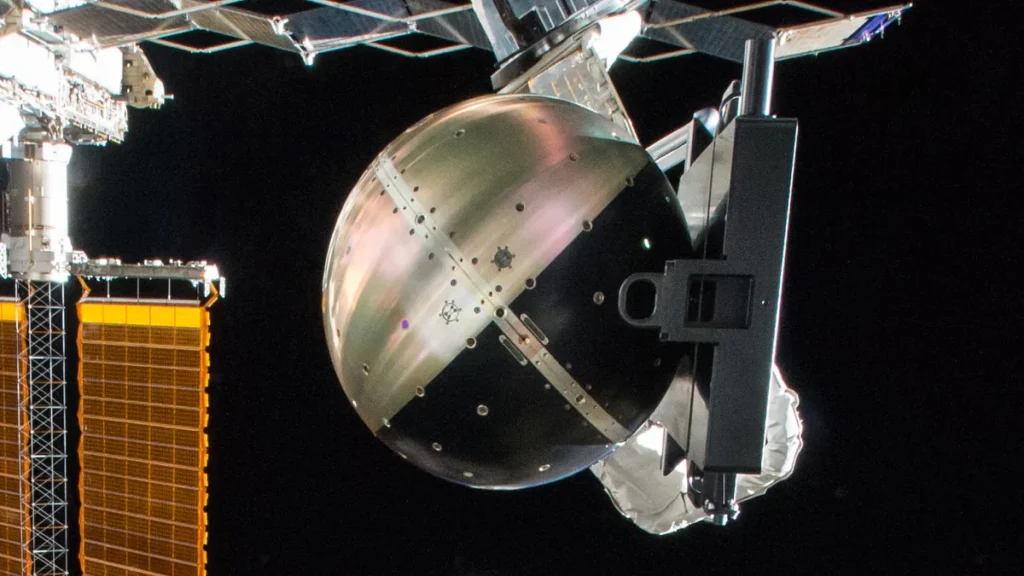
Orbital Robotics announced that it is readying a pair of robotic arms for the Astrobee robots aboard the International Space Station, with delivery planned for the third quarter of 2027. Orbital Robotics, a startup based in the Seattle area, entered the space industry in 2024, founded by Aaron Borger. Three former Blue Origin employees—Riley Mark, Sohil Pokharna, and Doug Kohl—joined Borger. The upcoming ISS test will be the initial flight for the company’s capture technology and autonomous software together in microgravity, and the company has been working on AI-driven arms for free-flying spacecraft.
The arms that will be sent to the station are compact versions of the ORA‑A arm (a robotic arm developed by the company), which was created in Orbital Robotics’ Seattle lab. According to GeekWire, there are three Astrobee robots on the International Space Station for experiments, named Bumble, Queen and Honey; these robots are free-flying platforms that operate within the station, and during 2024 an Astrobee was equipped with tentacle-like arms and successfully grabbed a cube, demonstrating its gripping ability.
Orbital Robotics says that once the arms reach the station, the crew will attach them to one Astrobee, which will then try to capture and service a second Astrobee already on the station. Orbital Robotics says that after capture, a compute module launched with the arms will connect to the captured Astrobee; the plan includes three demonstrations spaced about one month apart to test the arms’ capture technology and autonomous software.
Arkisys is handling the demonstration, providing integration support and platform infrastructure for NASA‘s Astrobee program. David Barnhart, CEO of Arkisys, stated that pairing Astrobee with the new arms makes a robust testbed for the coming in-space servicing, assembly and manufacturing economy. Orbital Robotics indicated that the project is internally funded, and Arkisys’ Space Act Agreement with NASA covers the launch and demo expenses. The Space Act Agreement is a formal agreement with NASA that enables such partnerships.
Orbital Robotics says that after the demonstrations, the arms will remain on the ISS to assist with moving cargo, automating routine tasks, and acting as a platform for robotics experiments. NASA says it is preparing the Fly Foundational Robots mission for a late-2027 launch, which will put a satellite with a commercial arm on the ISS for servicing demonstrations. Aaron Borger, the CEO of Orbital Robotics, commented that the upcoming demonstration will prove the arms can capture, manipulate and upgrade satellites while in orbit.




Join the discussion