Key facts
- NASA Earth Observatory published a satellite view of Shiveluch volcano on Russia's Kamchatka Peninsula on November 27, 2026, showing clouds around the flanks while the summit caldera remained visible.
- Shiveluch's upper caldera is 9 kilometers (5.6 miles) wide and open to the south.
- A lava dome inside the caldera appears as a dark area and forms when vents extrude viscous magma.
- According to the Kamchatka Volcanic Eruption Response Team (KVERT), lava effusions and explosive activity at Shiveluch continued for months during November 2026.
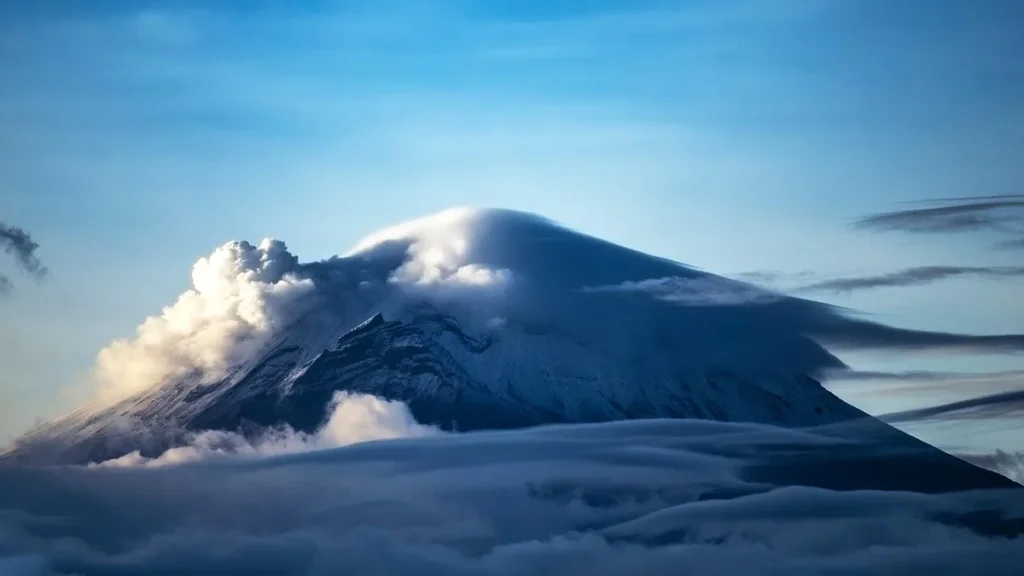
NASA Earth Observatory published a satellite view of Shiveluch volcano on Russia’s Kamchatka Peninsula on November 27, 2026, showing clouds around the mountain’s flanks while the summit caldera remained visible.se.
The Landsat 9 Operational Land Imager acquired the image on November 8, 2026. Clouds surrounded the snowy mountain but stayed below its 3,283-meter (10,771-foot) peak, leaving an unobstructed view of the caldera and northern upper slopes. Lauren Dauphin produced the NASA Earth Observatory image from U.S. Geological Survey Landsat data, while Lindsey Doermann authored the accompanying story.
Shiveluch’s upper caldera is 9 kilometers (5.6 miles) wide and open to the south. Inside the caldera, a dark lava dome appears where vents extrude viscous magma. The dome forms part of a horseshoe-shaped crater at the mountain’s center. Lava domes on Shiveluch go through cycles of growth and collapse, and collapses can launch rapid flows of hot ash and rock known as pyroclastic flows.
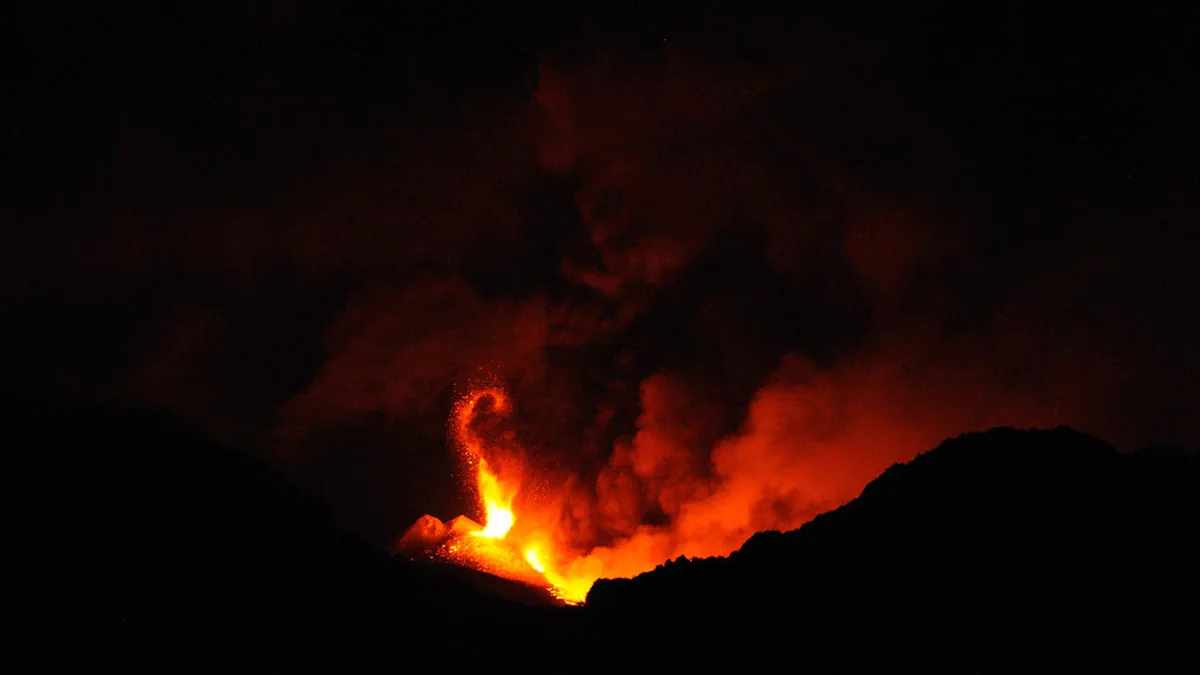
Kamchatka Volcanic Eruption Response Team reports say the lava dome at Shiveluch’s center has been expanding in recent months inside that crater. The dome is a mound of thick, slow-moving lava. KVERT also reported that lava outflows and explosive blasts continued for months during November 2026. Heat anomalies from Shiveluch show up regularly in satellite data even though clouds often cover the mountain.
NASA Earth Observatory states that orbiting sensors regularly detect heat anomalies from Shiveluch even when clouds frequently cover the mountain. KVERT said ash that had been resuspended moved 120 kilometers (75 miles) eastward on November 8, 2026. The observatory characterized the event as mild compared with the volcano’s usual behavior.
Periodic explosions from Shiveluch loft ash several kilometers into the air, allowing it to travel long distances and endanger aircraft. The November 8 resuspended ash plume was described as relatively tame compared with these larger explosions.
In July 2026, ash from the volcano traveled on the jet stream across the Bering Sea into Alaskan airspace, leading news reports to cite multiple canceled flights. The event demonstrated the aircraft hazard created when Shiveluch sends ash high into the atmosphere.
Earlier in 2026, Landsat 9 images taken on April 23 showed Shiveluch melting snow from within as volcanic heat moved through the frozen Kamchatka terrain. The pictures revealed dark paths of ash and volcanic debris crossing snow-covered slopes. NASA Earth Observatory ranks Shiveluch as Kamchatka’s northernmost active volcano and among Earth’s most active volcanoes.
Shiveluch stays active almost constantly, and orbiting sensors regularly observe ash fallout, thermal signals and fast rock avalanches on its flanks. Satellites often spot ash deposits, heat signatures and hot-rock avalanches moving down the slopes because the volcano remains active nearly without pause.
When parts of the unstable dome fall apart, they can set off swift flows of hot ash, gas and rock known as pyroclastic flows. Thick pyroclastic flow deposits can retain heat for months or years after an eruption ends.
The lingering heat remains visible from space as snow melts along channels where fresh volcanic deposits spread across the slopes. Recent satellite views show snow disappearing along multiple flow paths covered by new volcanic debris spread across the mountainside over the past few months. Some dark scars on Shiveluch may still contain heat from the volcano’s massive 2023 eruption, which sent huge pyroclastic flows across the mountain. The scars appear in imagery that also shows newer ash and debris channels cutting through snow.
Janine Krippner, a volcanologist, said Shiveluch collapses in cycles and rebuilds repeatedly because it is constantly volcanically active. “It goes through cycles of collapse but then builds itself up again and again through constant volcanic activity,” Krippner said. Krippner also joked that the volcano should be on a motivational poster. The statement accompanied NASA Earth Observatory satellite images.

Join the discussion