Key facts
- More than 600 of the first-generation OneWeb satellites built by the business are still in orbit today.
- Loft Orbital has ordered more than 30 Arrow satellite buses from the business.
- Steve Feinberg co-founded Cerberus in 1992 and served as co-CEO until March 2025, when he left to become the current U.S. Deputy Secretary of Defense.
Cerberus Capital Management agreed on Nov. 24, 2026, to acquire Airbus U.S. Space & Defense’s U.S. Space Systems business, headquartered in Merritt Island, Florida.
The transaction is expected to close by the end of 2026, subject to customary closing conditions, and neither party disclosed financial terms. Airbus does not break out the annual revenue of its U.S. arm.
Cerberus said it intends to invest in the business’s engineering organization, product portfolio, and U.S. supply chain to create a leading satellite platform owned independently in the United States, citing demand for resilient space architectures. A Cerberus representative declined to answer Via Satellite’s questions, including whether the firm will rename the manufacturing business.
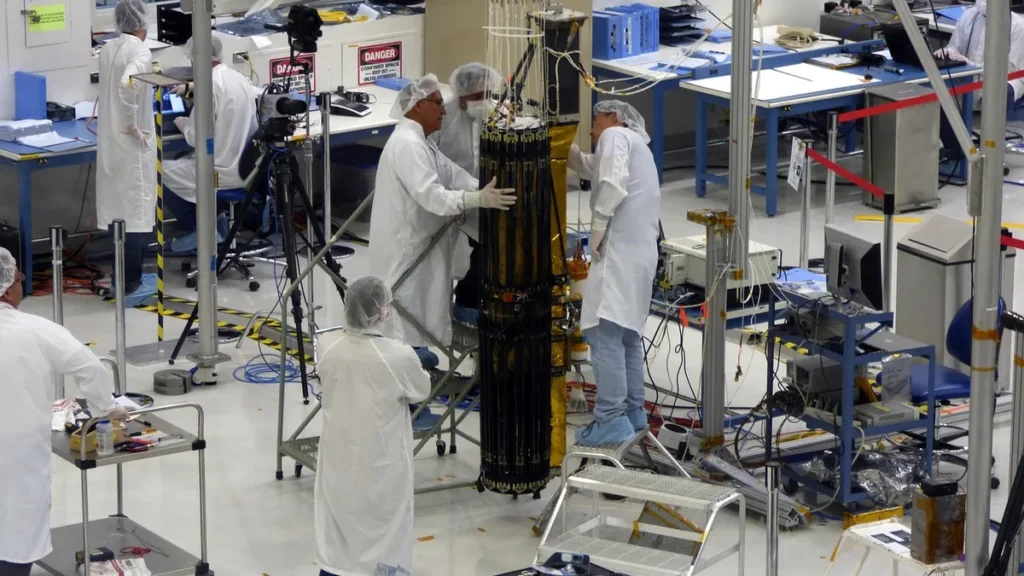
The business is based at a roughly 200,000-square-foot production facility on the Space Coast in Merritt Island, Florida, adjacent to the Kennedy Space Center. The plant opened in 2019 and built the first generation of OneWeb satellites and Arrow bus platforms (a satellite bus is the main body of a spacecraft).
The unit began in 2016 as OneWeb Satellites, a joint venture between Airbus Defence and Space and OneWeb created to build the OneWeb low-Earth-orbit constellation. Airbus is now building 669 satellites for Eutelsat OneWeb in Toulouse, France, after Eutelsat bought OneWeb in 2023 and sold its half of the joint venture to Airbus U.S. Space & Defense in early 2024. The Florida facility will not produce the next OneWeb generation.
The business has produced and launched more than 650 satellites for customers including the first-generation OneWeb constellation and platforms for the Space Development Agency’s constellation. More than 600 of those first-generation OneWeb satellites remain in orbit.
Its customer base includes Northrop Grumman and Loft Orbital alongside government and commercial missions. The unit built 42 satellite platforms for Northrop Grumman as a subcontractor for the Space Development Agency’s Proliferated Warfighter Space Architecture, and the first plane of 21 satellites launched in October 2026. Loft Orbital has ordered more than 30 Arrow satellite buses.
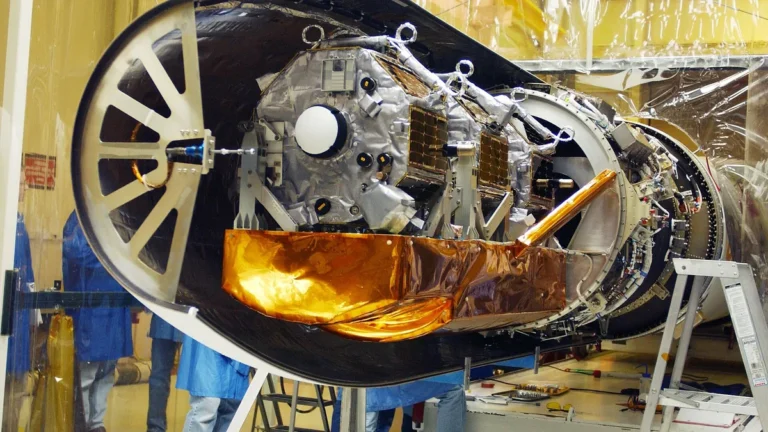
The business builds the Arrow satellite bus in two variants: the 100 kg Arrow150 platform that supported OneWeb and the larger Arrow450 platform. Debra Facktor leads the U.S. Space Systems business.
Caleb Henry, director of research at space analysis firm Quilty Space, said, “The commercial market skewed heavily towards vertical integration.” He also said the government market took longer than expected to mature, leaving Airbus in a more crowded field than first envisioned. Henry covered OneWeb as a journalist for Via Satellite and Space News and wrote a book about the company’s origins scheduled for publication next year.
The factory’s financial numbers were never publicized, Henry said, but the facility clearly did not sustain the long-term demand envisioned when it was built. He noted that Airbus, Eutelsat and the French government want future OneWeb satellites built in Europe, so the Merritt Island factory would benefit from a new U.S.-focused owner.
Retired Gen. John “Jay” Raymond, the first chief of Space Operations for the U.S. Space Force, is senior managing director of Cerberus Supply Chain. “With dedicated U.S. ownership and continued investment, we believe the [Space Systems unit] can innovate and scale to meet growing mission requirements,” Raymond said. He added that this would strengthen the nation’s space industrial base and secure U.S. interests in, through, and from space. Raymond framed space as a contested warfighting domain vital to national security and that of allies, and Cerberus emphasized that space is essential to U.S. and allied national and economic security.
Cerberus Supply Chain was established in 2022 as a fund dedicated to supporting defense-related companies, part of Cerberus’s strategy to invest in defense industry firms. Craig Brooks, co-head of Cerberus Supply Chain and senior managing director, said, “This transaction is directly aligned with the mission of Cerberus’ Supply Chain strategy.”
Danil Subkhankulov, managing director of Cerberus Supply Chain, said the business is well positioned to grow as a trusted, independent supplier of spacecraft, pointing to its flight history, engineering depth, and production capability. He said Cerberus looks forward to working alongside the business’s talented team. The unit offers engineering, design, manufacturing, integration, testing, and launch preparation capabilities.
Steve Feinberg co-founded Cerberus in 1992 and served as co-CEO until March 2025, when he left to become U.S. Deputy Secretary of Defense. The firm has deep connections to the Department of Defense. Its space holdings also include Stratolaunch, which the firm acquired in 2019, and an investment in Star Catcher, a company working to build power-beaming satellites that would supply power to customer spacecraft in orbit. It fully acquired Vivace earlier in 2026; Vivace contributes to launch vehicles, satellite systems, and missions supporting defense primes and space companies.
Alex Veneziano, CEO of Airbus U.S. Space & Defense, said autonomous systems are increasingly central to the future of defense and that the renewed strategic focus will strengthen competitiveness, advance innovation, and respond to U.S. defense and national security customer needs. Airbus U.S. Space & Defense is expanding autonomous aircraft capabilities while pursuing new opportunities in the U.S. defense market.
Airbus U.S. Space & Defense said the U.S. Space business considerations are not connected to the Airbus Defense and Space business outside the United States. A company representative made the clarification in a statement to Via Satellite. The company remains committed to unmanned aerial systems, military helicopters, and fixed-wing aircraft solutions and is focusing on its core aviation business.

Join the discussion