Key facts
- Plants grown in space can take in carbon dioxide, release oxygen and clean water for reuse, skills that become increasingly important as human missions venture farther away from Earth.
- NASA's Biological and Physical Sciences Division leads scientific discovery and supports exploration through investigations carried out in space settings that cannot be replicated on Earth.
- Strawberries are one of the few sweet fruits NASA is considering for spaceflight, valued for being nutritious, aromatic, and self-pollinating.
- NASA Kennedy worked with the University of Melbourne and the University of Western Australia on a recent comparison of a wild strawberry and NASA's leading candidate, ‘Delizz,' under simulated space conditions.
NASA researchers are evaluating strawberries, cucumbers, and lemon basil as fresh-food candidates for future Moon and Mars missions, with strawberry and lemon basil testing underway at Kennedy Space Center in Florida on Nov. 25, 2026.
During the week the nation celebrates Thanksgiving, NASA published the deep-space crop-candidates article, linking fresh food variety in space to the holiday. The research ties crop choices to menu variety, a concern that is top of mind during the U.S. holiday week. Fresh food, nutrition, and menu variety are central goals as NASA prepares for missions to the Moon and Mars.
Strawberries are one of the few sweet fruits NASA is considering for spaceflight, valued for being nutritious, aromatic, and self-pollinating. At Kennedy Space Center in Florida, researchers grow strawberries in flight-like growth chambers to evaluate them as a space crop. The Australian Research Council Centre for Excellence in Plants for Space, a NASA partner, also helps expand knowledge of space strawberries.
NASA Kennedy worked with the University of Melbourne and the University of Western Australia on a comparison of a wild strawberry and NASA’s leading candidate, Delizz, under simulated space conditions, with both NASA and Australian university researchers taking part. The comparison was done to determine which strawberry thrived better under conditions simulating space. A September study in Life Sciences in Space Research found that Delizz produced big red berries while the wild strawberry gave small yellow ones due to a recessive genetic mutation. From seed, the wild strawberry yielded twice the number of buds, flowers, and fruit compared with Delizz, but its heavy runner growth would take up valuable spacecraft room, leaving Delizz as NASA’s preferred candidate.
No crop from the gourd family has been grown in space yet, so cucumbers could become the first, NASA says. Research supported by NASA recently assessed cucumbers regarding growth, yield, and nutrition in spaceflight conditions. Research published in August in HortScience reported that cucumber plants displayed some enlarged leaves yet produced a steady stream of edible fruit.
Crop variety such as cucumbers helps astronaut diets and mental well-being while increasing plant biodiversity, which can improve crop success odds on long missions. Greater biodiversity raises the likelihood that at least some crops succeed during extended missions away from Earth. Plants grown in space can take in carbon dioxide, release oxygen and clean water for reuse, skills that become increasingly important as human missions venture farther away from Earth. These life-support functions matter because crews will venture farther from home, making resupply harder.
NASA Kennedy is testing lemon basil, an edible herb with a citrus scent and taste, and the herb is advancing in trials. Lemon basil passed preliminary space crop testing and completed required seed sanitization to remove microorganisms before spaceflight. Seed sanitization removes microorganisms from seeds and is a mandatory step before any spaceflight. The next step involves checking how lemon basil grows in plant pillows, containers that can hold plants on the space station.
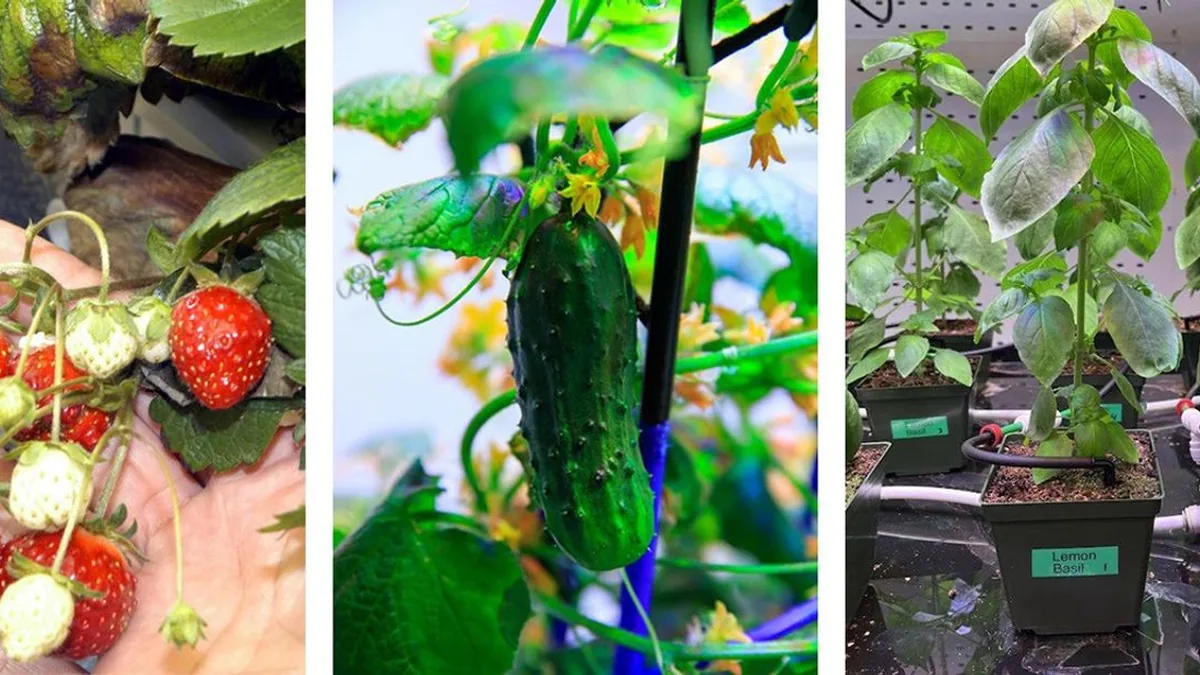
Astronauts can quickly face menu fatigue, yet fresh herbs such as lemon basil can change packaged meals into something new and satisfying while supporting health and performance in space. Fresh herbs can make bland meals bolder, offering variety that supports crew health and performance on long missions.
NASA’s Biological and Physical Sciences Division leads scientific discovery and supports exploration through investigations carried out in space settings that cannot be replicated on Earth. The division looks at biological and physical phenomena in extreme settings to push basic scientific knowledge ahead for journeys that go farther and last longer in space, while also aiding life on Earth. This work supports deeper exploration and produces benefits for people on the planet.
NASA’s Biological and Physical Sciences Division has a new investigation set to launch to the International Space Station. There, a first-of-its-kind prototype growth chamber will provide insights for crop production systems intended for future Moon Base habitats and voyages to Mars. The investigation is part of expanding capabilities in space while Earth-based crop research continues, and its data are meant to inform designs for Moon Base habitats and Mars missions. NASA’s note does not state a launch date for the new International Space Station investigation.
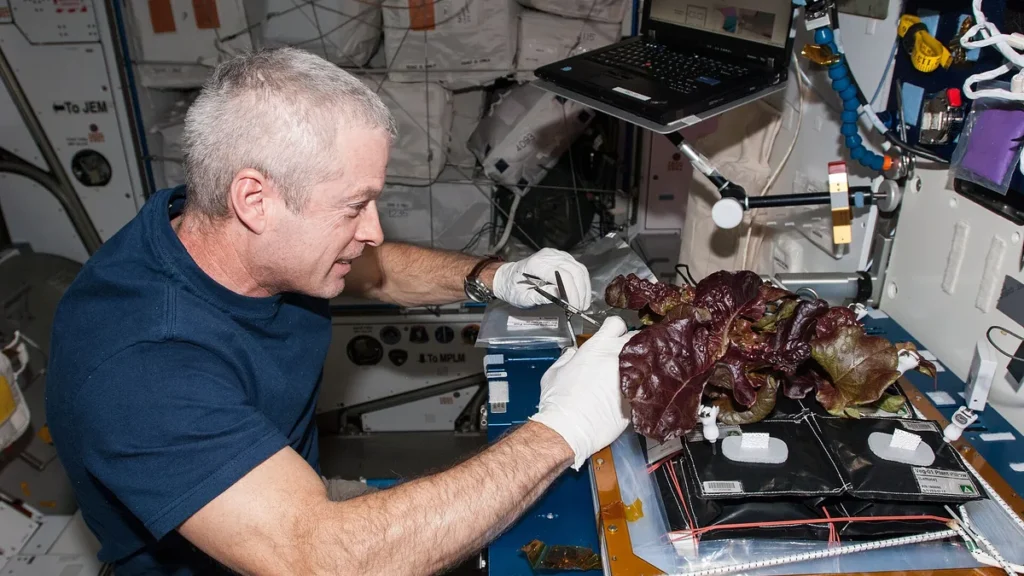
In 2019, astronaut Christina Koch worked with the Veggie PONDS experiment to grow and harvest lettuce and mizuna on the International Space Station. Lettuce and mizuna are among the vegetables already grown on the station.

Join the discussion