Key facts
- NASA Administrator Jared Isaacman said it is irresponsible, even as hyperbole, to call the detonation a Chernobyl event since the event has no reactor and no fission products.
- Iowa Gov. Kim Reynolds issued a proclamation declaring a disaster emergency for Des Moines, Lee and Van Buren counties; it allows all available state resources to be deployed to help citizens in those disaster counties.
- Up to 100 federally activated Iowa National Guard soldiers would assist with community outreach to about 150 households that local and federal authorities identified.
- A U.S. Army Corps of Engineers map built from satellite data highlights where surface lead deposits are expected to exceed Environmental Protection Agency maximum allowable amounts on surfaces.
NASA deployed a P-3 Orion, a Langley-based Gulfstream III, and an Ames B200 research aircraft, along with the TEMPO satellite instrument, to monitor the U.S. Army’s planned controlled detonation of aging explosives at the Iowa Army Ammunition Plant in Middletown, Iowa, set for 9 a.m. CT on Wednesday, Nov. 25, 2026. The detonation involves nearly five tons of material, including lead azide, the primary explosive used to set off grenades and artillery shells.
The agency said it collaborates with other federal agencies and stands ready to send more equipment and scientific experts when required. The agency described its role as part of a coordinated whole-of-government effort to collect environmental and atmospheric data around the plant.
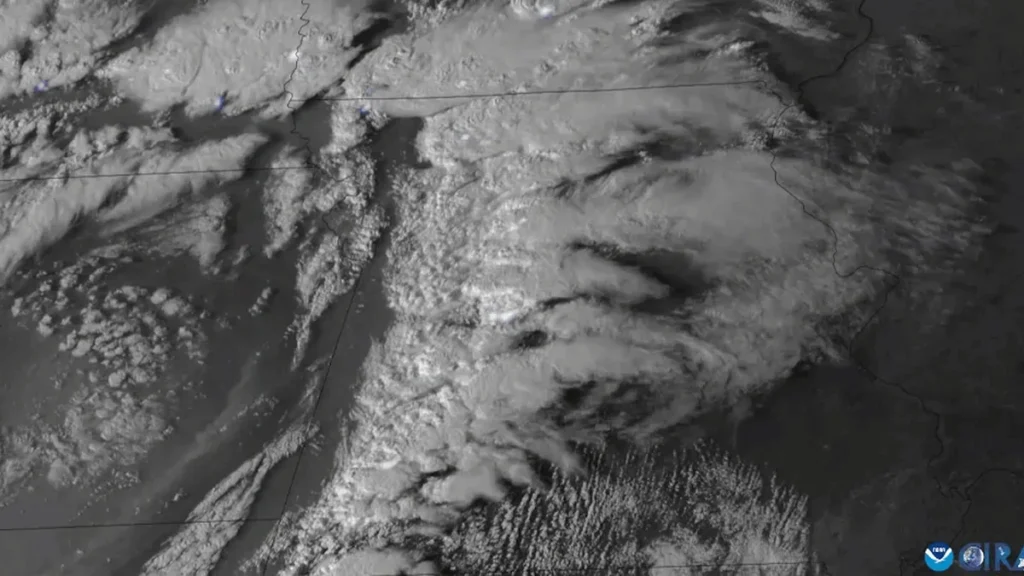
TEMPO, which stands for Tropospheric Emissions: Monitoring of Pollution, monitors atmospheric pollution and is mounted on a commercial satellite orbiting Earth. A U.S. Army Corps of Engineers map built from satellite data shows where surface lead deposits are expected to exceed Environmental Protection Agency maximum allowable amounts on surfaces.
NASA Administrator Jared Isaacman said it is irresponsible, even as hyperbole, to describe the detonation as a Chernobyl event because it involves no reactor and no fission products. He made the remark online after someone compared the blast to the nuclear accident, and he separately said NASA calls on its best scientific minds and sensors in challenging circumstances.
Robert Cekada, director of the Bureau of Alcohol, Tobacco, Firearms and Explosives, said the stockpile of 68 barrels of lead azide arrived at the plant in 2009 and turned unstable in March. Col. Aaron Teller, group commander of the 71st Explosive Ordnance Disposal, said the barrels deteriorated quickly over the past eight months, with crystallized material on their exteriors and lids preventing teams from moving or opening them, and teams could not chemically treat the lead azide because of the deterioration. Maj. Gen. Eric Shirley, commanding general of the U.S. Army Sustainment Command, said months of research found no other safe way to dispose of the barrels at Middletown.
Acting Army Secretary Adam Telle said teams worked with several experts to limit blast effects using gel blocks, foam barriers and a waterwall at a news conference Tuesday morning, Nov. 24, and the disposal plan had been in place since March.
Officials told Middletown residents to evacuate on Tuesday, Nov. 24, and not to return before Friday, Nov. 27, at the earliest, covering an area within a 5-mile cone extending southwest from the plant and reaching one mile past the dispersion path. The CDC opened an emergency response for public health communication and technical assistance and urged residents to stay indoors with doors and windows closed for 24 to 28 hours. Sean Kaufman, a Health and Human Services official overseeing preparedness and response, said pregnant women, children and people with chronic illness near the plant should evacuate, adding that people close to the area who felt uncomfortable should do what they needed to care for their families. Tom Croci, the Environmental Protection Agency’s associate administrator for national security and operations coordination, said the agency would track local lead levels until they were back at safe levels and would put consolidated real-time field data out for the public.
Iowa Gov. Kim Reynolds issued a proclamation on Tuesday, Nov. 24, declaring a disaster emergency for Des Moines, Lee and Van Buren counties, allowing all available state resources to be deployed to help citizens in those counties. Up to 100 federally activated Iowa National Guard soldiers would assist with community outreach to about 150 households identified by local and federal authorities. Iowa’s Department of Agriculture and Land Stewardship advised farmers before the blast to consider moving livestock to another location or into a barn, machine shed or shelter. Missouri Gov. Mike Kehoe activated the State Emergency Operation Center on Tuesday, Nov. 24, in case resources were needed.
The detonation, originally set for the previous week, was postponed twice because of weather and a lawsuit filed by the Iowa Environmental Council and the Sierra Club Iowa Chapter. The Eighth Circuit Court of Appeals granted an administrative stay late Thursday night, Nov. 19, then lifted it on Monday, Nov. 23, after rejecting the groups’ emergency request; the groups said they would drop the case. The blast also faced a week-long delay driven by public worry that it would create clouds of lead and toxic materials. ABC7 Chicago, which published Nov. 24, described the detonation as set for Tuesday, while Space and KGAN, which published Nov. 25, place it on Wednesday.




Join the discussion