Key facts
- Atomic-6 announced proof-of-concept test results on Nov. 20, 2026, showing a Space Armor Lite tile stopped a 3-mm aluminum sphere traveling about 7.2 km/s while a 4-mm solid aluminum plate allowed penetration.
- Atomic-6 said the 4-mm solid aluminum plate let the sphere punch through, leaving fragments embedded in the simulated torso.
- Atomic-6 cautioned that the stationary torso test did not establish injury outcomes, pressure retention, or space readiness because it involved no functioning spacesuit or life-support hardware.
- Commander Chris Hadfield, former International Space Station commander and Atomic-6 advisory board member, said early results are encouraging and further testing may show whether the material adds astronaut safety.
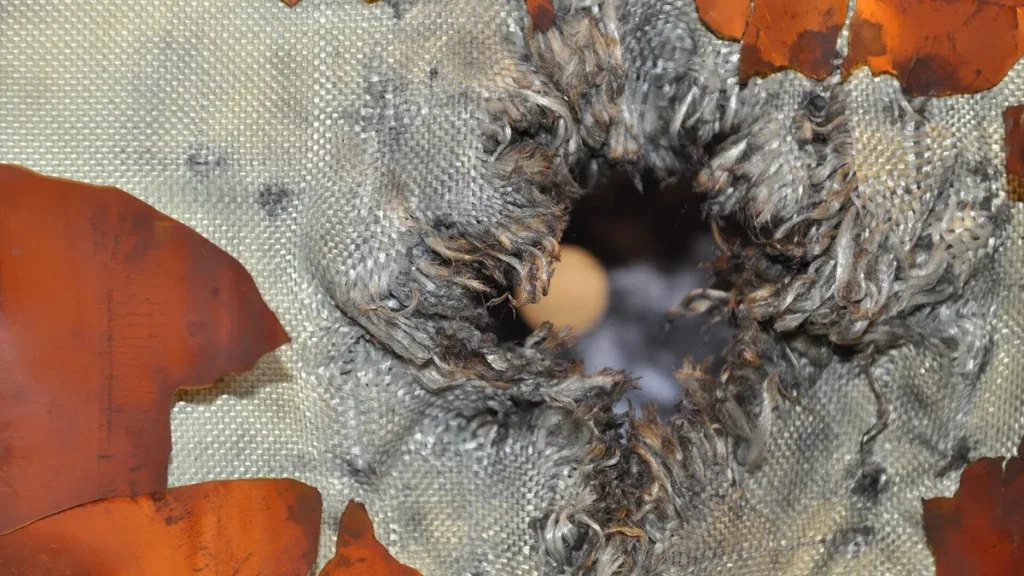
Atomic-6 announced proof-of-concept results on Nov. 20, 2026, at Texas A&M University’s Hypervelocity Impact Laboratory, where a Space Armor Lite tile stopped a 3-mm aluminum sphere moving at about 7.2 km/s while a 4-mm solid aluminum plate let the sphere pass through.
Behind the tile, a ballistic torso from Georgia-based Ballistic Dummy Lab showed no visible damage or penetration. The back of the tile showed no bulging, cracking or shedding.
The company picked the 4-mm plate using NASA ballistic-limit equations, keeping impact angle, shield-to-torso spacing and mounting identical to the tile test. Fragments from the plate embedded in the simulated torso, while the tile weighed 14 kilograms per square meter.
The company cautioned that the test could not establish injury outcomes or pressure retention or space readiness because no functioning spacesuit or life-support hardware took part. It said its findings describe visible damage only under the tested conditions. Trevor Smith said the testing harmed no humans.
“Building Space Armor, we want to protect assets in space,” Atomic-6 CEO Trevor Smith told Payload. He said a human life is the highest-value asset in space. Chris Hadfield, who commanded the International Space Station and sits on Atomic-6’s advisory board, called the early results encouraging and said more testing may show whether the material improves astronaut safety.
Atomic-6 is in early talks with suit makers about fitting the armor without cramping movement. Space Armor Lite stops objects up to 3 mm, while Space Armor Max targets objects up to 12.5 mm for human-rated spacecraft and habitats. Trevor Smith said the tiles run under an inch thick. He contrasted them with traditional metallic Whipple shields, which need 4–6 inches of standoff room and are too bulky to wear.
Smith said, “Things that are three millimeters or less, it’s called untrackable.” He said on Oct. 19, 2026, that these objects constitute over 90 percent of the debris and move at thousands of miles per hour in low Earth orbit, though tracking systems cannot detect them. The company said on Oct. 21, 2026, that Space Armor addresses concerns tied to Kessler Syndrome. It describes the syndrome as a cascading effect of debris collisions that could render parts of Earth’s orbit unusable.
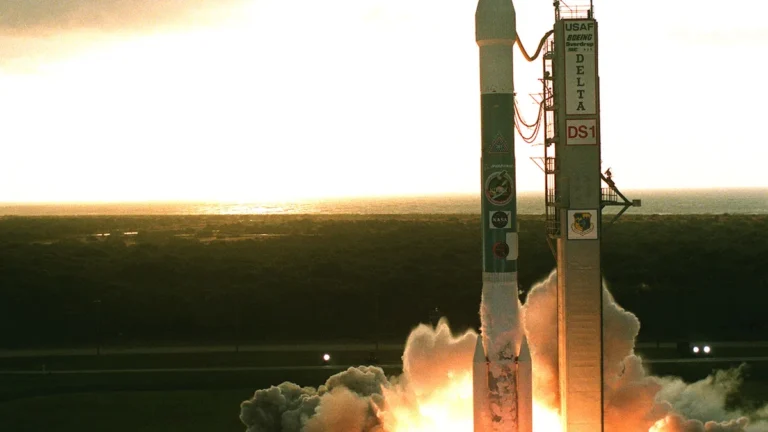
“We’ve proven Space Armor® tiles can withstand debris traveling at extraordinary speeds without generating harmful secondary fragments,” said Trevor Smith, CEO, Atomic-6. The tiles reached orbit Oct. 21, 2026, on Portal Space Systems’ Starburst-1, which flew aboard a SpaceX Falcon 9 rocket in the Bandwagon-5 mission, marking the technology’s first flight demonstration. Smith joked to Portal CEO Jeff Thornburg that he hopes the satellite gets hit in the right spot, while noting orchestrating such an impact is not possible.
95.5 WSB reported on Oct. 19, 2026, that the launch carrying Starburst-1 moved from Monday morning to Tuesday. Atomic-6 operates from Marietta, Georgia, and WSB Radio said workers built the shield in Atlanta. FOX 5 Atlanta reported on Oct. 28, 2026, that Marietta-based Atomic-6 creates ultralight armor for satellites and that the technology recently flew aboard a SpaceX launch.




Join the discussion