Key facts
- Finnish satellite developer ICEYE announced on November 17, 2026 that it seeks to acquire Italian rocket manufacturer Avio for more than $2.2 billion to establish Europe's first vertically integrated space company.
- ICEYE's Italian subsidiary Iris 2 S.p.A made an all-cash voluntary tender offer at 41 euros per share to take Avio private, valuing the company at 2 billion euros or about $2.2 billion.
- Avio's board of directors acknowledged ICEYE's offer and said it had begun assessing the purchase proposal.
- The earlier Vega rocket achieved a 20-for-22 flight record since debuting in 2012.
Finnish satellite developer ICEYE announced on November 17, 2026, that it seeks to acquire Italian rocket manufacturer Avio for more than $2.2 billion, a move the company said would create Europe’s first vertically integrated space company, meaning a single firm that both builds satellites and operates its own launchers. ICEYE’s Italian subsidiary Iris 2 S.p.A., an indirectly wholly owned company, made an all-cash voluntary tender offer at 41 euros per share, or 45 dollars per share, to take Avio private, valuing the company at 2 billion euros or about $2.2 billion. The 41 euro per share offer represented a 21 percent premium over Avio’s closing share price on November 16, 2026, on the Milan Stock Exchange, measured against the prior day’s close. ICEYE plans to delist Avio from the Milan Stock Exchange after the acquisition closes, and Seraphim Space Investment Trust, an ICEYE shareholder, confirmed the offer terms in a market filing.
Avio’s board of directors acknowledged ICEYE’s offer and said it had begun assessing the purchase proposal, reviewing the voluntary tender offer from the ICEYE subsidiary. Leonardo, Italy’s state-controlled defense group, owns about 18 percent of Avio and is the largest shareholder, making it a key voice in whether enough shareholders tender their shares to ICEYE’s offer. ICEYE needs shareholders to tender at least two-thirds of Avio’s shares for the offer to succeed. According to Reuters, officials from Avio, part-owner Leonardo, and the Italian government have expressed early support for the deal, which would need approval from both the Italian and Finnish governments, with the Finnish government reportedly in full support.
The company’s valuation exceeds $12 billion following its latest fundraising round in June. ICEYE raised 450 million euros in June 2026 at a valuation of more than 10 billion euros. The Organization for Economic Cooperation and Development recently reported that access to private capital, regulatory barriers, and fragmented markets often hinder startup growth in Europe, describing ICEYE as by far the most successful space startup in Europe. ICEYE builds and flies its own radar surveillance satellites and sells imagery data to commercial and government customers, including Ukraine.
ICEYE recently announced plans to move into communications satellites, working with Nokia, and expanded into a joint venture with Rheinmetall in Germany during 2026. The company unveiled its Gen5 satellite, the fifth generation in eight years, offering government customers images sharp enough to show objects 11 centimeters across plus an on-board AI processor for orbital image screening. ICEYE operates a constellation of synthetic aperture radar satellites and sells these satellites to governments. ICEYE’s CEO, Rafal Modrzewski, said the combination with Avio would let the company “build, launch and operate sovereign space systems.”
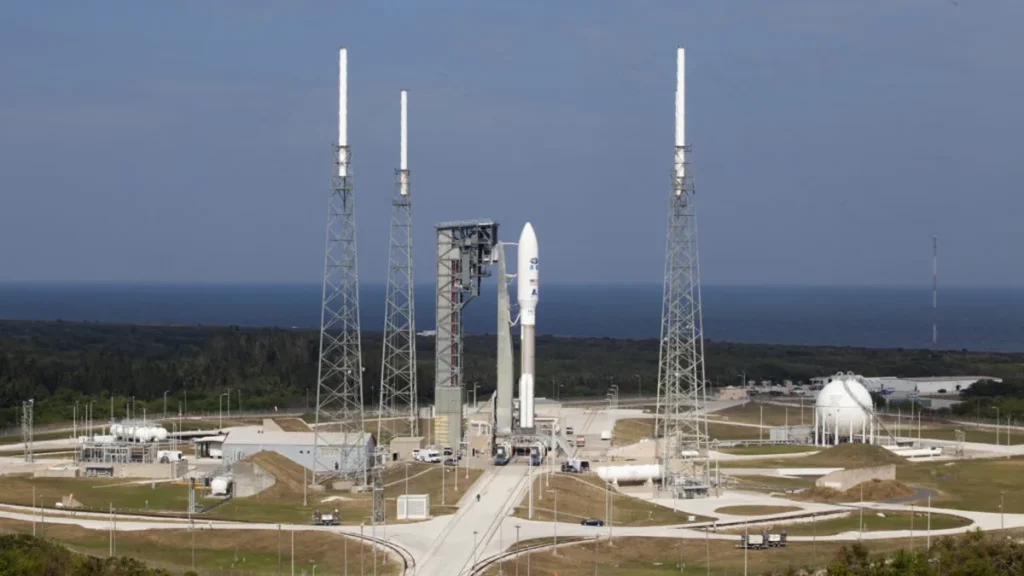
Avio builds the solid-fueled Vega C launcher, a light-lift rocket that can carry as much as 3.3 metric tons, or 7,300 pounds, of payload to low-Earth orbit. The Vega C launcher has flown successfully seven times in eight attempts since 2022, as a follow-on to the earlier Vega rocket. The earlier Vega rocket achieved a 20-for-22 flight record since debuting in 2012. Avio took over operation of Europe’s Vega rocket from Arianespace under a deal completed the previous year, giving the Italian manufacturer direct control over the light-lift launcher.
The company’s Europropulsion and Regulus joint ventures build solid boosters used on Europe’s Ariane 6 rocket, and Avio also serves as prime contractor for the Vega C launch vehicle. Avio’s missile propulsion business accounts for 33 percent of the company’s total order backlog. The company is spending more than $500 million on solid rocket motor production in the United States, backed by Lockheed Martin and Raytheon according to Bloomberg. The Avio acquisition would combine Avio’s launch and propulsion capabilities with ICEYE’s satellite manufacturing and intelligence services.
ICEYE said the Avio combination addresses Europe’s need for sovereign space and defense capabilities. The deal would give ICEYE more reliable launch access for growing customer demand, while Avio would gain visibility into future demand to support production and more frequent Vega flights. “Europe’s need for sovereign space and defense capabilities is growing,” said Rafael Modrzewski, CEO of ICEYE. Many in Europe have grown increasingly concerned about reliance on the United States for space launch and military space capabilities, especially following stories about whether SpaceX has been cutting support to Ukraine’s defenses.
European governments have grown increasingly concerned about reliance on the United States for space launch and military space capabilities. ICEYE builds satellites for military use and has provided imagery support to Ukraine. Reports last month said a Russian satellite trailed an ICEYE satellite, at one point coming within 500 meters. The proposed ICEYE-Avio deal comes amid those worries, and ICEYE’s CEO said governments need control of critical space infrastructure because Europe needs it most.
The transaction requires regulatory clearances involving Italy, France, the United Kingdom, and the United States, as well as approval under the European Union’s Foreign Subsidies Regulation. ICEYE intends to finance the Avio transaction through a combination of existing cash and debt financing, having closed its most recent funding round in June 2026. ICEYE plans to invest an additional 1 billion euros in Italy over five years if the acquisition goes through, and expects the investment to create up to 400 jobs. ICEYE pledged to keep Avio’s workforce in Italy while maintaining commitments to European programs.
The European Space Agency commented on the ICEYE bid for Avio as European space stakeholders evaluated implications for institutional launch programs. “Securing launch capacity is essential for ICEYE to grow its constellation,” said Rafal Modrzewski, CEO of ICEYE. The acquisition would maintain Avio’s brand and keep Italy as the center of its business.




Join the discussion