
Key facts
- Responses to the Request for Information are due on November 24, 2026, according to a report published on November 11, 2026.
- The Space Force's most distant satellites currently operate in geostationary orbit roughly 22,000 miles or 36,000 kilometers above the equator, gathering routine surveillance and missile warning data.
- The report says planners are responding to growing foreign lunar exploration by watching deep-space routes and seeking to counter possible threats.
- The initiative continues earlier strategy in which the service formalized its cislunar plan during acquisition changes aimed at threats past geostationary orbit.
The Department of the Air Force and the U.S. Space Force issued a request for information Nov. 11, 2026, seeking as many as five cislunar satellites for an operational defense presence in the Earth-Moon region by late 2029. The notice marks the first military procurement move to treat the area past geostationary orbit as a warfighting domain for active defense operations.
Responses to the request are due Nov. 24, 2026. In early 2027, the Department of the Air Force plans to issue as many as five firm-fixed-price contracts for preliminary design studies. The schedule targets initial launch capability by late 2029 and full on-orbit operations by 2031, following industry answers to the notice due in late November 2026 and aiming to move experimental concepts into operational hardware.
The Cislunar Space System notice calls for contractor platforms to host government payloads. Those payloads would support space domain awareness, data relays, and independent positioning, navigation, and timing. Bidders must offer spacecraft buses (the spacecraft’s underlying platform) with flight heritage from the past three years or vehicles completing qualification within two years, meeting strict readiness requirements for the solicitation. Spacecraft must remain on station and fix faults on their own for at least three days if they lose contact with the ground, allowing independent operation without communications.
The spacecraft serve as seed vehicles that test survivability ahead of a larger proliferated constellation, and the service plans to judge whether a few platforms can survive in cislunar space before deciding on a bigger group. To speed delivery, the Department of the Air Force wants to bypass the normal four- to five-year development schedule by purchasing commercial spacecraft buses ready for quick integration into flight. The approach depends on deep-space technology matured under the Air Force Research Laboratory’s Oracle cislunar space situational awareness program, moving experimental work from that program into operational hardware for the new satellites.
Planners are watching deep-space routes and seeking to counter possible threats in response to growing foreign lunar exploration, a link the report draws between the purchase and expanding foreign activity at the Moon. This work follows earlier strategy under which the service set out its cislunar plan during acquisition changes directed at threats past geostationary orbit, continuing prior defense planning that already identified cislunar space as needing attention against threats beyond geostationary orbit. The report connects this work to General Saltzman’s 2040 plan to expand the Space Force and meet great power competition, tying the purchase to the service’s longer-term blueprint for competing with other great powers.
Officials describe the Earth-Moon region as an operational volume 1,728 times larger than traditional geostationary orbit, a scale the solicitation cites as a strategic concern driving military interest. Right now, the Space Force’s farthest satellites operate in geostationary orbit about 22,000 miles or 36,000 kilometers above the equator, collecting routine surveillance and missile warning data. The planned purchase extends American military space operations beyond geostationary orbit into cislunar space.
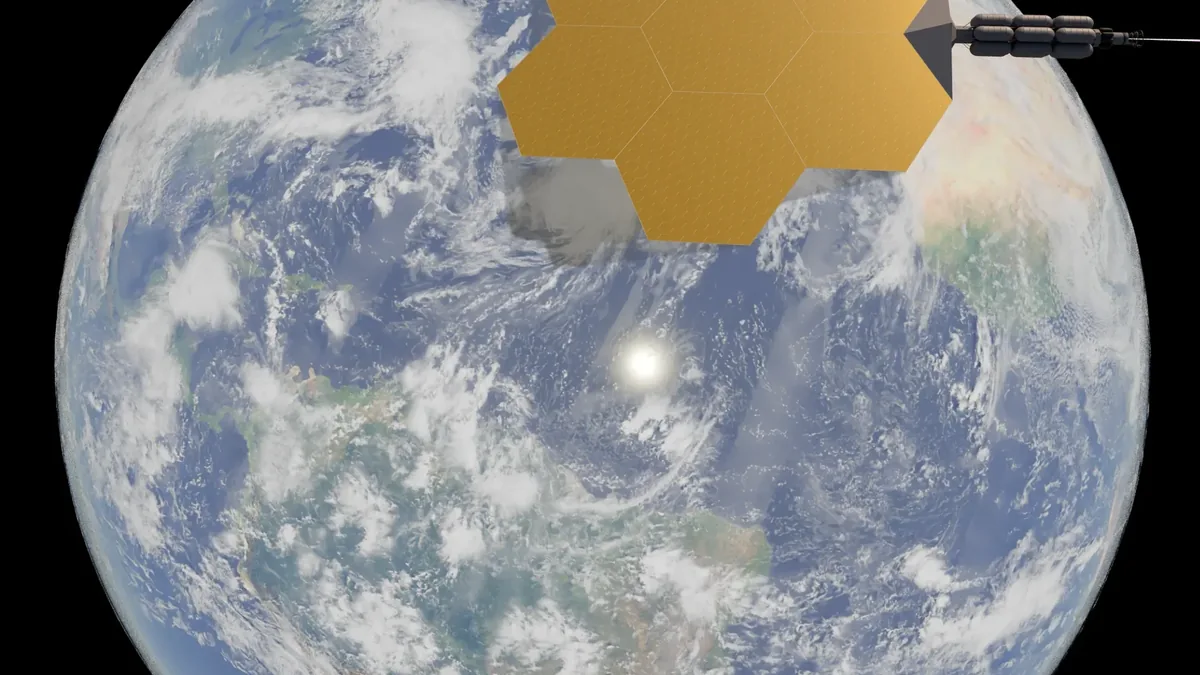
Maj. Gen. Stephen Purdy, who leads advanced acquisition programs for the Space Force, said in recent months that the military was becoming serious about operations extending to the Moon. “This is a warfighting domain,” Purdy said. The announcement follows statements from the Space Force acquisitions chief for advanced programs regarding a shift in Pentagon leadership thinking following an executive order signed by President Donald Trump last December.
At a Space Systems Command industry event held in October, Purdy said top military leaders had publicly labeled space a warfighting domain to encourage participation in cislunar efforts. The report connects the purchase to a December executive order from President Donald Trump that set out the administration’s space policy, an order cited as a factor behind a shift in Pentagon leadership thinking about the Moon. The document also covers the government’s authority to spot, characterize, and counter threats to U.S. space interests from low Earth orbit to the area around the Moon, tying the order directly to military attention on the region from Earth orbit to the Moon.
Officials quoted in the report say the armed forces should defend American interests at the Moon even as the United States and China grow lunar programs aimed at landing crews on the surface within a few years, framing the purchase within growing U.S.-China lunar activity and anticipated crewed landings. Certain officials expect the Moon to turn into a contested zone for territory and resources. Safe sites near the south pole that can reach water ice are few, a strategic motivation tied to lunar geography and resources.
The U.S. military published a Request for Information signaling interest in a proliferated cislunar constellation consisting of an unspecified number of satellites in the vicinity of the Moon. The initiative builds upon deep-space technologies matured under the Air Force Research Laboratory’s Oracle cislunar space situational awareness program.





Join the discussion