Key facts
- Carl Edward Sagan was born on November 9, 1934, in Brooklyn, New York.
- EarthSky suggests Sagan's messages carried on Pioneer and Voyager could be his most important legacy.
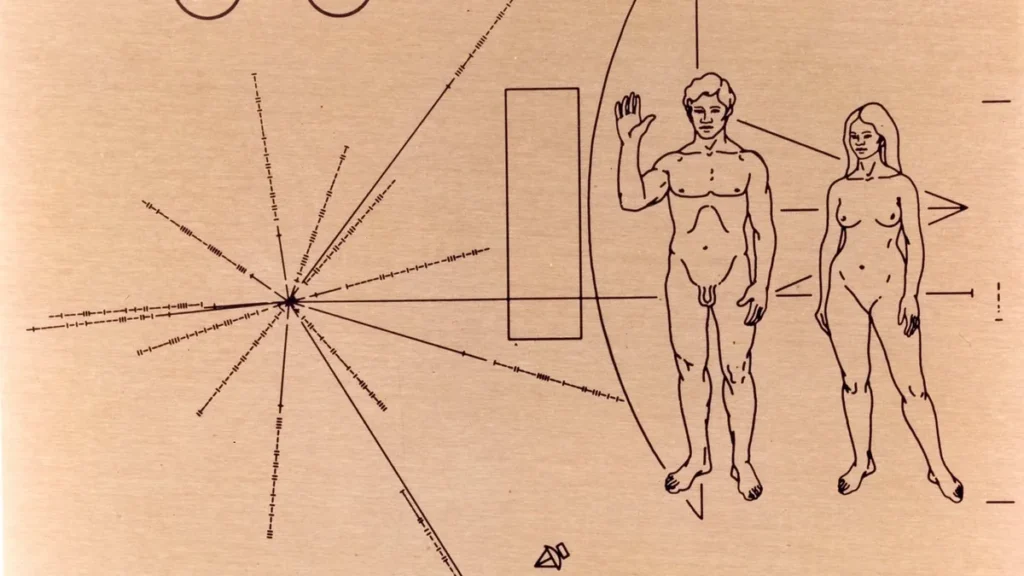
- The Pioneer 10 and Pioneer 11 spacecraft, launched in 1972 and 1973, carry gold-anodized aluminum plaques with messages from humankind.
- Journalist and consultant Eric Burgess came up with the Pioneer plaque idea and then approached Sagan.
EarthSky reports that Carl Edward Sagan, born in Brooklyn, New York, on November 9, 1934, would mark his 92nd birthday tomorrow. EarthSky credits his fame to his books and the 1980 television series Cosmos. It also connects his work to planetary science and the U.S. space program.
Pioneer 10 and Pioneer 11 launched in 1972 and 1973 carry plaques of gold-anodized aluminum bearing messages from humankind. Journalist Eric Burgess conceived the plaque idea and approached Sagan, and NASA approved the project, giving Sagan three weeks to prepare the message.
Sagan worked with astronomer Frank Drake on the plaque design, and Linda Salzman Sagan, his wife at the time, created the artwork. Drake formulated the Drake Equation to estimate intelligent civilizations in the Milky Way galaxy. EarthSky suggests the messages carried on Pioneer and Voyager could be his most important legacy. The Pioneer spacecraft and their plaques are billions of miles from Earth and heading toward interstellar space.
Sagan and Ann Druyan helped design the Voyager message carried by probes launched in 1977. Each Voyager Golden Record holds 116 images of scientific works and everyday human activities, music by artists including Bach, Mozart, and Chuck Berry, an hour-long recording of Ann Druyan’s brainwaves, and greetings in 55 languages. Voyager 1 and Voyager 2 have entered interstellar space, with Voyager 1 holding the position as the most distant human-made object from Earth. EarthSky projects Voyager 1 will reach 1 light-day from Earth on November 18, 2026, while Voyager 2 stays closer than Voyager 1 yet farther out than Pioneer 10.
EarthSky says Sagan supported the U.S. space program by briefing moon-bound astronauts and taking part in the Mariner, Viking, Galileo, and Voyager missions. He helped select landing locations for the two Viking Mars probes launched in the 1970s.
His education included physics at the University of Chicago and a doctorate in astronomy and astrophysics earned in 1960. During the 1960s, he said Venus was a greenhouse furnace based on steam boiler engineering tables, and around that same period he took an interest in SETI, the search for extraterrestrial intelligence, and contributed to its programs. He also demonstrated that basic chemicals exposed to UV light can readily form the building blocks of life.
In 1966, he assisted Soviet astronomer and astrophysicist I. S. Shklovskii in revising and expanding Intelligent Life in the Universe. In 1968, Harvard denied Sagan tenure, and some linked that decision to his controversial views on extraterrestrial intelligence. He then joined Cornell University in Ithaca, New York, as a professor and stayed for the rest of his career.
In the 1980s, Sagan pushed for nuclear disarmament and co-wrote the nuclear winter concept with four other researchers. EarthSky says the research showed that nobody would win a nuclear war, and suggests the Cold War’s end not long afterward may be connected to the work’s effect on global consciousness.
Sagan stayed at Cornell until he died on December 20, 1996, at age 62 from pneumonia. He wrote more than 600 scientific papers and articles and more than 20 books. EarthSky says he motivates new researchers in astronomy and communication, advanced scientific responsibility through disarmament advocacy, and encouraged science literacy across the United States and worldwide.
Join the discussion