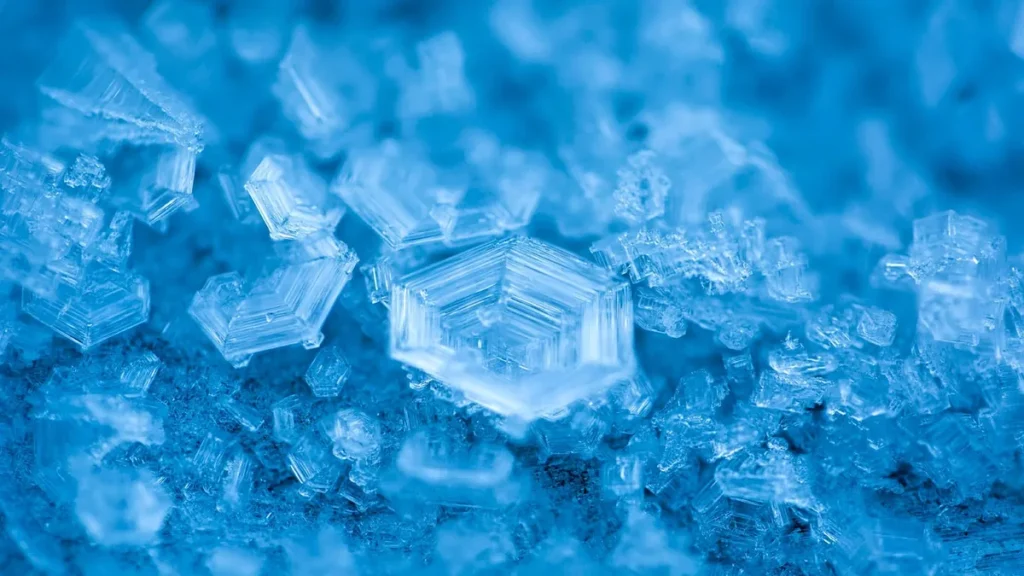
Astrobiology Web reported that researchers showed sulfuric acid can form in interstellar ice analogs before planetary accretion. The study, titled “Pre-Accretion Formation of Sulfuric Acid in Interstellar Ice Analogs: Implications for Sulfate in Ryugu and Bennu,” appeared in The Journal of Physical Chemistry Letters.
The team irradiated sulfur dioxide and water ices at 5 K. They identified the acid using threshold photoionization, deuterium labeling, and sulfur isotope analysis. These methods support the conclusion that sulfuric acid can form before accretion when researchers irradiate sulfur dioxide and water ices at 5 K.
For carbonaceous asteroids, soluble sulfate species such as sodium sulfate (Na2SO4) are usually explained by parent-body aqueous alteration. The source says creating S(+VI) sulfate in the cold, reducing settings believed to exist on primitive bodies remains chemically difficult.
Later, aqueous alteration could mobilize, neutralize, and precipitate the acid if it becomes part of accreting planetesimals. This depends on the acid entering planetesimals before aqueous alteration occurs. The process might add to sulfate-bearing phases found in primitive carbonaceous bodies. The work describes how preaccretion ice chemistry can lead to oxidized sulfur reservoirs.

Join the discussion