Key facts
- The Extremely Large Telescope's first light is scheduled for March 2029.
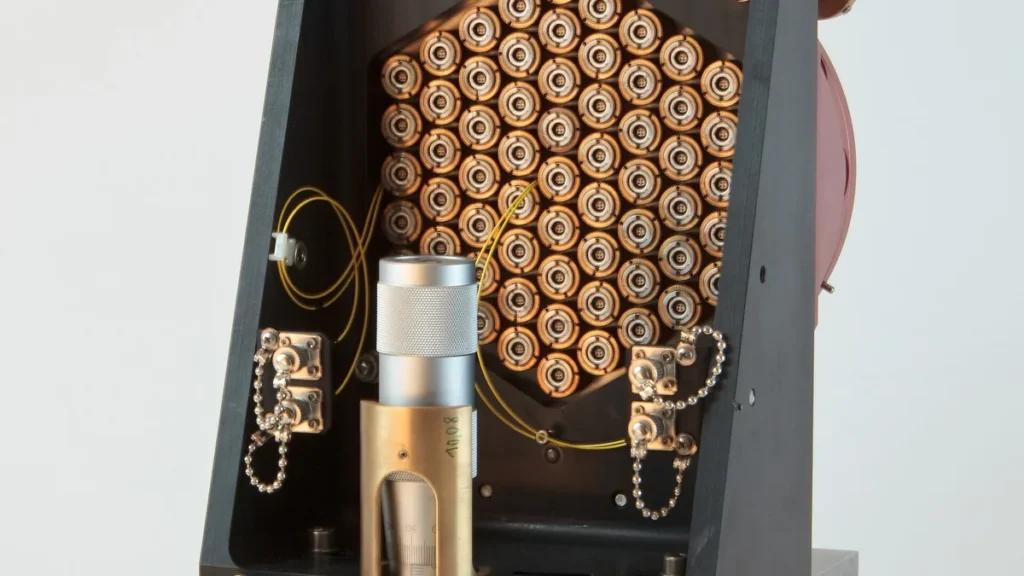
- NEXUS@SHARP is a proposed near-infrared multi-slit spectrograph for the upcoming Extremely Large Telescope.
- Marco Mirabile is a PhD student at INAF-Astronomical Observatory of Abruzzo and Gran Sasso Science Institute in Italy.
- NEXUS@SHARP combines high spatial resolution with efficient multiplexing, enabling it to observe many globular clusters at once.
Marco Mirabile, a PhD student at the INAF-Astronomical Observatory of Abruzzo and Gran Sasso Science Institute in Italy, leads a New Astronomy paper proposing NEXUS@SHARP, a near-infrared multi-slit spectrograph for the coming Extremely Large Telescope. The paper, titled SHARP(ening the) view of unresolved globular clusters in ultra diffuse galaxies, argues that the instrument could probe questions about Lambda-CDM, the standard cold dark matter model of cosmology, through ultra-diffuse galaxies. The observatory is large, powerful, and costly, with multiple science goals including the study of fundamental aspects of the Universe such as dark matter, and its first light is scheduled for March 2029. NEXUS@SHARP remains only a concept, and the paper’s authors argue that it should be built.
SHARP stands for Spectrograph for High Angular Resolution Physics, while NEXUS is a Multi-Object Spectrograph designed to work with SHARP. NEXUS@SHARP is one of the proposed instruments for an observatory of this scale, which always carries multiple instruments: a near-infrared multi-slit spectrograph for the Extremely Large Telescope that pairs a multi-object spectrograph with a spectrograph for high angular resolution physics to overcome current observational limits.
Attached to the ELT’s 39.3-metre-diameter segmented primary mirror, it would combine high spatial resolution with efficient multiplexing. That multiplexing, an approach like the systems on Keck, the VLT, Gemini, and JWST, means it could observe and capture data from many globular clusters at once.
Ultra-diffuse galaxies are about as large as the Milky Way but can have thousands of times fewer stars, with their stars spread out over a wide area, making them dim and too puffy to agree with Lambda-CDM expectations. Current spectroscopic facilities struggle to reach the depth required to fully characterize globular cluster populations beyond the local neighborhood, and existing facilities cannot fully characterize globular cluster populations in faint systems outside the nearby universe.
Measuring a handful of clusters around only a few ultra-diffuse galaxies would not sufficiently characterize either population. The authors argue that deep spectroscopy must extend to many ultra-diffuse galaxies, since matching globular cluster richness to field-star kinematics and evolution offers a strong diagnostic of different formation channels.
NEXUS@SHARP is built to close that gap. The authors state that NEXUS can characterize globular cluster populations in ultra-diffuse galaxies across diverse environments out to 60 to 70 megaparsecs, a unit of astronomical distance, using only a few hours of ELT time. The reach covers diverse environments and requires only a few hours because the instrument observes many clusters at once, and the Universe Today article also states that 70 megaparsecs is about 230 light years.
Globular clusters are the key tracers. All galaxies have globular clusters, including the Milky Way, and in ultra-diffuse galaxies the clusters are brighter than their host galaxies and extend farther outward, helping measure dark matter halos; the clusters orbit within the galaxies and extend beyond them, making them useful probes of dark matter distribution.
Spectra of the clusters reveal the ages and metallicities of the clusters, showing how quickly the stars formed and helping astronomers identify what kind of ultra-diffuse galaxy they are observing, spectral information that makes globular clusters useful probes of formation history. Globular cluster numbers scale with dark matter halo mass, providing a mass constraint. Previous research by Minh Ngoc Le and Andrew P. Cooper, published in ApJ 978 33 in 2025, showed the relationship in a figure where each circle represents the number of globular clusters in an individual galaxy, illustrating the link between globular cluster count and galaxy mass that NEXUS@SHARP would help measure.
A galaxy’s dark matter halo shapes its size, and ultra-diffuse galaxies present a mismatch: the expected halo size should not produce galaxies as diffuse as they are, since a halo of the expected size would not create such a diffuse galaxy. Lambda-CDM remains the best match for much cosmological data but does not fit everything, still standing as the leading cosmological model despite gaps in explaining dark matter and dark energy. The authors write that ultra-diffuse galaxies challenge current galaxy formation models within the Lambda-CDM framework, particularly dark matter content and formation histories, presenting the size mismatch as a key reason these galaxies are difficult to reconcile with Lambda-CDM.
“Ultra-Diffuse Galaxies (UDGs) challenge current galaxy formation models within the ΛCDM framework,” the authors write. The statement appears as part of the paper’s motivation for studying ultra-diffuse galaxies with NEXUS@SHARP.
Two competing scenarios explain ultra-diffuse galaxy formation: they were either failed massive galaxies quenched early, or puffed-up dwarf galaxies, and the scenarios differ in the age, color, metallicity, and cluster richness astronomers would expect to see. Under the first scenario, the galaxies would be red, old, metal-poor and dark-matter-dominated, with unusually rich globular cluster populations despite having kept dwarf-like stellar masses, preserved inside halos typical of larger galaxies. Under the second, they would be bluer, with star formation drawn out over extended histories, and their dark matter and globular cluster content would resemble typical dwarfs, genuinely low-mass systems that expanded for some reason.
NEXUS@SHARP would yield two independent mass measurements for each ultra-diffuse galaxy: a dynamical mass from the orbital velocities of its globular clusters, and a globular-cluster-count mass from the total number of clusters, resting on the linear relationship between cluster number and halo mass. If both measurements agree and are high, the galaxy supports the failed massive galaxy scenario, indicating an overmassive halo compared with its stellar content; if both agree and are low, it supports the puffed-up dwarf scenario. If the dynamical mass is low but the globular-cluster-count mass is high, globular cluster formation was unusually inefficient because of environmental factors. The authors state that precise measurements of radial velocities and stellar populations would enable robust dynamical mass estimates and distinguish between the competing formation scenarios, summing up what the instrument could achieve if built.
The authors conclude that NEXUS@SHARP would serve as a key instrument for limiting the possible formation channels of faint galaxy populations across the local universe if built. Construction is not yet approved: the instrument is only a concept, and the paper makes the case for its scientific value.

Join the discussion