Key facts
- Qualcomm described the deal as its biggest 5G deal yet and the first U.S. deployment of its Dragonwing infrastructure brand, which Qualcomm unveiled in February 2025; financial terms were not disclosed.
- The Starlink Mobile effort could create a fourth major U.S. wireless carrier option, challenging AT&T, Verizon, and T-Mobile, the three large carriers that have dominated since T-Mobile merged with Sprint.
- SpaceX has far less terrestrial spectrum than its rivals, with existing holdings below 80MHz while each big three national carrier holds from 300MHz to 400MHz.
- SpaceX acquired a block of 2GHz spectrum from EchoStar in a September 2025 deal that ended EchoStar subsidiary Boost Mobile's ambitions to build a national 5G network.
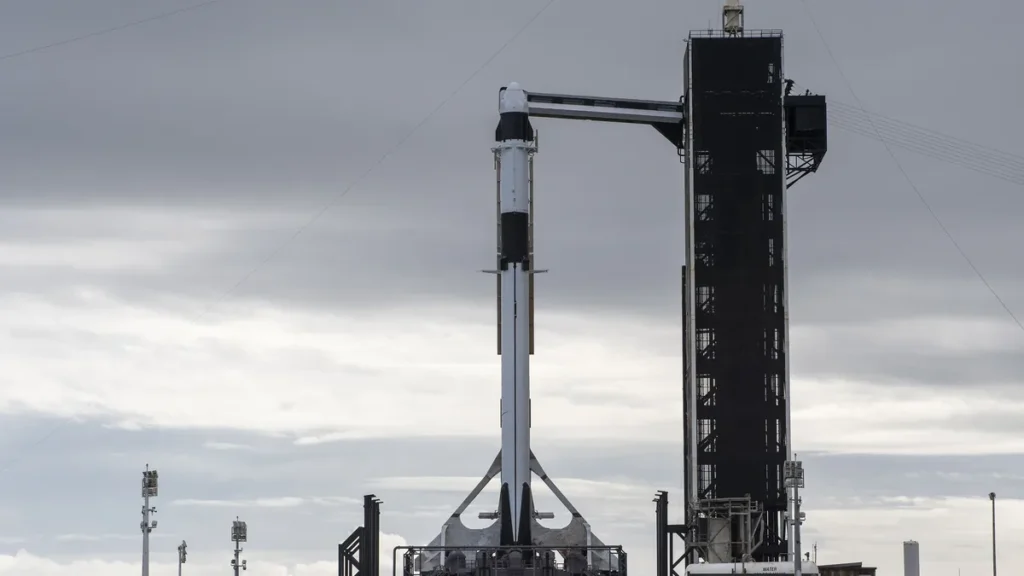
SpaceX plans to launch Starlink Mobile as a nationwide 5G carrier in 2027, using Qualcomm-supplied radio equipment, baseband units, and software across tens of thousands of U.S. cell towers paired with its direct-to-cell satellite constellation, which links phones directly to orbit.
The plan pairs ground towers with Starlink satellites so towers carry most traffic in towns and cities while satellites fill gaps where towers do not reach, and the new towers will rely on Starlink for backhaul. SpaceX has spent years building direct-to-cell satellite capability, and adding Qualcomm silicon to terrestrial base stations completes a satellite-plus-ground architecture ahead of the 2027 rollout window. Starlink SVP Michael Nicolls said SpaceX is excited to work with Qualcomm and use its platform to speed up development of SpaceX’s base station architecture. [S1, PCMag Middle East, S20, S7]
SpaceX is preparing thousands of larger, more powerful V3 Starlink satellites to massively upgrade its satellite network’s capacity. In September, Starship’s 14th launch deployed the first batch of V3 satellites and marked the first time the rocket reached Earth orbit. The launch supports SpaceX’s plan to expand Starlink capacity for the terrestrial carrier buildout.
Qualcomm signed a multiyear agreement to supply the equipment, describing the deal as its biggest 5G deal yet and the first U.S. deployment of its Dragonwing infrastructure brand, which Qualcomm unveiled in February 2025. Financial terms were not disclosed. Qualcomm’s gear already powers 5G networks in Japan and Vietnam, and Dragonwing equipment serves overseas carriers including those in Vietnam, yet this deal represents Qualcomm’s first U.S. Dragonwing deployment. [S2, PCMag Middle East, S19, S15]
Deployment across tens of thousands of large U.S. cell towers starts in 2027, positioning SpaceX ahead of the rollout window as it rapidly assembles pieces for a nationwide carrier from scratch. Reports last month indicated SpaceX sought as many as 80,000 cell towers for Starlink Mobile, a count approaching the tower totals of AT&T, T-Mobile, and Verizon.
SpaceX has far less terrestrial spectrum than its rivals, with existing holdings below 80MHz while each big three national carrier holds from 300MHz to 400MHz. The company acquired a block of 2GHz spectrum from EchoStar in September 2025 in a deal that ended EchoStar subsidiary Boost Mobile‘s ambitions to build a national 5G network. The Dragonwing units would support this spectrum block, and their massive MIMO hardware runs 64 transmit and 64 receive paths to expand coverage and capacity. SpaceX has also secured 800MHz spectrum and has been buying spectrum and exploring deals with cell tower companies to build out its network.
Starlink Mobile could create a fourth major U.S. wireless carrier option, challenging AT&T, Verizon, and T-Mobile, the three large carriers that have dominated since T-Mobile merged with Sprint. Mint Mobile and Ultra Mobile, prepaid brands, still operate on T-Mobile’s network following T-Mobile’s 2024 acquisition, while Verizon purchased TracFone in 2021. SpaceX publicly ruled out operating a wireless carrier in March but now says it is building the first fully integrated nationwide satellite and terrestrial network to keep people connected wherever they are.
AT&T plans to spend $23 billion to $24 billion on its network this year, Verizon expects around $16 billion to $16.5 billion, and T-Mobile plans about $10 billion, for combined big-three annual network investment of roughly $50 billion. Competing with those carriers takes enormous investment because they have spent decades building their networks.
Qualcomm’s radio technology uses beamforming to aim signals directly at phones instead of broadcasting in every direction, helping SpaceX squeeze more data from the spectrum it owns. Malladi said Qualcomm is not doing small cells, and the big three already run tens of thousands of small cell sites alongside their macro towers. The Qualcomm deal covers only traditional towers, not small cells, though SpaceX has suggested future Starlink terminals could double as femtocells, small cellular base stations, to fill coverage gaps.
The Washington Post reported on Monday that SpaceX considered buying what remains of Boost Mobile to obtain Boost’s existing wholesale agreements with AT&T and T-Mobile after the big three carriers declined SpaceX’s requests to resell their networks. Lightshed Partners and MoffettNathanson analysts questioned the idea, pointing to contractual clauses that could block or prohibit such a workaround. Qualcomm’s Durga Malladi described the network gear as a clean sheet of paper that gives operators the ability to build a more modern network during a Monday press briefing.
“This is the first time we have a US-based deployment that’s coming up,” Malladi said. Malladi made the comment during a Monday press briefing.
The agreement pits Qualcomm against Marvell, Broadcom, and Intel in the cell tower chip market as Qualcomm tries to grow beyond phones. According to network analysts, SpaceX’s spectrum shortfall ranks as the biggest obstacle to Starlink becoming a national network, outweighing satellite capacity.


Join the discussion