Key facts
- Tumbleweed announced a €6.9 million ($7.7 million) seed round led by PactVC to build Oasis Beta, a reentry-capable research vehicle launching in 2028, and to fund at least three Pod missions in 2027.
- The €6.9 million round is the largest-ever spacetech seed round in Austria, announced four months after Tumbleweed launched Austria's first commercial satellite.
- Founded in 2024, Tumbleweed was created by Julian Rothenbuchner, Guillaume Brault and Leonhard Goliasch and operates across Vienna and Delft.
- Tumbleweed sells pre-certified, fault-isolated Pods that supply power and data in orbit and operate like a remote server; missions start at €15,000 including launch and operational support.
Vienna-based Tumbleweed announced on 3 November 2026 a €6.9 million ($7.7 million) seed round led by PactVC to build Oasis Beta, a reentry-capable research vehicle.
Tech.eu says the round is the largest-ever spacetech seed round in Austria, announced four months after Tumbleweed launched Austria’s first commercial satellite. CredX Media reports Tumbleweed did not disclose its valuation. Payload names Vanagon Ventures, Prototype Capital, EWOR and angels including SES cofounder Candace Johnson as investors.
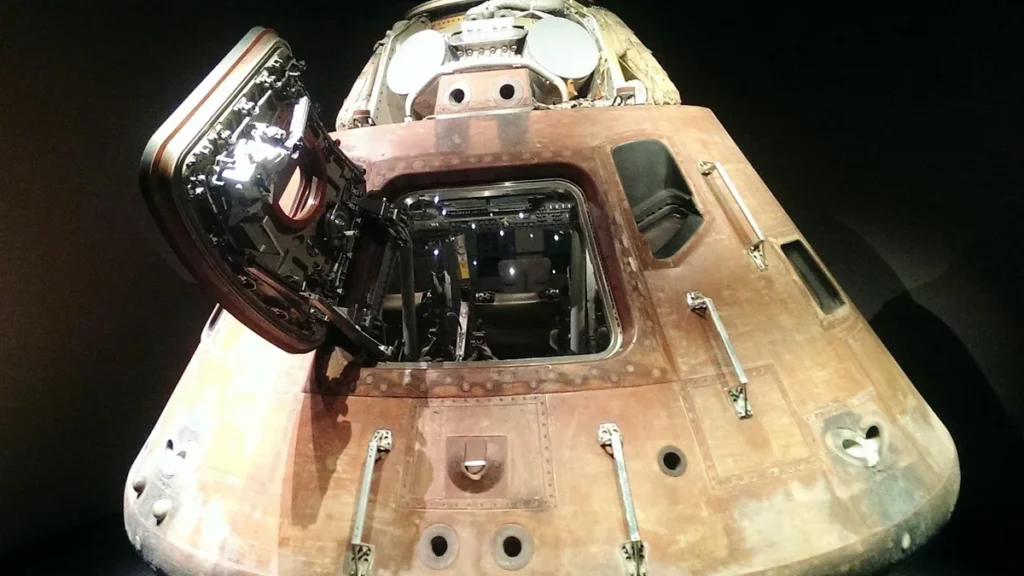
Oasis Beta is Tumbleweed’s next-generation orbital platform, designed to return physical samples to Earth and to support larger payloads than its first satellite. The reentry capsule will enter the atmosphere at 25 to 27 times the speed of sound and land by parachute outside Austria.
The company is building its own vehicle while evaluating partnerships with other reentry providers. Company officials said the decision aims to smooth the path to space and back for future customers rather than to create a best-in-class capability. ‘It is very consistent with our ethos of space being as much in the background as possible,’ Rothenbuchner said.
The November announcement sets Oasis Beta for 2028, but Rothenbuchner previously told Trending Topics in July that it could launch as early as late 2027. Tumbleweed’s team has grown to more than 20 engineers, and the first parts for Oasis Beta are already being milled. The round will fund at least three Pod missions in 2027 carrying more than 10 customers.
Tumbleweed’s first mission, Oasis Alpha, was a 3.6-kilogram CubeSat. It launched on 7 July 2026 aboard SpaceX’s Transporter-17, was built in nine months — five times faster than industry standard — for less than €500,000, and was fully booked a year before launch and paid for upfront.
Oasis Alpha carried four first-time space customers — Delft University of Technology, ESRIC, The Spring Institute for Forests on the Moon, and Mass Balance — for materials science, protein synthesis and cell biocatalysis research. ‘Tumbleweed put Austria’s first commercial satellite in orbit in less time than it usually takes to certify a single experiment,’ said Daniel Dippold, CEO of EWOR.
Tumbleweed sells pre-certified, fault-isolated Pods that supply power and data in orbit and operate like a remote server, with missions starting at €15,000 including launch and operational support. Customers install and test equipment in their own facilities before handover, while Tumbleweed handles certification, launch and orbital operations, removing a certification process that typically takes years and can cost $500,000.
Flights support microgravity research in materials science, protein synthesis using bacteria, immune-system ageing, cardiovascular deconditioning, wound healing and organoids as disease models. The company reports a customer conversion rate of about 40 percent, with roughly two-thirds arriving through inbound enquiries.
Julian Rothenbuchner framed it as a contest over who can deactivate and reactivate gravity most cheaply and quickly. Tumbleweed sees itself as a cross-industry infrastructure provider for pharma, semiconductors and photonics.
Almost every space manufacturing application requires materials to physically return to Earth, so Tumbleweed is building its own reentry vehicle, according to Rothenbuchner.
Tech Funding News and Today’s Startup News report that Tumbleweed is very dependent on SpaceX, which rejected its first two certification proposals before accepting the third; the Austrian government, the U.S. Federal Aviation Administration and the U.S. Space Force also accepted the approach. Rothenbuchner told Tech.eu on 3 November 2026 that Tumbleweed is not dependent on American launch providers and cannot afford to be.
Trending Topics reports that SpaceX is offering less room for rideshare customers and that prices are rising, prompting Tumbleweed to focus on launch diversification. The company has signed a memorandum of understanding with French launcher SIRIUS Space Services to test Pod compatibility.
Tumbleweed sells certified containers and handles regulatory work rather than returning materials, unlike reentry capsule developers such as Varda, The Exploration Company and ATMOS Space Cargo. Rival funding rounds include:
- Varda Space Industries raised $251 million on 30 September and is valued at $1.6 billion; it has completed six reentry missions.
- The Exploration Company raised $450 million in September.
- ATMOS Space Cargo secured a €25.7 million Series A in April.
- Space Forge raised $30 million in 2025 and is developing semiconductors made in orbit.
MarketsandMarkets forecasts in-space manufacturing at $4.6 billion by 2030 and $62.8 billion by 2040. The firm projects a 29.7% compound annual growth rate.
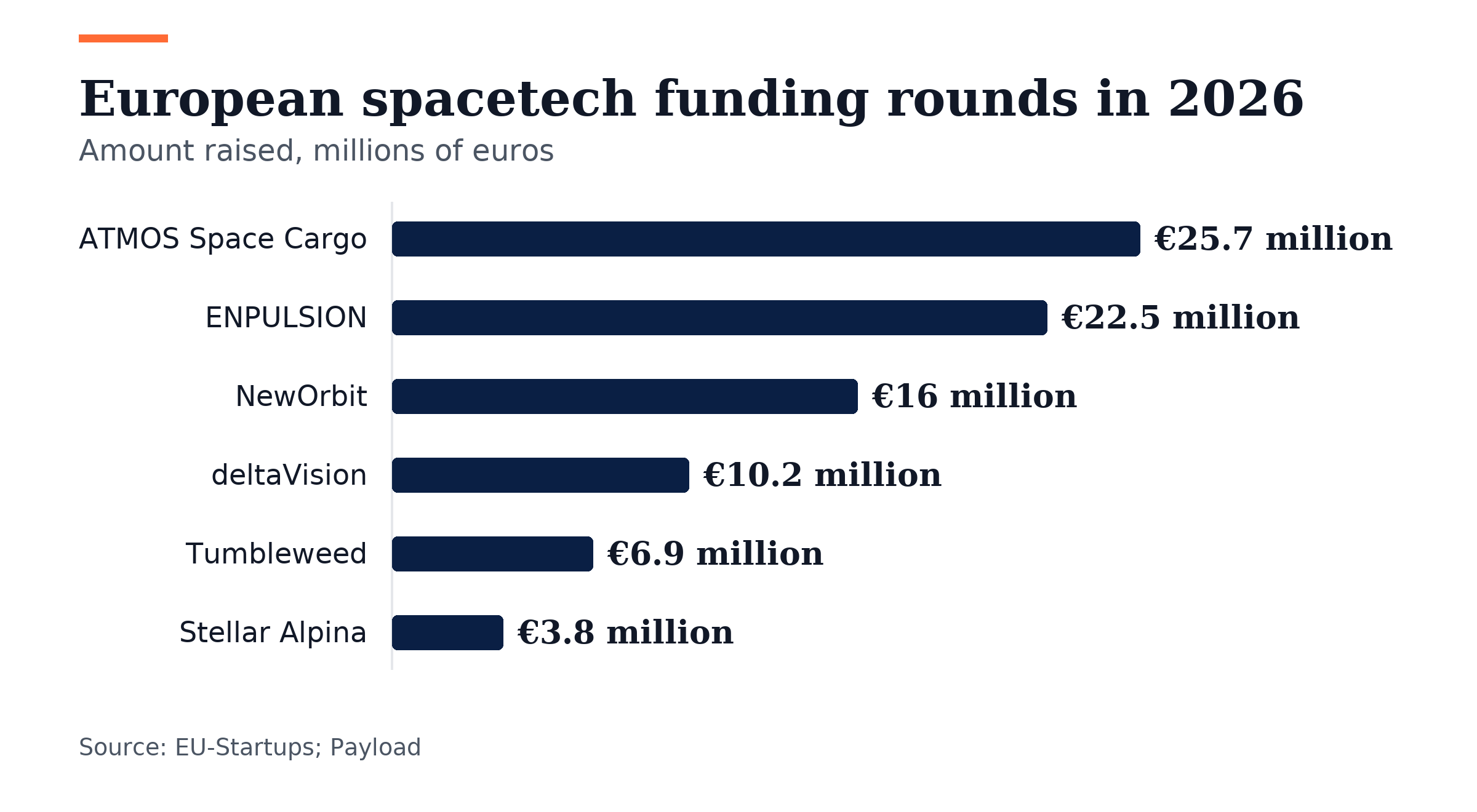
Tumbleweed’s round is part of roughly €85.1 million in 2026 European spacetech financing. The total also includes ATMOS Space Cargo (€25.7 million), deltaVision (€10.2 million), NewOrbit (€16 million), Stellar Alpina (€3.8 million) and Austria’s ENPULSION (€22.5 million in March).
The Federal Ministry for Innovation, Mobility and Infrastructure backed the company and approved its license quickly by global standards, while the Vienna team plans to expand by roughly 70 percent before the end of 2026, outpacing Delft. Peter Hanke, Austria’s federal minister for innovation, mobility and infrastructure, said the round builds domestic value, creates skilled jobs and shows Austria can compete in hard future technologies.
Tumbleweed was founded in 2024 by Julian Rothenbuchner, Guillaume Brault and Leonhard Goliasch and operates across Vienna and Delft. Tech.eu says Rothenbuchner built drones at about age eight. At 16 in 2016 he founded Team Tumbleweed, a wind-powered Mars rover effort that won a competition and ESA backing; at 19 he was ESA’s youngest funded person. Rothenbuchner earned an Aerospace Engineering degree from TU Delft with the top thesis in his class, and grew the rover effort to 85 participants on four continents.
Austria in Space says weightless experiments have flown for over half a century, yet reaching microgravity stays slow, costly and nearly out of reach for groups beyond the usual space industry. Julian Rothenbuchner said science has major openings, but they stay curiosities unless researchers can reach microgravity simply and cheaply, Tech.eu reports.

Join the discussion