Key facts
- The Barnes Ice Cap is cold-based and frozen directly to bedrock, which prevents sliding and preserves ancient vegetation beneath it instead of eroding the record.
- The last glacial period spanned approximately 95,000 to 20,000 years ago.
- Nicolás Young said the findings provide evidence about controversial 1970s global cooling predictions, stating that it actually was happening.
Researchers led by Columbia University geologist Nicolás Young reported in Science on October 22, 2026, that the Barnes Ice Cap on Baffin Island in the Canadian Arctic began re-expanding roughly 2,000 years ago before human-caused climate warming reversed the trend around 1960.
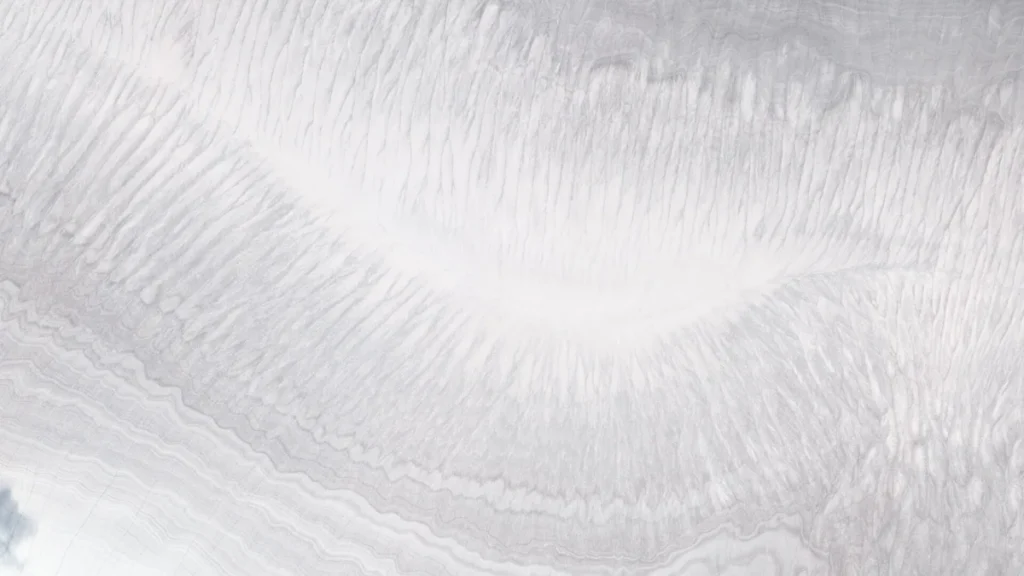
The Barnes Ice Cap sits on the central plateau of Baffin Island and is the last surviving fragment of the Laurentide Ice Sheet. The massive ice dome thinned during the Holocene and pulled back onto Baffin Island, leaving behind the deflated core of a formation once two miles thick. Today one of the last remnants is roughly the size of Delaware, the second-smallest U.S. state, and it is one of the final pieces of a sheet that once stretched across much of North America. The Laurentide was the largest of the Pleistocene ice sheets.
At its peak, the sheet covered most of Canada beneath two miles of ice and stored roughly 80 meters of sea level. It once extended from the Arctic Circle to present-day Illinois.
The Barnes Ice Cap is cold-based and frozen directly to bedrock, which prevents sliding and preserves ancient vegetation beneath it instead of eroding the record. Ordinary glaciers slide because meltwater at the base lubricates motion, and that movement scrapes away underlying material and destroys old evidence. Barnes does not slide because it remains frozen to the rock below, so tundra plants colonized bare ground as the ice retreated and were later smothered in place when the ice came back.
Scientists gathered plant material left bare by retreating ice and used radiocarbon dating to determine when those organisms stopped exchanging carbon with the environment. By tracking the ice margin systematically advancing over plants, they developed a timeline of expansion.
The remnant reached its smallest size about 3,600 years ago and began re-expanding roughly 2,000 years ago. By the 1960s, summer temperatures had become high enough for the Barnes Ice Cap to shrink again, interrupting what researchers interpret as the start of the next glaciation. Natural conditions supported renewed ice expansion for the previous two thousand years, yet rising global temperatures by the 1960s grew strong enough to reverse the trend and override the natural processes behind glacial growth. Human-caused climate warming had already turned the expansion around by about 1960.
The team argues the earliest sustained regrowth should count as the start of a glacial period, even though ice would need many thousands of years to spread widely. The researchers estimate rebuilding a continent-spanning ice sheet could have taken about 30,000 years under suitable conditions, and the initial shifts would be too slow for a person to observe in one lifetime. Young offered a comparison for cold-based ice: “that ice that’s plastered to the windshield of your car, that’s a good example of how cold-based ice operates.”
That interpretation differs from climate models that place the next major glaciation thousands or tens of thousands of years in the future. “It’s a very powerful example of how we have jolted the system,” Young said.
Earth remains technically within a long ice age that contains warmer periods, and during the past two billion years the planet has gone through at least five major ice ages that changed landscapes and altered life. People often use ice age to describe extensive glaciers, but the technical definition includes warmer intervals. The last glacial period spanned approximately 95,000 to 20,000 years ago, and the ice sheet expanded during that time, moving back and forth across glacial cycles spanning the past 2.6 million years.
Orbital changes, greenhouse gases and feedbacks inside the climate system all play a role, and the evidence from one ice-sheet remnant leaves open several questions about future glaciation. The research does not settle every question about what comes next. Losing the ice that remains could block attempts to piece together earlier glacial cycles or to guess what comes next for glaciation.
The early changes would have been far too gradual for people to notice within a lifetime. The findings do not establish that a full continental-scale ice age was imminent during the 1970s. Nicolás Young said the findings provide evidence about controversial 1970s global cooling predictions, stating that it actually was happening. The evidence comes from the history of one important ice-sheet remnant and does not settle every question about future glaciation.
The work gives perspective on disputed 1970s forecasts of global cooling, when experts argued about natural cycles, aerosols and rising greenhouse gases even though evidence increasingly supported sustained warming. Young said scientists could not prove cooling was underway then, but now evidence exists.



Join the discussion