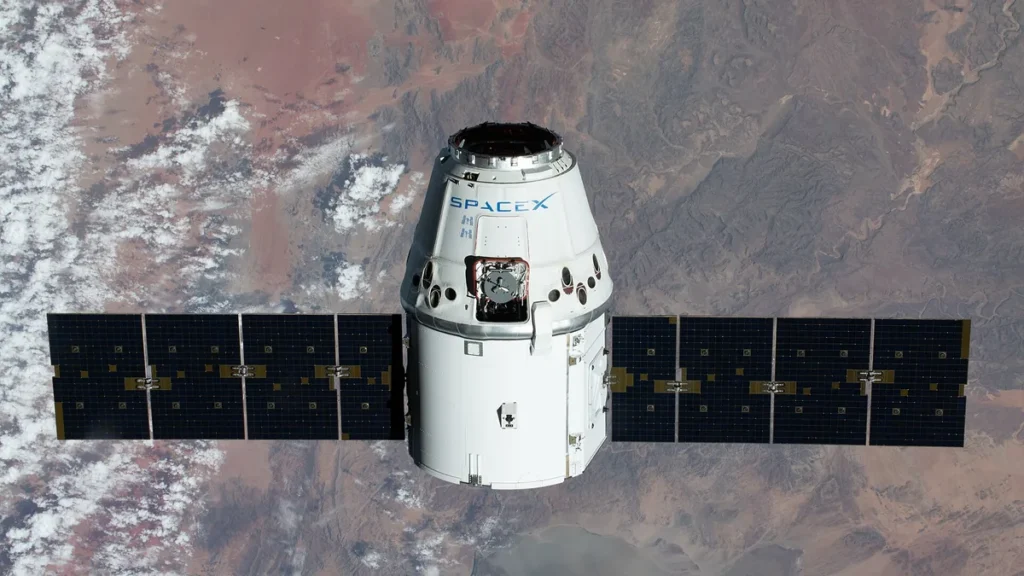
Airbus Chief Executive Guillaume Faury warned UK officials in a letter to Prime Minister Andy Burnham that granting the Skynet satellite contract to Lockheed Martin might endanger Britain’s position within the European space sector.
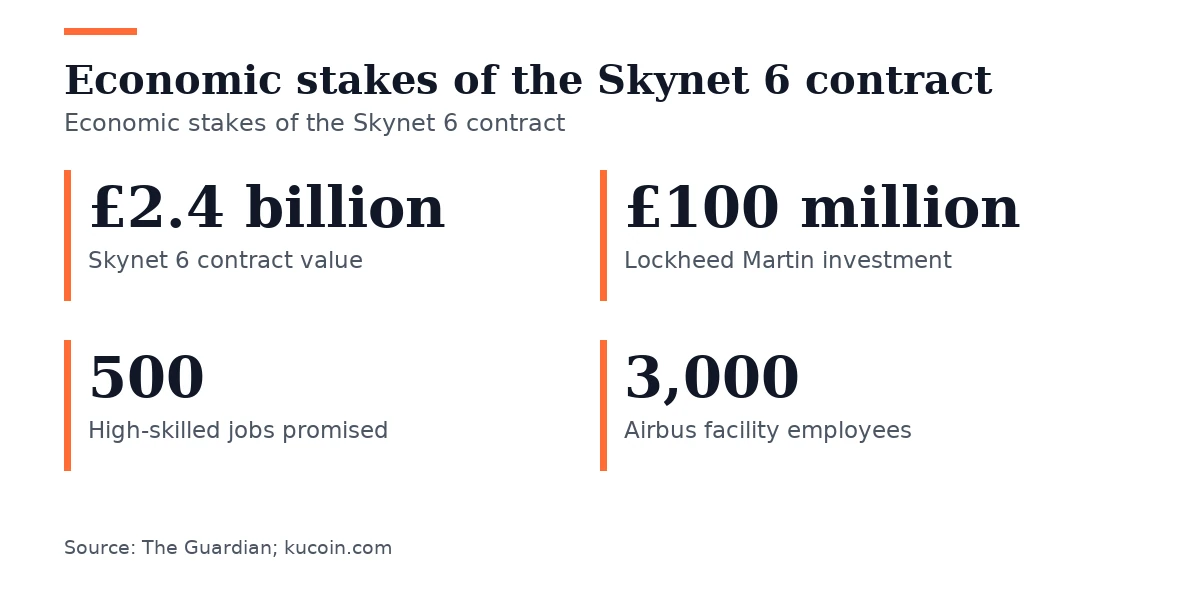
The monetary value assigned to the forthcoming Skynet 6 contract has been set. It amounts to two point four billion pounds sterling. This agreement is intended to deliver protected communication services for the United Kingdom’s armed forces continuing until the year 2042, and it will supersede the existing Skynet 5 system presently managed by Airbus. In the same correspondence, Faury indicated that the determination of which company will supply the Skynet service could influence the United Kingdom’s military satellite capability in Europe over an extended period spanning several decades.
Senior representatives from the industry have expressed the view that Airbus’s satellite operations based in the United Kingdom would lack viability. They link this lack of viability to the absence of the forthcoming Skynet agreement. These representatives added that the absence of such a contract might result in the shutdown of the company’s facilities located in Stevenage and Portsmouth. Airbus, Thales and Leonardo are jointly advancing an initiative known as Project Bromo.
This initiative involves bringing together their space subsidiaries. The goal is to form a single, unified entity. The objective of the consolidation is to establish a European champion capable of competing with prominent United States aerospace corporations. Faury further cautioned that should the United Kingdom branch of Airbus become non‑viable, the nation might forfeit the opportunity to serve as the European centre for military satellite communications.
Such an outcome would occur once the Project Bromo merger is complete. It would prevent the United Kingdom from becoming the European hub for military satellite communications. Lockheed Martin asserts that its United Kingdom subsidiary will retain complete authority over the satellites manufactured within the United Kingdom. The company also declares that a design authority situated in the United Kingdom and a chief engineer based in the United Kingdom will be responsible for supervising the programme.
Individuals associated closely with Lockheed Martin have rejected the notion of United States government influence. They state that the US government would exert no influence over the Skynet satellites. Elected officials representing the north-east region of England, among them Labour Member of Parliament Luke Akehurst and Mayor Kim McGuinness, have expressed support for Lockheed Martin’s proposal. The proposal put forward by Lockheed Martin envisages the construction of a new manufacturing plant in the city of Durham.
According to the bid, the initiative would involve an investment of one hundred million pounds. It would also generate five hundred positions requiring advanced technical skills. The United Kingdom administration has postponed reaching a conclusion on the selection of the Skynet contractor. Originally, the resolution was anticipated to occur during the summer period of 2026.
The postponement has been attributed to multiple factors. One of these factors is the recent elevation of Andy Burnham to the office of Prime Minister. The final decision on the Skynet 6 contract will rest with Prime Minister Andy Burnham and Chancellor John Healey. The same authority will also be exercised by the Chancellor of the Exchequer, John Healey.
A governmental paper dealing with defence‑oriented satellites sets out requirements for spacecraft. It states that they must be capable of enduring the spread of counter‑space hazards. The document explicitly mentions hazards such as radio jamming, cyber intrusions through hacking, and direct physical assaults as examples of the threats to be resisted. Information supplied by certain sources indicates that the combined workforce at the Stevenage and Portsmouth installations totals three thousand individuals.
Within this workforce, a subset of employees focuses on Skynet‑related tasks. The size of this subset is estimated at approximately six hundred individuals. Some of these sources have suggested that the Ministry of Defence exhibits a preference for Lockheed Martin’s bid in the procurement process. Alternative sources contend that the Stevenage and Portsmouth sites employ a limited number of staff.
They specify that this number amounts only to six hundred. These same sources have asserted that no definitive agreement concerning the Skynet contract has yet been finalised. They also state that the decision remains pending.





Join the discussion