Key facts
- The results indicate that bigger organic molecules may arise in diverse extraterrestrial environments, enter small bodies and reach planetary surfaces, potentially helping life to emerge.
- Within the interstellar medium, glycine encounters energetic processing such as cosmic rays and the secondary electrons they produce, a form of processing shown to yield complex organic molecules including peptides.
- The study examines whether the formation of peptides is a general outcome of energetic processing.
- Tests in the laboratory indicate that glycine arises from energetic processing as well as non-energetic processing of interstellar ice analogues.
Researchers found that exposing glycine and glycine-d3 films to 1-2 keV electrons in ultrahigh-vacuum chambers can drive peptide-forming condensation reactions, in work reported by Astrobiology Web on Nov. 27, 2026.
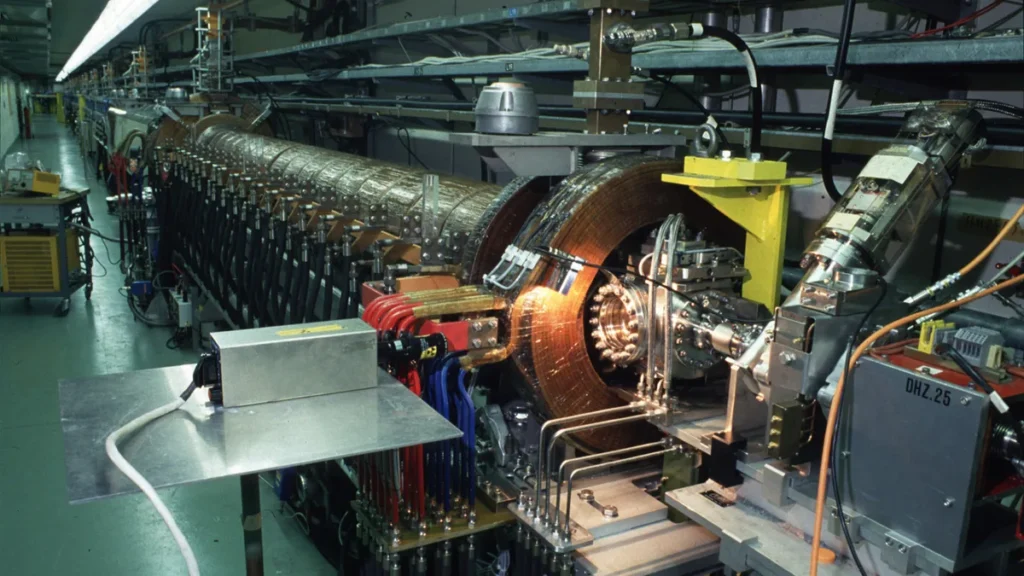
The team grew glycine and glycine-d3 films side by side in two ultrahigh-vacuum chambers and exposed both to identical electron irradiation. Ultrahigh-vacuum chambers maintain extremely low pressure. Running the films under the same conditions let the researchers compare products formed from ordinary glycine with those from its deuterated counterpart.
After irradiation, the material was studied with infrared spectroscopy, temperature-programmed desorption and vacuum-ultraviolet spectroscopy. Infrared spectroscopy identifies molecules by how they absorb infrared light. Temperature-programmed desorption heats a sample and measures the gases it releases, while vacuum-ultraviolet spectroscopy uses short-wavelength light to probe molecular structure. The three techniques together identified both the products formed and anything left after warming.
Condensation reactions join molecules into longer chains while releasing water as a secondary product, so the team looked for water signatures after irradiating the films. Spectra from irradiated glycine-d3 indicated D2O formation, and temperature-programmed desorption detected H2O from ordinary glycine along with H2O, HDO and D2O from glycine-d3. Those water forms support the conclusion that condensation had occurred, with glycine-d3 providing a comparison against ordinary glycine.
Peptides are short chains of amino acids, the building blocks of proteins. Glycine is the simplest amino acid, and glycine-d3 is a deuterated form used as a comparison against ordinary glycine. Using both forms side by side let the team distinguish newly formed products from the original material.
After heating, material that would not evaporate was left behind on the surface. That non-volatile residue indicates glycine had been converted into less volatile compounds, consistent with the growth of larger organics rather than only gas-phase fragments.
Vacuum-ultraviolet spectra of irradiated glycine showed decomposition products including CO, CO2 and H2O. The detected mix reflects both the breaking apart of glycine and its recombination into new molecules during irradiation. Carbon oxides appeared alongside water and any condensation products, indicating that the processing drives more than one chemical pathway.
Products from electron-irradiated glycine resemble those from proton-irradiated glycine, so the outcome does not hinge strongly on which energetic particle is used. Comparing electron and proton beams checks whether the chemistry needs a specific particle or responds generally to energetic processing. Space contains multiple radiation types, which makes the particle choice less critical to the result.
The study examines whether the formation of peptides is a general outcome of energetic processing. The experiments were designed to test whether peptide formation happens broadly whenever glycine is energetically processed, rather than depending on one particular radiation source.
Within the interstellar medium, glycine encounters energetic processing such as cosmic rays and the secondary electrons they produce. Cosmic rays are high-energy particles traveling through space, and the interstellar medium is the matter and radiation found between stars. Prior work links this energetic processing to complex organic molecules including peptides. Glycine also arises from non-energetic processing of interstellar ice analogs, so the researchers separated the question of how glycine forms from the separate question of whether processing glycine builds peptides.
Amino acids found on asteroids, including samples returned from asteroid Bennu, together with glycine detected on comet 67P/Churyumov-Gerasimenko, support the idea that glycine forms in extraterrestrial settings outside Earth. Those findings motivated the laboratory work by showing that glycine exists on small bodies. Small bodies can carry material to planets, so their chemistry matters for how material moves through space.
The results indicate that bigger organic molecules may arise in diverse extraterrestrial environments, enter small bodies and reach planetary surfaces, potentially helping life to emerge. The authors present electron processing as a route by which larger organic molecules made in space could reach planetary surfaces. The authors describe the outcome as a possibility because the experiments were conducted in laboratory chambers rather than in space.
The research is an arXiv preprint in Astrophysics of Galaxies (astro-ph.GA). Version 1 was submitted by Alfred Hopkinson on Nov. 24, 2026, and the paper is to be submitted to A&A, meaning it is not yet peer-reviewed. An arXiv preprint is a research paper shared publicly before formal peer review, while peer review means evaluation by independent experts before publication.
The author credits run from A. T. Hopkinson and D. V. Mifsud through P. Herczku. The remaining authors are Z. Juhász, B. Sulik, N. J. Mason, N. C. Jones, S. V. Hoffmann, A. Cassidy, L. Hornekær and S. Ioppolo. Alfred Hopkinson submitted version 1 on Nov. 24, 2026, and the list carries no institutional affiliations.
Join the discussion