Key facts
- The Apollo basin formed around 4.2 billion years ago, resolving why earlier estimates of the SPA basin's age ranged from 4.35 billion to 4.2 billion years ago.
- Around 3.87 billion years ago, a massive collision created the Orientale basin, which may have covered the studied area with tens of meters of rock and debris.
- Moderately magnesium-rich norite found by Chang'e-4 in Von Kármán crater crystallized directly from the molten rock sea produced by the SPA-forming impact and later cooled into layers.
- Highly magnesium-rich rocks formed through magnesium-suite magmatism after the SPA impact broke the crust and allowed magma from the Moon's liquid interior to cool beneath the surface layer.
An international team led by Professor Guochun Zhao of the University of Hong Kong’s Department of Earth and Planetary Sciences and Dr. Yuqi Qian, the study’s first author, reconstructed the impact history of the Moon’s South Pole-Aitken basin using samples from the Chang’e-6 mission and data from the Chang’e-4 rover, publishing their study in Science Advances in 2026.
According to the reconstructed impact timeline, the South Pole-Aitken basin formed around 4.34 billion years ago, a few hundred million years after the solar system formed. Scientists had previously debated the basin’s age for years, with estimates spanning 4.35 billion years ago up to about 4.2 billion years ago.
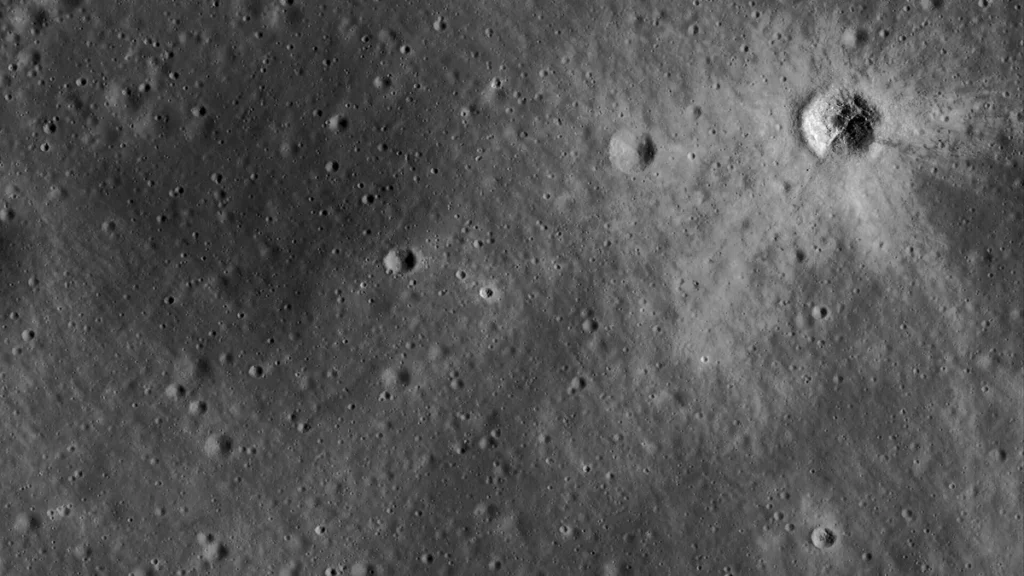
The Apollo basin formed around 4.2 billion years ago, resolving that long-standing discrepancy. The 490-kilometer-wide basin was created by a separate impact overlapping the SPA basin. The team lists the Apollo impact as the second major collision in the reconstructed history, after the SPA-forming event.
Chang’e-6 brought nearly 1.9 kilograms of soil and rock from the Apollo crater in 2024, marking the first mission to return material from the Moon’s far side. Chang’e-4 performed the first-ever far-side lunar landing in 2019, touching down in Von Kármán crater with its Yutu-2 rover. The far side had remained largely unexplored until these missions provided new access.
The South Pole-Aitken basin measures roughly 2,200 kilometers across and runs up to 10 kilometers deep, comparable to the north-south axis of mainland China. Other estimates place its diameter at approximately 2,050–2,400 kilometers and its depth at up to 12 kilometers.
The basin formed during a gigantic ancient collision that broke through the far side crust and exposed underground rock buried since the Moon’s formation. The main basin overlaps Von Kármán and other smaller craters formed within the larger SPA structure. The Moon’s nearside is covered in smooth dark maria, while the far side has many more craters, almost no volcanic plains, and a thick crust, a contrast known as the lunar dichotomy.
This difference has stumped scientists, and many have turned to the SPA basin to help explain it. The new study aims to resolve both the basin’s age discrepancy and the lunar dichotomy between the Moon’s near and far sides.
Moderately magnesium-rich norite, a type of igneous rock, found by Chang’e-4 in Von Kármán crater crystallized directly from the molten rock sea produced by the SPA-forming impact. The SPA impact melted enormous quantities of rock into a thick, cooling, differentiating sheet, and later impacts pushed these solid rocks up to the peaks of newly formed craters, exposing the norites at central peaks.
The Finsen impact later blasted pieces of that cooled lava lake into Von Kármán crater, where Chang’e-4 found them. Around 3.87 billion years ago, a massive collision created the Orientale basin, which may have covered the studied area with tens of meters of rock and debris.
Highly magnesium-rich rocks formed through magnesium-suite magmatism, the creation of magnesium-rich rocks from magma, after the SPA impact broke the crust and allowed magma from the Moon’s liquid interior to cool beneath the surface layer. The Apollo basin impact later pushed these cooled materials up into its western peak ring.
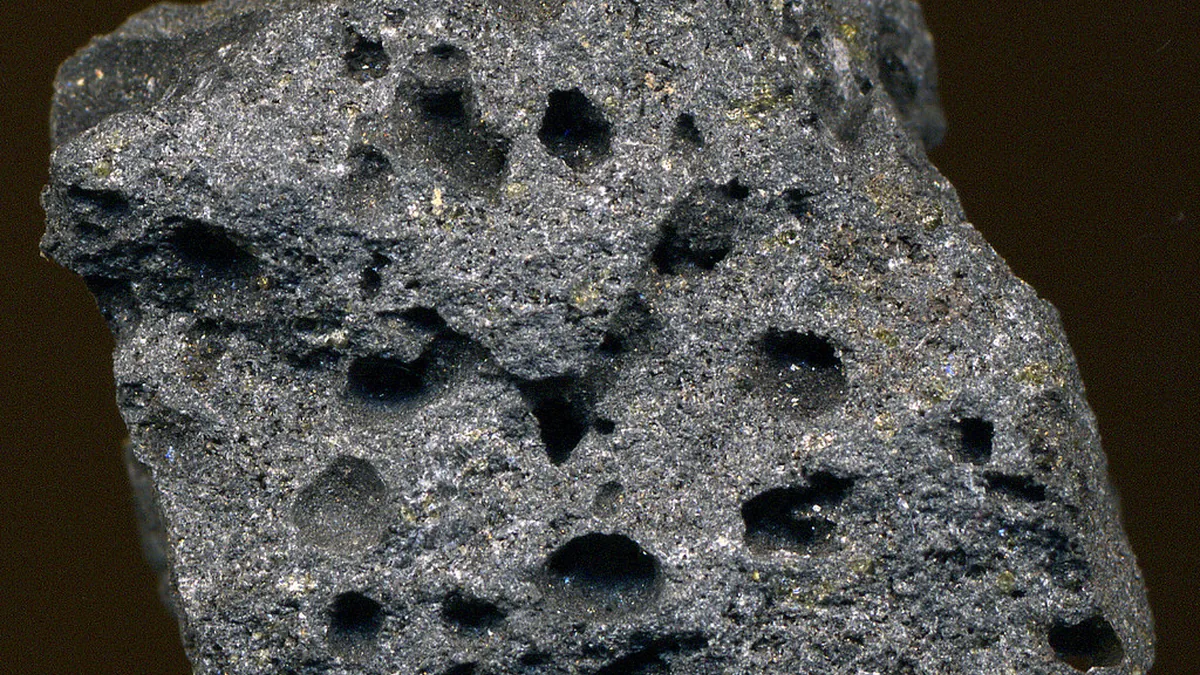
The Chaffee S impact later blasted rock fragments into the plains where Chang’e-6 collected them, and those fragments ended up in the soil at the Chang’e-6 landing site billions of years later. Smaller impacts such as Finsen later showered the entire SPA region with debris that mixed ancient crust rocks with soil formed over hundreds of millions of years, coming after the Orientale basin formed.
Researchers combined data from the Chang’e-4 rover with roughly one gram of the two kilograms returned by Chang’e-6, plus computer simulations, to reconstruct the Moon’s early bombardment history. Combining Chang’e-6 samples with surface measurements from Chang’e-4 and Chang’e-6 provided the first direct, on-site evidence from both landing sites, extended across the wider basin by remote sensing and numerical simulations.
Non-local rocks make up 40–50 percent of the studied soil, most linked to the Chaffee S crater impact, while the remainder is solidified lava plus rocks from ancient cosmic collisions. Scientists compared Chang’e-6 samples with Chang’e-4 data and lunar orbit observations to reach this conclusion.
Earlier work from the HKU-led team found signs of long-lasting volcanic activity and magma activity not previously recognized in the SPA region. That research suggested titanium-rich ilmenite-bearing cumulates, mineral layers rich in titanium and iron, helped create different volcanic histories between the Moon’s near side and far side, and it preceded the team’s shift to studying the basin’s impact history.
The far side of the Moon is never in direct line of sight with Earth, so the SPA basin could previously only be observed from afar using orbiters around the far side. Even orbital observation required sending spacecraft there because that hemisphere is never visible from Earth. Chinese landers and rovers have reached the site for closer study.
The SPA basin is a prime target for future crewed missions, where rovers, landers, and possibly people may encounter fragments of ancient crust made by massive impacts. These impact-created fragments have waited billions of years to be studied by humans. Counting craters and using radiometry, a method of estimating age from radiation measurements, can reveal when major asteroid swarms struck the inner solar system, potentially evidencing the giant planets’ early orbital path under the Nice model of early giant-planet orbital migration.
Scientists caution that the reconstructed history rests on soil samples, satellite observations, and calculations, so future samples from other basin areas could refine the conclusions. Scientists say studying the SPA basin could help answer what lies beneath the Moon’s surface, why the near and far sides differ, and when major impacts occurred.

Join the discussion