Key facts
- The Canadian Space Agency announced on Tuesday, Nov. 24, 2026, that Joshua Kutryk's wife, Heather, gave birth to their third child, a daughter, while he is in orbit.
- NASA astronaut Anil Menon plans a Thanksgiving meal aboard the International Space Station using a space-grown plant, a tortilla, pasta and hot sauce, according to a NASA video released on Monday, Nov. 23, 2026.
- NASA astronaut Jessica Watkins said the crew will eat roasted turkey, mac and cheese, mashed potatoes and candied yams during Thanksgiving aboard the station.
- Canadian Space Agency astronaut Joshua Kutryk said he will eat rice and space-grown plants raw because they remind him of Earth, which he misses.
NASA astronaut Anil Menon said Monday, Nov. 23, 2026, that he plans a Thanksgiving meal aboard the International Space Station featuring a space-grown plant, a tortilla, pasta and hot sauce.
Menon said growing food in space is necessary for survival on a moon base and during travel to Mars, and he showed the space-grown plants in the video. “I plan on using this [plant] with a tortilla and some pasta and some hot sauce to make my Thanksgiving meal,” he said.
Jessica Watkins said Thanksgiving aboard the station will feature roasted turkey, mac and cheese, mashed potatoes and candied yams. Joshua Kutryk said he plans to eat rice and raw space-grown plants because they remind him of Earth, which he misses. All four astronauts sent viewers holiday wishes and floated through the cabin in zero-gravity flips and rolls with the space plants. Station crews usually get major holidays off and mark them together, helping them cope with being away from loved ones.
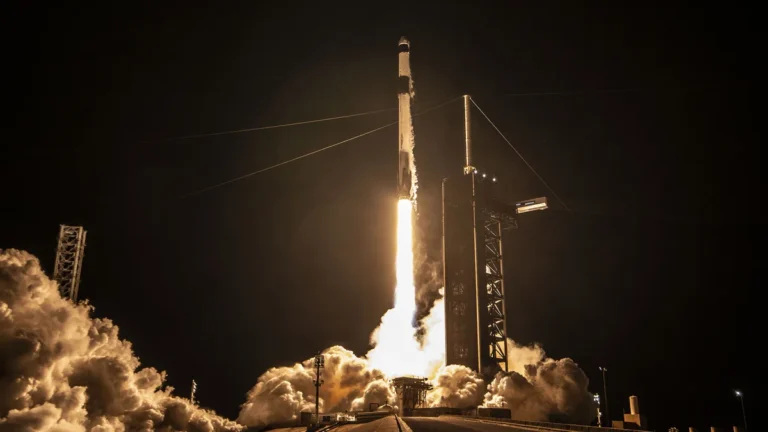
Crew-13 counts Luke Delaney, Joshua Kutryk and Jessica Watkins among its members. Roscosmos crew member Sergey Teteryatnikov reached the station with them on Oct. 1, 2026. Anil Menon shares the station with cosmonauts Pyotr Dubrov and Anna Kikina, who arrived in July 2026 aboard a Russian Soyuz spacecraft.
On Tuesday, Nov. 24, 2026, the Canadian Space Agency said Heather Kutryk had given birth to the couple’s third child, a daughter, while her husband was in orbit. He is only the fourth astronaut ever to be away from the station when a child was born. In a statement shared by the Canadian Space Agency, Kutryk and his wife said they feel connected despite the distance and are proud of their growing family. This is Kutryk’s first space mission, a six-month flight that began in October, making the birth an especially emotional time for him.
Kutryk, who is from Fort Saskatchewan, Alberta, worked as a fighter pilot and colonel in the Royal Canadian Air Force before joining the Canadian Space Agency in 2017. Before the October 1 takeoff, Heather Kutryk said her family had spent years getting ready and called the pregnancy unplanned but wonderful.
She said she feels well-supported by both CSA and NASA and that her family will be fine during the six-month mission. Kutryk said he hopes his new child will see the mission as service and risk for Canada, “making some sacrifice, taking some risk, but doing so in the name of public service and the name, in my case, for Canada.” The couple said they hope to show their children that big dreams are worth pursuing and that hard work and determination matter.
Progress 97, a cargo ship carrying about three tons of food, fuel and supplies, is set to dock with the station at 7:11 a.m. EST on Thanksgiving Day, Nov. 26, 2026. Dubrov and Kikina reviewed docking procedures, and the shipment includes food for the crew’s Thanksgiving celebration. NASA+ and other platforms will begin live coverage of the arrival at 6:30 a.m. on Thanksgiving Day.
Northrop Grumman’s Cygnus XL is targeted to launch no earlier than 10:47 a.m. on Sunday, Nov. 29, 2026, on a SpaceX Falcon 9 from Cape Canaveral Space Force Station. The mission will resupply the Expedition 75 crew.
On Wednesday, Nov. 25, 2026, flight engineers Jessica Watkins and Luke Delaney used the EchoFinder-2 ultrasound device to scan their internal organs during a human research investigation. The EchoFinder-2 uses augmented reality and superintelligence algorithms to help astronauts locate organs, potentially reducing reliance on ground medical teams for health monitoring. The ultrasound work headed the station’s research schedule on Wednesday while Expedition 75 prepared for the Thanksgiving cargo arrival.
NASA’s Anil Menon and the Canadian Space Agency’s Kutryk replaced life support hardware in the Tranquility module, which removes moisture from the air, condenses it and processes it for recycling. In the Kibo laboratory module, Kutryk prepared two college-student-designed CubeSats for deployment into Earth orbit to photograph the planet and monitor space weather. CubeSats are small satellites.
Station commander Pyotr Dubrov and flight engineer Anna Kikina of Roscosmos took turns checking their blood pressure with arm, wrist and finger cuffs to study cardiovascular effects of spaceflight. Flight engineer Sergey Teteryatnikov cleaned ventilation systems in the Nauka science module on Wednesday, Nov. 25, 2026, and transferred water and cleaned water tanks in the station’s Roscosmos segment.
Join the discussion